Los Cabos International Airport
Los Cabos International Airport Aeropuerto Internacional de Los Cabos | |||||||||||
|---|---|---|---|---|---|---|---|---|---|---|---|
 | |||||||||||
| Summary | |||||||||||
| Airport type | Public | ||||||||||
| Operator | Grupo Aeroportuario del Pacífico | ||||||||||
| Serves | San José del Cabo and Cabo San Lucas, Los Cabos, Baja California Sur, Mexico | ||||||||||
| Location | San José del Cabo, Baja California Sur, Mexico | ||||||||||
| Opened | 1977 | ||||||||||
| Focus city for | Viva | ||||||||||
| Time zone | MST (UTC-07:00) | ||||||||||
| Elevation AMSL | 114 m / 374 ft | ||||||||||
| Coordinates | 23°09′06″N 109°43′15″W / 23.15167°N 109.72083°W | ||||||||||
| Map | |||||||||||
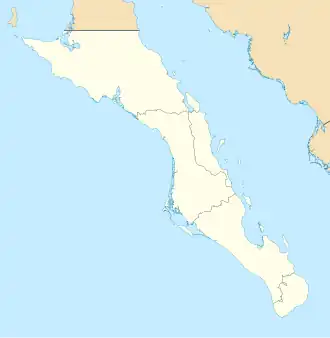  SJD Location of the airport in Baja California Sur  SJD SJD (Mexico) | |||||||||||
| Runways | |||||||||||
| |||||||||||
| Statistics (2025) | |||||||||||
| |||||||||||
| Source: Grupo Aeroportuario del Pacífico[1] | |||||||||||
Los Cabos International Airport (Spanish: Aeropuerto Internacional de Los Cabos) (IATA: SJD, ICAO: MMSD) is an international airport located in San José del Cabo, Baja California Sur, Mexico, serving as the main gateway to the Los Cabos region on the southern tip of the Baja California Peninsula. It offers flights to more than 50 destinations across the Americas and Europe, primarily functioning as a major destination for most U.S. and Canadian mainline airlines. The airport is also part of a high-traffic air corridor connecting the Baja California Peninsula with Mainland Mexico.
Operated by Grupo Aeroportuario del Pacífico (GAP), the airport supports general and executive aviation, flight training, and tourism-related operations. It is the larger of two airports in the Los Cabos region; the smaller Cabo San Lucas International Airport is located approximately 26 kilometres (16 mi) to the south.
As of 2025, it is the sixth-busiest airport in Mexico and ranks 23rd in Latin America by passenger traffic.[2] It also ranks fourth in Mexico for international passengers. In 2024, Los Cabos International Airport handled 7,488,200 passengers, and 7,529,900 in 2025.[1]
History
.jpg)
Los Cabos International Airport was inaugurated in 1977, featuring a provisional terminal with a tent-like roof. As the Los Cabos beach resort gained popularity among American and Canadian tourists, the airport underwent a substantial expansion and renovation in 1997, resulting in the construction of the current Terminal 1, accommodating both domestic and international flights.[3]
In 2002, the control tower was upgraded with advanced technology during the Asia-Pacific Economic Cooperation (APEC) Forum hosted in Los Cabos. Terminal 2 was subsequently added to accommodate increased international flights, and a new highway provided direct access to the tourist zone. Between 2008 and 2011, Terminal 1 underwent renovations, and Terminal 3 was constructed adjacent to Terminal 2. The general aviation apron was relocated, and a dedicated terminal for general aviation activities was established at the northern end of the airport grounds.
In September 2011, non-stop flights to Shanghai, China were briefly operated. In 2014, Hurricane Odile caused substantial damage, leading to an 18-day suspension of operations before reopening on October 3, 2014.[4] The airport's infrastructure has faced challenges due to a surge in resorts and rapid regional population growth, leading to congestion and reported capacity constraints during peak hours.[5]
Between 2018 and 2020, Terminal 3 was fully integrated with Terminal 2, adopting the name Terminal 2 and undergoing further expansion in 2022 with additional jet bridges.[6] From 2019 to 2020, TUI Airways provided flights to and from London Gatwick Airport, and since 2023, Spain-based carrier Iberojet has operated daily flights to Madrid.[7]
Facilities

Los Cabos International Airport is situated 10 kilometres (6.2 mi) north of San José del Cabo, Baja California Sur, at an elevation of 114 metres (374 ft) above mean sea level. The airport features a single runway, designated as 16/34, measuring 3,000 metres (9,800 ft) with an asphalt surface. The commercial aviation apron accommodates 22 narrow-body aircraft. Nonetheless, the airport is also capable of accommodating wide-body aircraft. For general aviation, there is a dedicated apron with stands for fixed-wing aircraft and helipads for private aviation. The airport operates two terminals.
Terminal 1
Terminal 1, covering an area of 16,580 square metres (178,500 sq ft), houses arrival and departure facilities for domestic flights within a single-story building. It features a distinctive roof over the departures concourse with peaked white structures. The arrivals area includes a baggage claim, car rental services, taxi stands, snack bars, and souvenir shops. The departures section includes a check-in area, a security checkpoint, and a concourse with a food court and eight gates on the ground level, allowing passengers to walk to their aircraft. A mezzanine level, housing a VIP lounge, is accessible from the departure concourse.[8]
Terminal 2
Terminal 2 is a two-story structure. The ground floor manages arrivals with customs and immigration facilities, a baggage claim area, car rental services, taxi stands, snack bars, and souvenir shops. The upper floor is dedicated to departures, featuring check-in areas, a security checkpoint, and a 400 metres (1,300 ft) long departure concourse. This section includes restaurants, food stands, duty-free shops, and 19 gates, nine of which are equipped with jet bridges. A VIP lounge in Terminal 2 is located past security, near the central food court.
Airlines and destinations
Passenger
Destination maps












Los Cabos Domestic destinations from Los Cabos International Airport Red = Year-round destination Blue = Future destination Green = Seasonal destination |
|
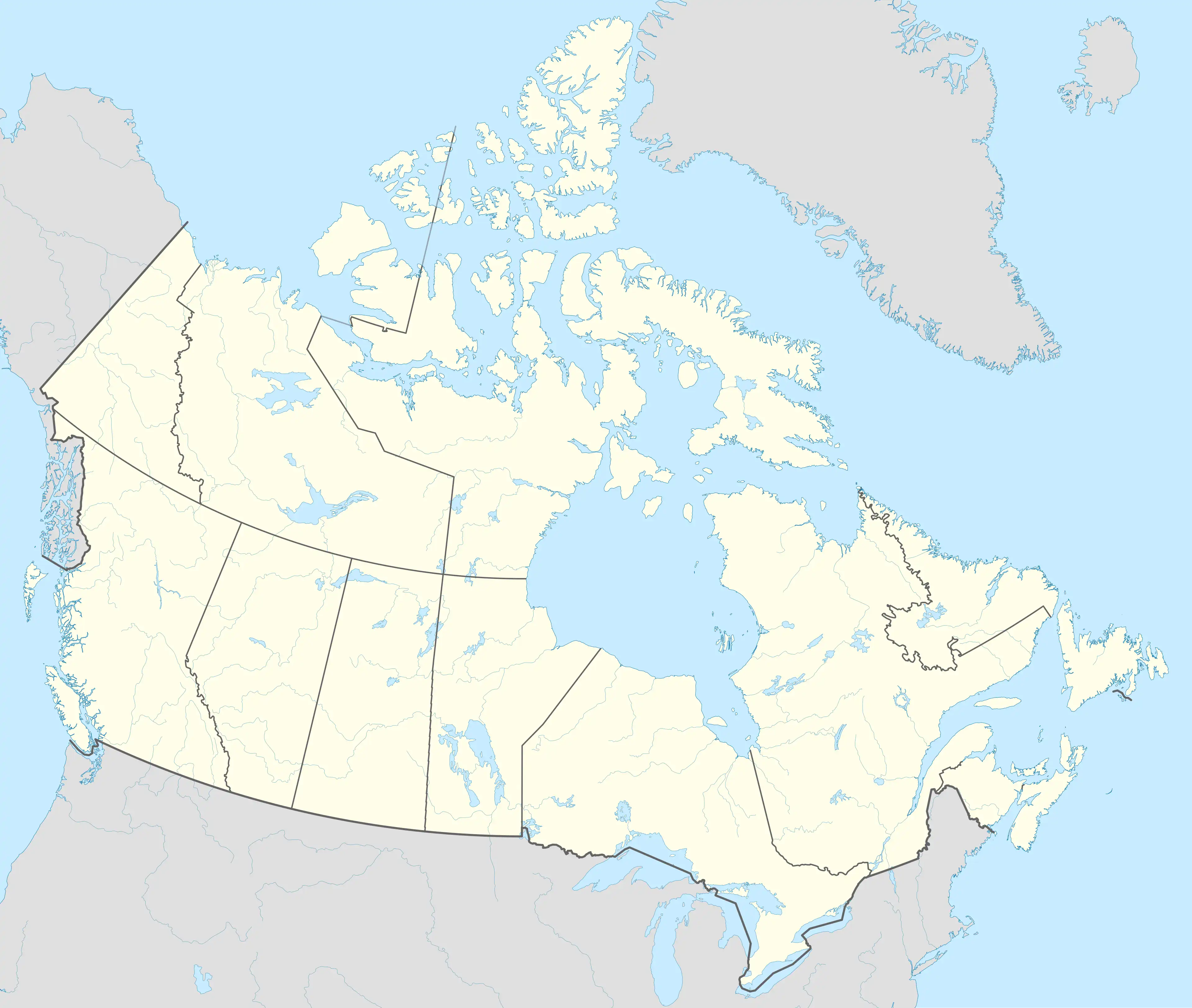
Canadian destinations from Los Cabos International Airport Red = Year-round destination Blue = Future destination Green = Seasonal destination |
|
 United States destinations from Los Cabos International Airport Red = Year-round destination Blue = Future destination Green = Seasonal destination |
|
Central American destinations from Los Cabos International Airport Red = Year-round destination Blue = Future destination Green = Seasonal destination |




Statistics
Annual Traffic
| Year | Total Passengers | change % |
|---|---|---|
| 2010 | 2,745,500 | 
|
| 2011 | 2,807,000 |  2.25% 2.25%
|
| 2012 | 3,018,500 | 7.55%
|
| 2013 | 3,234,287 | 7.20%
|
| 2014 | 3,130,986 |  3.26% 3.26%
|
| 2015 | 3,523,010 | 12.55%
|
| 2016 | 4,089,000 | 16.05%
|
| 2017 | 4,701,580 | 14.99%
|
| 2018 | 5,249,000 | 11.6%
|
| 2019 | 5,609,100 | 6.9%
|
| 2020 | 3,064,200 | 45.4%
|
| 2021 | 5,549,600 | 81.1%
|
| 2022 | 7,019,300 | 25.1%
|
| 2023 | 7,715,500 | 9.9%
|
| 2024 | 7,488,100 | 2.9%
|
| 2025 | 7,529,900 | 0.6%
|
Busiest routes
| Rank | Airport | Passengers |
|---|---|---|
| 1 | Mexico City, Mexico City | 419,920 |
| 2 | Jalisco, Guadalajara, Jalisco | 258,929 |
| 3 | Tijuana, Baja California | 252,979 |
| 4 | Culiacán, Sinaloa | 99,845 |
| 5 | Toluca, State of Mexico | 96,262 |
| 6 | Monterrey, Nuevo León | 95,645 |
| 7 | Mexico City-AIFA, State of Mexico | 87,061 |
| 8 | León/El Bajío, Guanajuato | 29,659 |
| 9 | Querétaro, Querétaro | 23,357 |
| 10 | Mexicali, Baja California | 18,787 |
| Rank | Airport | Passengers |
|---|---|---|
| 1 |  Los Angeles, United States Los Angeles, United States
|
300,465 |
| 2 | Dallas/Fort Worth, United States
|
248,583 |
| 3 | Phoenix–Sky Harbor, United States
|
204,079 |
| 4 | Houston (Intercontinental and Hobby, United States)[a]
|
189,875 |
| 5 | San Francisco, United States
|
158,083 |
| 6 | Denver, United States
|
134,569 |
| 7 | Seattle–Tacoma, United States
|
113,636 |
| 8 | Chicago (O'Hare and Midway, United States)[b]
|
91,926 |
| 9 | San Diego, United States
|
83,763 |
| 10 | Atlanta, United States
|
81,581 |
- Notes
See also
- List of the busiest airports in Mexico
- List of airports in Mexico
- List of airports by ICAO code: M
- List of busiest airports in North America
- List of the busiest airports in Latin America
- Transportation in Mexico
- Tourism in Mexico
- Grupo Aeroportuario del Pacífico
- Los Cabos Corridor
References
- ^ a b "GAP Traffic Report 2026" (PDF). Grupo Aeroportuario del Pacífico. January 2026. Retrieved January 21, 2026.
- ^ "Estadística Operacional de Aeropuertos / Statistics by Airport". Agencia Federal de Aviación Civil. Retrieved January 27, 2025.
- ^ "About Cabo Airport: San José del Cabo International Airport".
- ^ "Hurricane Odile: Mexico begins airlifts of tourists stranded in Los Cabos". The Guardian. September 2014. Retrieved January 21, 2017.
- ^ "Los Cabos Tourist Alert: Depart For Airport Early Due To Traffic Congestion".
- ^ "Los Cabos Airport Expanding With More Gates To Keep Up With Tourist Demand".
- ^ "Iberojet schedules two seasonal routes to Mexico".
- ^ "Los Cabos Airport Maps".
- ^ "American Airlines Launches New Nonstop Flights to the Caribbean, Latin America". Travel and Leisure. June 2023. Retrieved February 26, 2025.
- ^ "Los Cabos strengthens its presence in Europe with a new season of the direct flight from Frankfurt to Los Cabos". EnElAire (in Spanish). September 2025. Retrieved September 3, 2025.
- ^ "Copa Airlines expands its network in Latin America and the Caribbean: a new destination and two reactivations". Aviación al Día (in Spanish). July 2025. Retrieved July 3, 2025.
- ^ "Delta Adds Two New Routes in Africa and One in Mexico". Aviation A2Z. February 28, 2025. Retrieved February 28, 2025.
- ^ a b "Frontier Airlines NW25 Further Network Expansion". AeroRoutes. September 2025. Retrieved September 6, 2025.
- ^ "Southwest Airlines May/June 2026 Network Additions". AeroRoutes. October 2025. Retrieved October 16, 2025.
- ^ "Southwest Airlines introducing new nonstop flight from Indianapolis for Spring Break 2026". WTHR. August 14, 2025. Retrieved August 14, 2025.
- ^ "Volaris triggers massive expansion with 33 new routes across North America". AviaciOnline. February 2026. Retrieved February 5, 2026.
- ^ "Calgary, AB, Canada YYC". OAG Flight Guide Worldwide. 27 (1). Luton, United Kingdom: OAG Aviation Worldwide Limited: 204–206. July 2025. ISSN 1466-8718. OCLC 41608313.
- ^ "Toronto, ON, Canada YTO". OAG Flight Guide Worldwide. 27 (1). Luton, United Kingdom: OAG Aviation Worldwide Limited: 1156–1162. July 2025. ISSN 1466-8718. OCLC 41608313.
- ^ "Vancouver, BC, Canada YVR". OAG Flight Guide Worldwide. 27 (1). Luton, United Kingdom: OAG Aviation Worldwide Limited: 1184–1188. July 2025. ISSN 1466-8718. OCLC 41608313.
- ^ a b c "Estadística operacional por origen-destino / Traffic Statistics by City Pairs" (in Spanish). Agencia Federal de Aviación Civil. January 2026. Retrieved February 1, 2026.
External links
 Media related to Los Cabos International Airport at Wikimedia Commons
- Aeronautical chart and airport information for MMSD at SkyVector
- Current weather for MMSD at NOAA/NWS
- Accident history for SJD at Aviation Safety Network