Tăușoare-Zalion Reserve
| Tăușoare Cave | |
|---|---|
| Peștera Izvorul Tăușoarelor | |
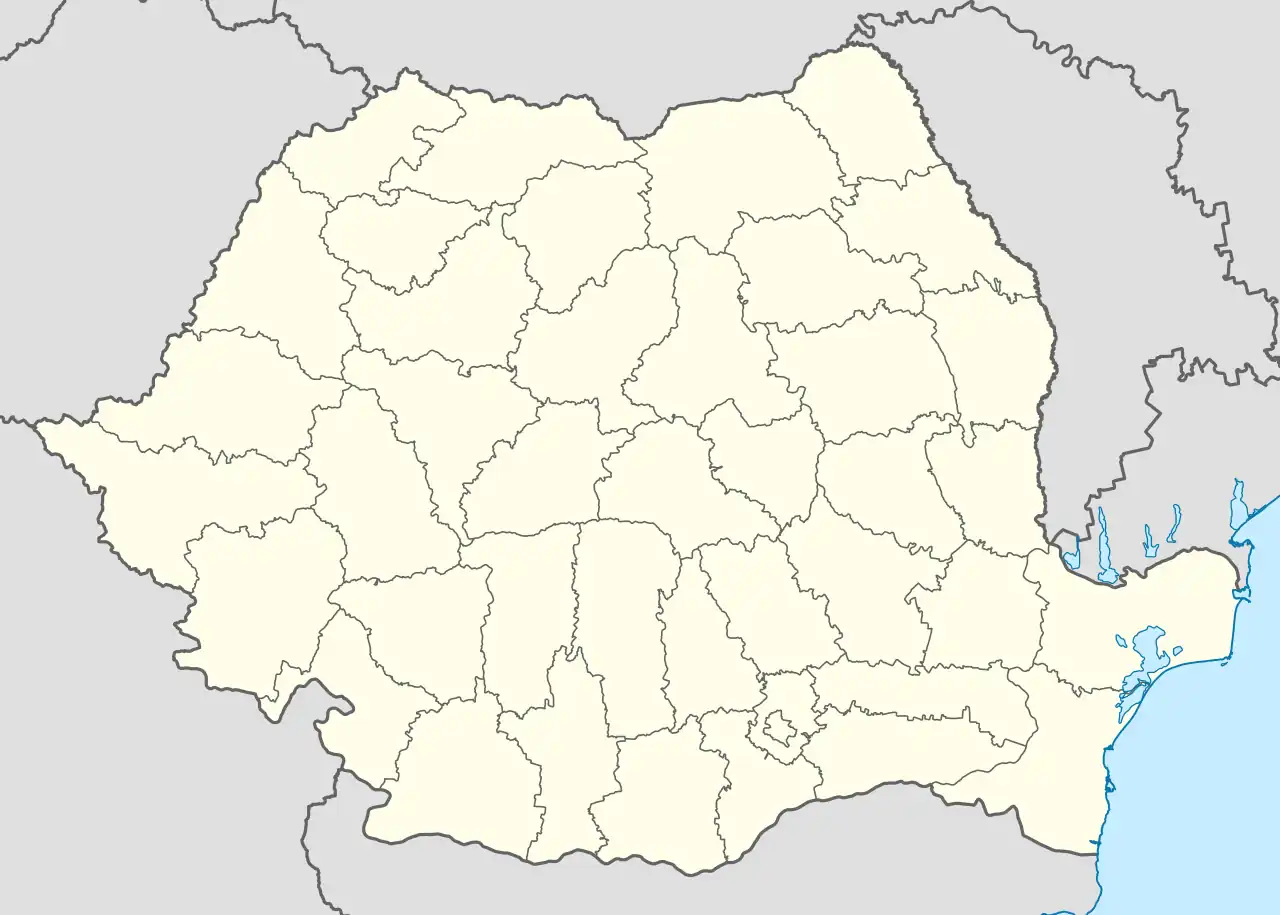  Location of the cave in Romania | |
Interactive map of Tăușoare Cave | |
| Location | Telciu, Rodna Mountains, Bistrița-Năsăud County, Romania |
| Coordinates | 47°26′34″N 24°31′45″E / 47.44278°N 24.52917°E |
| Depth | 413.5 m (1,357 ft) |
| Length | 20 km (12 mi) |
| Elevation | 950 m (3,120 ft) |
| Discovery | Leon Bârte (1955) |
| Entrances | 1 |
| Features | mirabilite, anthodites |
The Tăușoare-Zalion Reserve is a cave system located in the deeply forested areas of the Rodna Mountains, Bistrița-Năsăud County, in Romania.
The Tăușoare Cave was discovered in 1955 by a teacher, Leon Bârte. Located at an altitude of 950 metres (3,120 feet), it has a length of 20 km (12 mi) and a depth of 413.5 m (1,357 ft),[1][2] making it the deepest and the third longest cave in Romania.[2] The protected underground area covers 72.1 hectares (178 acres).[3]
Since 2000 the cave has been legally protected as a natural area, and since 2010 it has been placed under the custodianship of the Complexul Muzeal Bistrița-Năsăud; it is also designated as a Natura 2000 site (ROSCI0193 "Peștera Tăușoare").[4][5]
The cave features rare minerals, such as mirabilite and anthodites, being second in Romania in value of anthodites, after the Peștera Vântului in the Pădurea Craiului Mountains.[2] In addition, speleological studies describe abundant sulphate speleothems (gypsum and bassanite) and the first Romanian occurrences of the minerals leonit and konyaite in the cave.[6] The underground system is noted for “Bilele de Tăușoare”, spherical limestone nodules regarded as unique at least within Romania and sometimes described as unique worldwide.[7][8][3]
The cave also contains notable gypsum and mirabilite formations in named chambers such as the "Sala de Mese" and rare radial sulphate aggregates (locally called oulofolite).[9][10]
A fossil deposit of Ursus spelaeus (cave bear) and Ursus arctos (brown bear) bones is preserved in the “Sala Oaselor de Urs”; the site is mentioned as one of the less studied fossil bear deposits in Romanian caves.[11] Popular and scientific accounts also describe the cave as the only one in the Eastern Carpathians where glacial-age cave bear fauna has been documented.[12][13]
Biological interest is linked both to the cave’s invertebrate fauna and its large bat colonies. The subterranean fauna includes amphipods, cyclopoids, collembolans and diplurans.[14] During winter, several thousand bats (over 4,000 individuals according to museum data, and up to 5,000–10,000 in later estimates) of at least four species use the cave as a hibernation site, including Myotis myotis, Myotis blythii, Rhinolophus hipposideros and other rhinolophids.[12][13][15][16][8]
Several descriptions emphasize that the cave is technically demanding and was long closed to ordinary tourism, with access restricted to scientific teams; more recent regulations allow only tightly controlled eco-tourist visits during periods when bats are not hibernating.[10][12][13][3]
References
- ^ "Peștera Tăușoare". complexulmuzealbn.ro (in Romanian). Complexul Muzeal Bistrița-Năsăud. Retrieved October 12, 2022.
- ^ a b c Gavrilă, Bianca Sara (July 28, 2013). "Cea mai adâncă peșteră și a treia ca lungime din țară, deschisă pentru prima dată publicului". Adevărul (in Romanian). Retrieved October 12, 2022.
- ^ a b c "Peștera Tăușoare, reașezată pe palierul celor mai fascinante peșteri din România, printr-un proiect european". Răsunetul (in Romanian). June 22, 2015. Retrieved October 12, 2022.
- ^ "Peștera de la Izvorul Tăușoarelor". Ghidul Muzeelor şi Colecţiilor din România (in Romanian). Institutul Național al Patrimoniului. Retrieved December 1, 2025.
- ^ "Peștera Tăușoare" (in Romanian). Complexul Muzeal Bistrița-Năsăud. Retrieved December 1, 2025.
- ^ "Peștera de la Izvorul Tăușoarelor". Speologie România (in Romanian). Retrieved December 1, 2025.
- ^ "Peștera Izvorul Tăușoarelor". Turistmania (in Romanian). Retrieved December 1, 2025.
- ^ a b "Teorie nouă despre dispariţia omului de Neanderthal bazată pe probe culese dintr-o peşteră din România". Historia (in Romanian). Retrieved December 1, 2025.
- ^ "Peștera Tăușoare" (in Romanian). Complexul Muzeal Bistrița-Năsăud. Retrieved December 1, 2025.
- ^ a b "Peștera Izvorul Tăușoarelor". Turistmania (in Romanian). Retrieved December 1, 2025.
- ^ "Peștera Tăușoare" (in Romanian). Complexul Muzeal Bistrița-Năsăud. Retrieved December 1, 2025.
- ^ a b c "Peștera Tăușoare, un obiectiv de atracţie turistică. Dar nu pentru oricine". TimpOnline (in Romanian). September 20, 2012. Retrieved December 1, 2025.
- ^ a b c "Peștera Izvorul Tăușoarelor". Merg.in (in Romanian). July 24, 2015. Retrieved December 1, 2025.
- ^ "Peștera Tăușoare" (in Romanian). Complexul Muzeal Bistrița-Năsăud. Retrieved December 1, 2025.
- ^ "Efectivele de lilieci din Peștera Izvorul Tăușoarelor, în refacere spectaculoasă". Răsunetul (in Romanian). April 10, 2019. Retrieved December 1, 2025.
- ^ "Efectivele de lilieci din Peștera Izvorul Tăușoarelor, în refacere spectaculoasă". BistrițaNews (in Romanian). April 10, 2019. Retrieved December 1, 2025.
External links
- Tăușoare-Zalion Reserve (archived at the Wayback Machine)
- National Agency for Protected Natural Areas - Romania
