Sarvestan Palace
| Sarvestan Palace | |
|---|---|
کاخ ساسانی سروستان | |
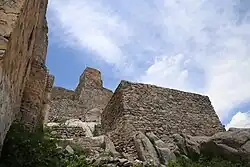
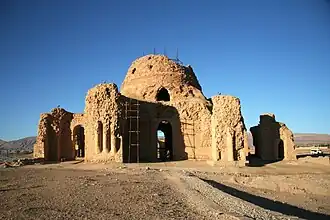 View of the palace | |
Interactive map of the Sarvestan Palace area | |
| General information | |
| Type | Palace |
| Location | Sarvestan, Iran |
| Coordinates | 29°11′44″N 53°13′51″E / 29.19556°N 53.23083°E |
| Completed | 420-422 AD[1] |
| Part of | Sassanid Archaeological Landscape of Fars Region |
| Criteria | Cultural: ii, iii, v |
| Reference | 1568-008 |
| Inscription | 2018 (42nd Session) |
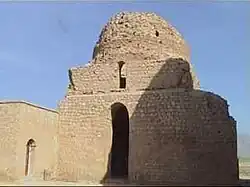
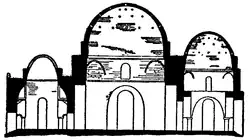
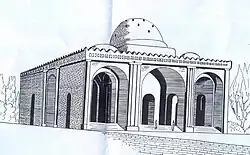
The Sassanid Palace of Sarvestan (Persian: کاخ ساسانی سروستان, romanized: kakh-eh Sassani-ye Sarvestan) is a Sassanid-era building in the Iranian city of Sarvestan, some 90 km southeast from the city of Shiraz. The palace was built in the 5th century AD, and was either a gubernatorial residence or a Zoroastrian fire temple.
The Sarvestan Palace is one of the most important archaeological sites of the field of Sasanian archaeology, and it is designated as one of the eight UNESCO World Heritage Sites in the Sassanid Archaeological Landscape of Fars Region.
History
The Sarvestan Palace was built by the Sasanian king Bahramgur (Persian: بهرام گور; r. 420–438) and dominates an immense, empty plain. The name "palace" is considered misleading, because the monument's function is obscure. It may have been a hunting lodge or a sanctuary instead of a palace, because of the presence of a small building, just north of the palace, whose function remains unknown.[2]
Palace court
A visitor who would have arrived from the south, would have seen three iwans. After entering the central one, he would have reached a large square hall under a large dome, made of baked brick. After this, a visitor would have found himself on a rectangular courtyard, surrounded by the residential quarters. The building reminds one of the Ghal'eh Dokhtar and the palace of Ardashir, both near Firuzabad; the difference is that the Sarvestan palace is open to all sides. The building, made of stone and mortar, must have had fine decorations, which partly survive.[2]
See also
References
- ^ "Sarvestan, the enigmatic monument of ancient Iran, finally dated". 26 October 2021.
- ^ a b "Sarvestan palace". Livius.org. 2011-04-03. Archived from the original on 2010-09-10. Retrieved 2011-10-03.
- J Homayooni (1996), History of Sarvestan.

| Periods |
|  | ||||
|---|---|---|---|---|---|---|
| Types | ||||||
| Elements | ||||||
| Traditional cities | ||||||
| Theory and analysis | ||||||
| Lists |
| |||||
| East Azerbaijan |
| 
.jpg) |
|---|---|---|
| West Azerbaijan |
| |
| Isfahan |
| |
| Ardabil |
| |
| Alborz | ||
| Bushehr | ||
| Kohgiluyeh and Boyer-Ahmad | ||
| Golestan |
| |
| Gilan | ||
| Tehran | ||
| Chaharmahal and Bakhtiari | ||
| North Khorasan |
| |
| Razavi Khorasan |
| |
| South Khorasan |
| |
| Khuzestan | ||
| Kurdistan | ||
| Semnan |
| |
| Sistan and Baluchestan |
| |
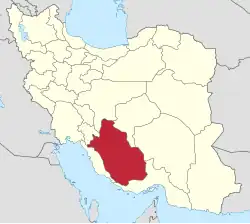
| Fars |
| |
| Qazvin | ||
| Qom |
| |
| Kerman |
| |
| Kermanshah |
| |
| Mazandaran |
| |
| Markazi |
| |
| Lorestan | ||
| Ilam |
| |
| Hormozgan |
| |
| Hamadan |
| |
| Yazd |
| |
| Zanjan |
| |
Also See: Castles in Iran | ||



.jpg)


.jpg)
.jpg)
 Sasanian castles Sasanian castles | |||||||||||||||||||||||||||||||||||||||||||||||||||||||
|---|---|---|---|---|---|---|---|---|---|---|---|---|---|---|---|---|---|---|---|---|---|---|---|---|---|---|---|---|---|---|---|---|---|---|---|---|---|---|---|---|---|---|---|---|---|---|---|---|---|---|---|---|---|---|---|
| Azerbaijan |
| 
 | |||||||||||||||||||||||||||||||||||||||||||||||||||||
| Georgia |
| ||||||||||||||||||||||||||||||||||||||||||||||||||||||
| Iraq |
| ||||||||||||||||||||||||||||||||||||||||||||||||||||||
| Iran |
| ||||||||||||||||||||||||||||||||||||||||||||||||||||||
| Oman |
| ||||||||||||||||||||||||||||||||||||||||||||||||||||||
| Russia |
| ||||||||||||||||||||||||||||||||||||||||||||||||||||||
| Saudi Arabia |
| ||||||||||||||||||||||||||||||||||||||||||||||||||||||
Also See: Sasanian castles | |||||||||||||||||||||||||||||||||||||||||||||||||||||||