Portal:Yemen

Yemen Portal

.svg.png)
Yemen, officially the Republic of Yemen, is a country in West Asia. Including the Socotra Archipelago, mainland Yemen is located in southern Arabia; bordering Saudi Arabia to the north, Oman to the northeast, the south-eastern part of the Arabian Sea to the east, the Gulf of Aden to the south, and the Red Sea to the west, sharing maritime borders with Djibouti, Eritrea, and Somalia across the Horn of Africa. Covering roughly 455,503 square kilometres (175,871 square miles), with a coastline of approximately 2,000 kilometres (1,200 miles), Yemen is the second largest country on the Arabian Peninsula by area, and the largest by population.
Sanaa is its constitutional capital and largest city. Yemen's estimated population is 34.7 million, mostly Arab Muslims, which is estimated to be greater than that of Saudi Arabia. It is a member of the Arab League, the United Nations, the Non-Aligned Movement and the Organisation of Islamic Cooperation.
Owing to its geographic location, Yemen has been at the crossroads of many civilisations for over 7,000 years. The Sabaeans formed a thriving commercial kingdom that influenced parts of modern Ethiopia and Eritrea. In 275 AD, it was succeeded by the Himyarite Kingdom, which spanned much of Yemen's present-day territory and was heavily influenced by Judaism. Christianity arrived in the fourth century, followed by the rapid spread of Islam in the seventh century. From its conversion to Islam, Yemen became a center of Islamic learning, and Yemenite troops played a crucial role in early Islamic conquests. Much of Yemen's architecture survived until modern times. For centuries, it was a primary producer of coffee, exported through the port of Mocha. Various dynasties emerged between the 9th and 16th centuries. During the 19th century, the country was divided between the Ottoman and British empires. After World War I, the Kingdom of Yemen was established, which in 1962 became the Yemen Arab Republic (North Yemen) following a civil war. In 1967, the People's Democratic Republic of Yemen (South Yemen) gained its independence from the British Aden Protectorate, becoming the first and only communist state in the Middle East and the Arab world. In 1990, the two Yemeni states united to form the modern Republic of Yemen, with Ali Abdullah Saleh serving as the first president until his resignation in 2012 in the wake of the Arab Spring.
Since 2011, Yemen has been enduring a political crisis, marked by street protests against poverty, unemployment, corruption, and President Saleh's plan to amend Yemen's constitution and eliminate the presidential term limit. By 2015, the country became engulfed by an ongoing civil war with multiple entities vying for governance, including the Presidential Leadership Council of the internationally recognized government, and the Houthi movement's Supreme Political Council. This conflict, which has escalated to involve various foreign powers, has led to a severe humanitarian crisis. (Full article...)
Selected article -
The Rasulid dynasty or Rasulids (Arabic: بنو رسول, romanized: Banū Rasūl) were a Sunni Yemeni dynasty who ruled Yemen from 1229 to 1454. Generally seen as Oghuz Turkic in origin, their chronicles claimed Arab Ghassanid descent. (Full article...)
List of selected articles
|
|---|
Selected biography -
.jpg)
Ali Nasir Muhammad Al-Husani (Arabic: علي ناصر محمد ; born 31 December 1939) is a Yemeni politician who also served as the Secretary-General of the Yemeni Socialist Party between 1980 and 1986. He was president of South Yemen twice and once the Prime Minister. He served as the Prime Minister from 2 August 1971 until 14 February 1985 and as Chairman of the Presidential Council from 26 June 1978, after the ouster and execution of Salim Rubai Ali, until 27 December 1978. In April 1980, South Yemeni president Abdul Fattah Ismail resigned, officially for health reasons, and moved to Moscow. His successor was Ali Nasir Muhammad, who was generally seen as a more pragmatic and moderate leader than his predecessor. Mohammad was less committed to Marxist-Leninist ideology than Ismail and relaxed various socialist policies in the PDRY. His rule was also marked by his moderate approach towards foreign affairs, as evidenced by his less interventionist stance towards both North Yemen and neighbouring Oman and attempts to improve relations with the West. On January 13, 1986, a violent struggle began in Aden between Ali Nasir's supporters and supporters of the returned Ismail, the South Yemen Civil War. The fighting lasted for more than a month and resulted in thousands of casualties, Ali Nasir's ouster, and Ismail's death. Ali Nasir's term lasted from 21 April 1980 to 24 January 1986. Some 60,000 people, including the deposed Ali Nasir, fled to North Yemen. He was succeeded by Haidar Abu Bakr al-Attas. (Full article...)
General images -
-
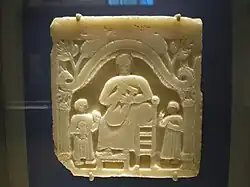 A funerary stela featuring a musical scene, 1st century AD (from History of Yemen)
 -
.jpg) Jabal Haraz, UNESCO Tentative Site (from Tourism in Yemen)
Jabal Haraz, UNESCO Tentative Site (from Tourism in Yemen) -
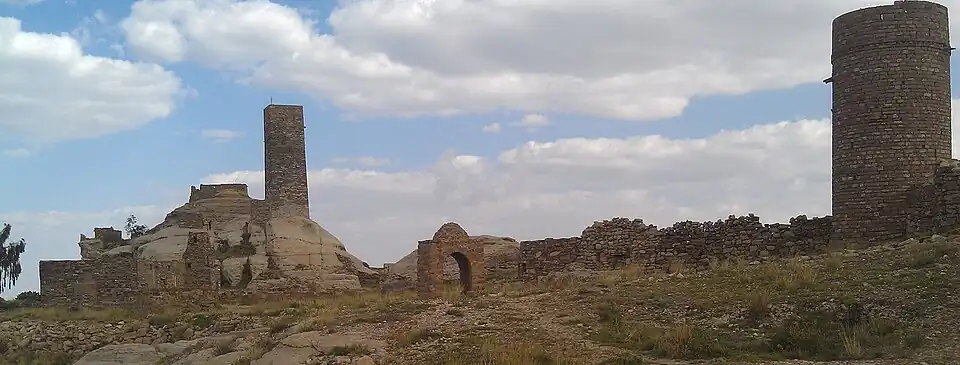 Ruins of Thula fortress in 'Amran, where al-Mutahhar ibn Yaha barricaded himself against Ottoman attacks. (from History of Yemen)
 -
.jpg) Himyarite King Dhamar Ali Yahbur II (from History of Yemen)
Himyarite King Dhamar Ali Yahbur II (from History of Yemen) -
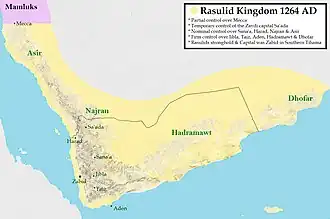 Rasulid Kingdom around 1264 AD (from History of Yemen)
 -
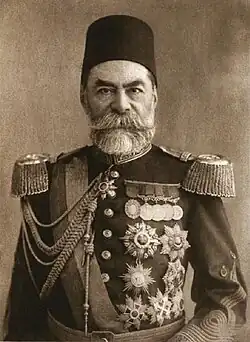
-
 Postage stamp of the Kathiri state of Sai'yun with portrait of Sultan Jafar bin Mansur. Kathiri is Kingdom of Hadhramaut Protected/Controlled British Empire. (from History of Yemen)
 -
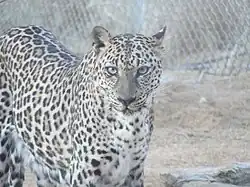 The critically endangered Arabian leopard (from Wildlife of Yemen)
 -
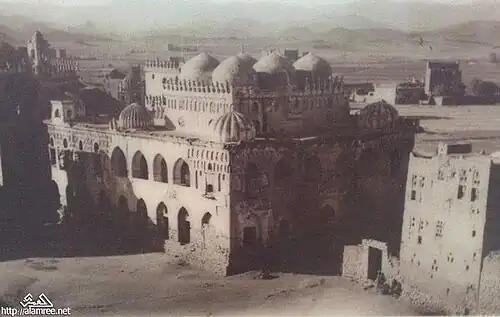 The Madrasa Amiriya of Rada, UNESCO Tentative Site (from Tourism in Yemen)
 -
.svg.png) Flag of the Colony of Aden. (from History of Yemen)
Flag of the Colony of Aden. (from History of Yemen) -
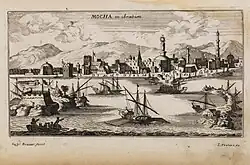 Mocha was Yemen's busiest port in the 17th and 18th century. (from History of Yemen)
 -
 Old City of Zabid, UNESCO World Heritage Site (from Tourism in Yemen)
 -
.jpg) Jibla and its surroundings, UNESCO Tentative Site (from Tourism in Yemen)
Jibla and its surroundings, UNESCO Tentative Site (from Tourism in Yemen) -
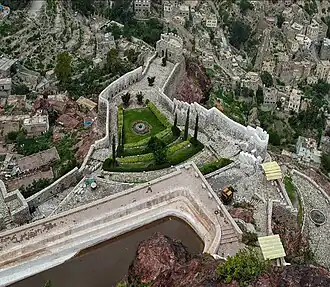 Al-Qahyra (Cairo) Castle's Garden in Ta'izz, the capital of Yemen during the Rasulid's era (from History of Yemen)
 -
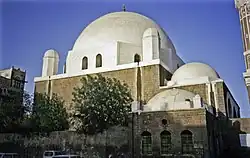
-
-
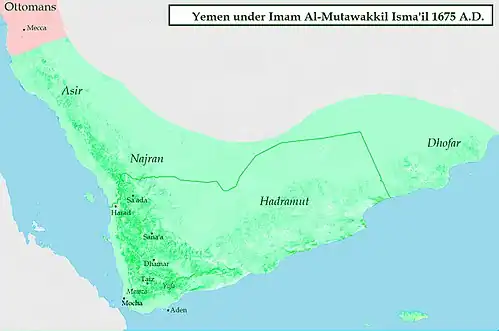 Zaidi State under the rule of Al-Mutawakkil Isma'il (1675) (from History of Yemen)
 -
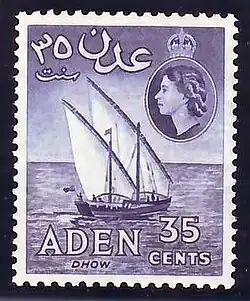
-
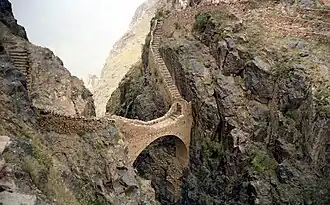 Bridge at Shaharah in the western highlands, with terracing at top right (from Wildlife of Yemen)
 -

-
 Old City of Sana'a, UNESCO World Heritage Site (from Tourism in Yemen)
 -
-
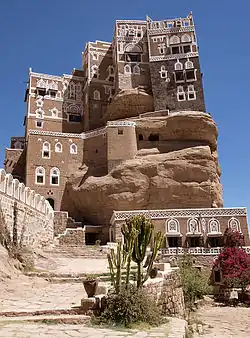 Imam Yahya hamid ed-Din's house in Sanaa(from History of Yemen)
 -
-
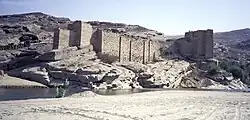 Ruins of The Great Dam of Marib (from History of Yemen)
 -
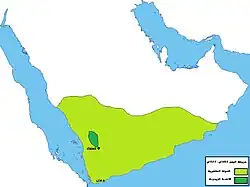 Tahirids in light green and Zaydi imams in dark green (from History of Yemen)
 -
 Arabian boduis farm couple, possibly Yemeni (Códice Casanatense, c. 1540) (from History of Yemen)
 -
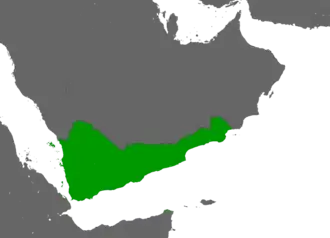 The Himyarite Kingdom at its height in 525 AD (from History of Yemen)
 -
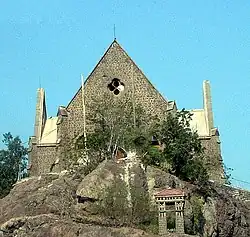 Saint Mary's Garrison church in Aden was built by the British in 1850 and is currently abandoned. (from History of Yemen)
 -
 Old Walled City of Shibam, UNESCO World Heritage Site (from Tourism in Yemen)
 -
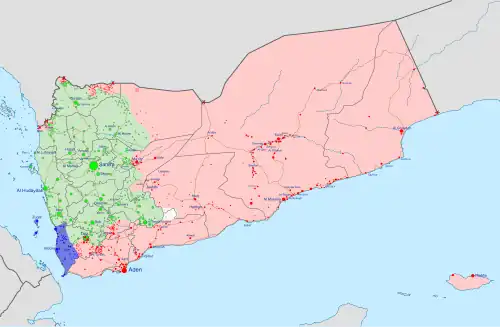 Current (January 2025) political and military control in ongoing Yemeni Civil War (2014–present)Controlled by the Government of Yemen (under the Presidential Leadership Council since April 2022) and allies(from History of Yemen)
 -
 Slave-market in the town of Zabid in Yemen. Illustration from the 1237 Maqamat al-Hariri produced in Baghdad by al-Wasiti (Arabe 5847) (from History of Yemen)
 -
 Sabaean gravestone of a woman holding a stylized sheaf of wheat, a symbol of fertility in ancient Yemen (from History of Yemen)
 -
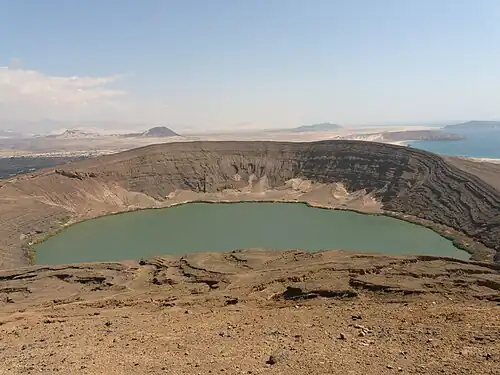 Balhaf/Burum coastal area, UNESCO Tentative Site (from Tourism in Yemen)
 -
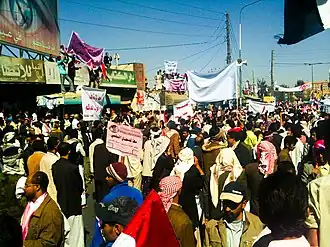 Protest in Sanaa, 3 February 2011 (from History of Yemen)
 -
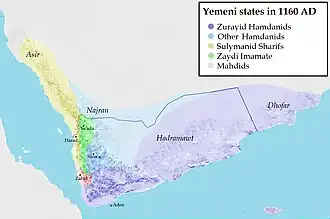 Zurayid Kingdom and the neighbouring polities (from History of Yemen)
 -
 Queen Arwa al- Sulaihi Palace (from History of Yemen)
 -
 The Historic City of Thula, UNESCO Tentative Site (from Tourism in Yemen)
 -
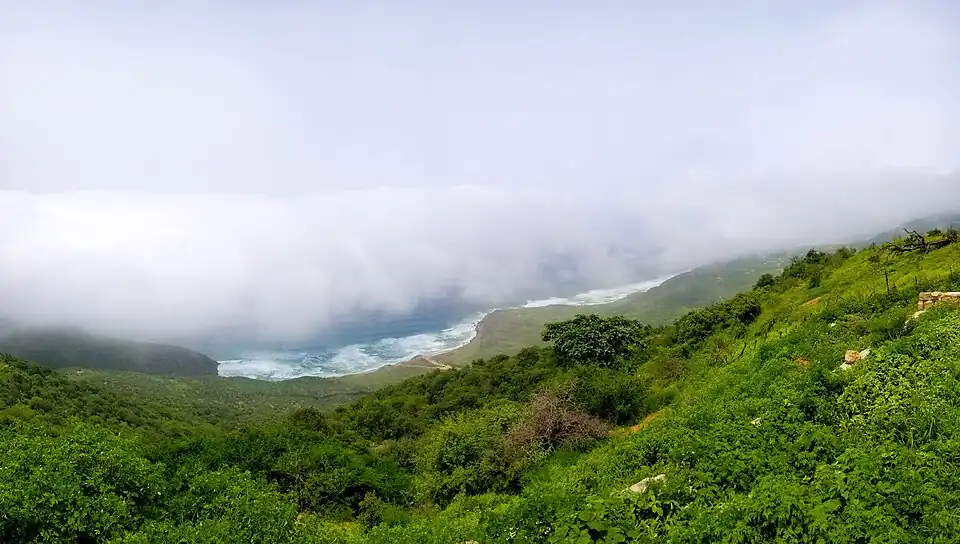 Hawf, UNESCO World Heritage Site (from Tourism in Yemen)
 -
.png) Map of Yemen and its environs on the eve of World War I (from History of Yemen)
Map of Yemen and its environs on the eve of World War I (from History of Yemen) -
.jpg) The Qadi of Sa'dah, Yemen, in 1200-1210, according to the Maqamat al-Hariri (BNF 3929) (from History of Yemen)
The Qadi of Sa'dah, Yemen, in 1200-1210, according to the Maqamat al-Hariri (BNF 3929) (from History of Yemen) -
 Interior of the Great Mosque of Sanaa, the oldest mosque in Yemen (from History of Yemen)
Selected city -
.jpg)
Sanaa, officially the Sanaa Municipality, is the capital and largest city of Yemen. The city is the capital of the Sanaa Governorate, but is not part of the governorate, as it forms a separate administrative unit. At an elevation of 2,300 metres (7,500 ft), Sanaa is the seventh highest capital city in the world and is next to the Sarawat Mountains of Jabal An-Nabi Shu'ayb and Jabal Tiyal, considered to be the highest mountains in the Arabian Peninsula and one of the highest in the Middle East.
Sanaa has a population of approximately 3,300,000 (2023), making it Yemen's largest city. As of 2020, the greater Sanaa urban area makes up about 10% of Yemen's total population. The Old City of Sanaa, a UNESCO World Heritage Site, has a distinctive architectural character, most notably expressed in its multi-story buildings decorated with geometric patterns. Al-Saleh Mosque, the largest in the country, is located in the southern outskirts of the city. (Full article...)
List of selected cities
|
|---|
Selected picture -
-
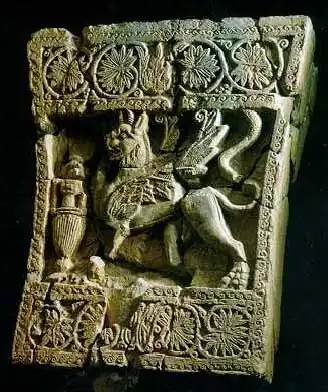 A Griffon from the royal palace at Shabwa, the capital city of Hadhramaut
 -
A bronze statue of Dhamar Ali Yahbur II, a Himyarite Kingdom king who probably reigned in late 3rd or early 4th century AD. Displayed in the Sana'a National Museum.
-
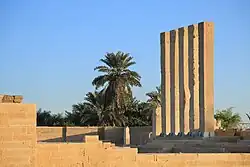 Barran Temple in Marib.
 -
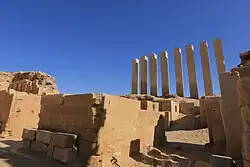 Temple of Awwam in Marib.
 -
%252C_1902.jpg) Jews of Maswar, Yemen, in 1902
Jews of Maswar, Yemen, in 1902 -
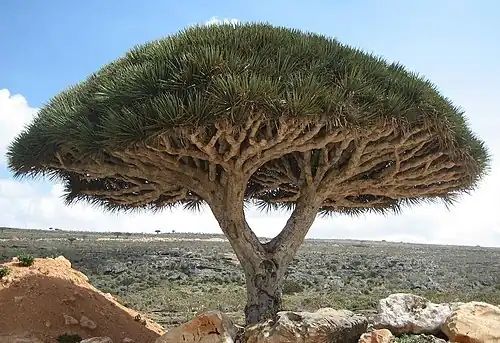
dragon's blood tree (Dracaena cinnabari) in Socotra
-
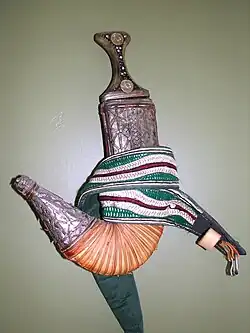 A Yemeni Jambiya
 -
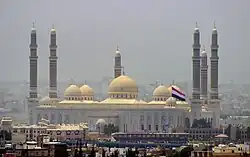 Al Saleh Mosque in Sana'a.
 -
Ruins of the Great Marib Dam (1988)
-
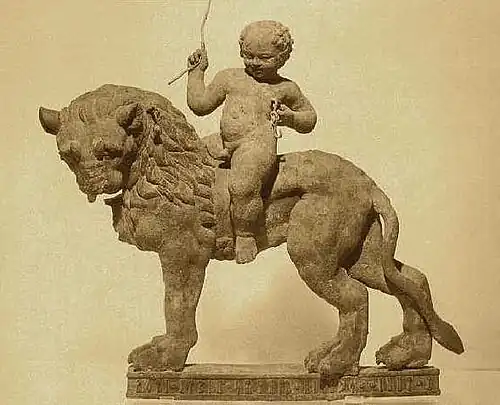 Bronze lion with a rider made by Qatabanians the circa 75-50 BCE.
 -
.jpg) Seiyun Palace was the royal residence of the sultan of Kathiri, located in the town of Seiyun in the Hadhramaut region, Yemen. It is one of the world’s largest mud-brick structures.
Seiyun Palace was the royal residence of the sultan of Kathiri, located in the town of Seiyun in the Hadhramaut region, Yemen. It is one of the world’s largest mud-brick structures.
Selected cuisines, dishes and foods -

Saltah (Arabic: سلتة) is a traditional Yemeni dish. Saltah is considered to be the national dish of Yemen. In the Ottoman Empire, saltah was used as a charitable food and was made with leftover food that was donated by the wealthy or the mosques. It is widely eaten in northern parts of the country. It is mainly served for lunch. The base is a brown meat stew called maraq, a dollop of fenugreek froth, and sahawiq (a mixture of chillies, tomatoes, garlic, and herbs ground into a salsa). Rice, potatoes, scrambled eggs, sambal and vegetables are common additions to saltah. It is eaten traditionally with khubz mulawah, a Yemeni flatbread used as a utensil to scoop up the dish. (Full article...)
Related portals
Religions in Yemen
Arab states
Related portals
Categories

Topics
Yemen articles | ||||||||
|---|---|---|---|---|---|---|---|---|
| History |
|  | ||||||
| Geography |
| |||||||
| Politics |
| |||||||
| Economy | ||||||||
| Society |
| |||||||
| ||||||||
| Africa | .svg.png) | ||
|---|---|---|---|
| Americas | |||
| Asia | |||
| Europe |
| ||
| Multilateral relations | |||
| Diplomatic missions | |||
| Related topics | |||
| Religions | |
|---|---|
| Main ethnic groups | |
| Foreign nationals | |

| Arabian Sea & Guardafui Channel |
| |
|---|---|---|
| Red Sea |
| |



Related portals
Religions in Yemen
Arab states
Related portals
Associated Wikimedia
The following Wikimedia Foundation sister projects provide more on this subject:
-
 Commons
Free media repository -
 Wikibooks
Free textbooks and manuals -
 Wikidata
Free knowledge base -
 Wikinews
Free-content news -
 Wikiquote
Collection of quotations -
 Wikisource
Free-content library -
 Wikiversity
Free learning tools -
 Wiktionary
Dictionary and thesaurus
More portals
-
 List of all portals
 -

-

-

-
-

-

-

-

-

-
 Random portal
 -
 WikiProject Portals