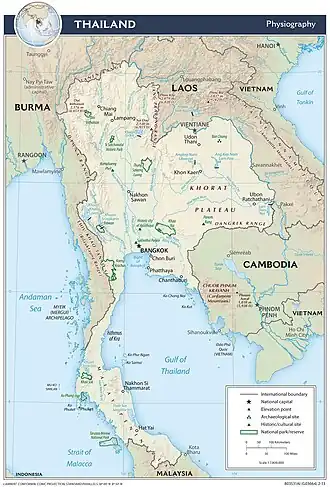
Thailand, officially the Kingdom of Thailand, and formerly known as Siam until 1939, is a country located in mainland Southeast Asia. It shares land borders with Myanmar to the west and northwest, Laos to the east and northeast, Cambodia to the southeast, and Malaysia to the south. Its maritime boundaries include the Gulf of Thailand and the Andaman Sea, as well as maritime borders with Vietnam, Indonesia, and India. Thailand has a population of nearly 66 million people and covers an area of approximately 513,115 km2 (198,115 sq mi). The country's capital and largest city is Bangkok.
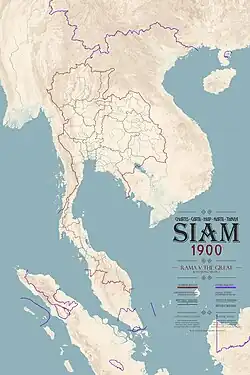
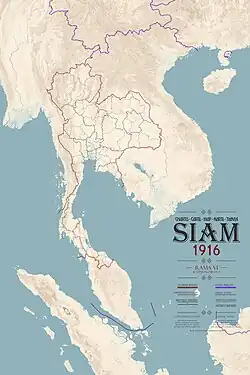
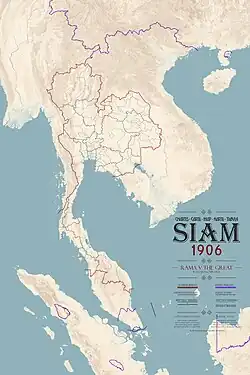
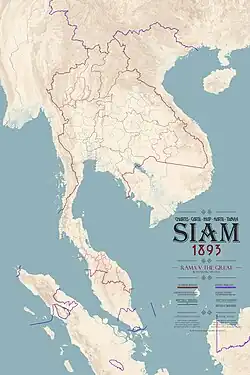
After the fall of Ayutthaya, King Taksin reunified the kingdom and established the Thonburi Kingdom, which lasted only 15 years before he was overthrown by Phutthayotfa Chulalok (Rama I), the founder of the Chakri dynasty. King Rama I established the Rattanakosin Kingdom and moved the capital to Bangkok in 1782. During the era of Western imperialism, Siam remained the only country in Southeast Asia to avoid colonization by European powers, although it ceded territory, trade rights, and legal privileges through several unequal treaties. The governance system evolved into an absolute monarchy centralized under the rule of King Chulalongkorn (Rama V). Siam adapted to international relations during the imperialist era and joined World War I on the side of the Allies, a political decision aimed at revising the effects of unequal treaties and enhancing Siam's international status.
In Thailand, protests began in early 2020 with demonstrations against the government of Prime Minister Prayut Chan-o-cha. They later expanded to include the unprecedented demands for reform of the Thai monarchy. The protests were initially triggered by the dissolution of the Future Forward Party (FFP) in late February 2020 which was critical of Prayut, the changes to the Thai constitution in 2017, and the country's political landscape that it gave rise to.
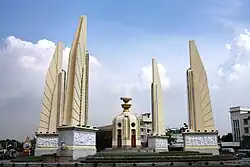
This first wave of protests was held exclusively on academic campuses and was brought to a halt by the COVID-19 pandemic. Protests resumed on 18 July 2020 with a large demonstration organised under the Free Youth umbrella at the Democracy Monument in Bangkok. Three demands were presented to the Government of Thailand: the dissolution of parliament, ending intimidation of the people, and the drafting of a new constitution. The July protests were triggered by the impact of the COVID-19 pandemic and enforcement of the lockdown Emergency Decree and spread nationwide. The protesters were mostly students and young people without an overall leader. (Full article...)
Image 3
In a rural hill tribe in Northern Thailand, a villager smiles with stained teeth from her Betel Chew. Betel quid chewing has always been an important part of Thai culture and tradition. In the past, betel chewing was a popular daily activity among Thais all over the country. Betel comes from the plant known as Areca catechu, which grows wild all over Thailand and is known as หมาก (maak). (Full article...)
Image 4
Official portrait, c. 1940s
Plaek Phibunsongkhram (14 July 1897 – 11 June 1964) was a Thai military officer and politician who served as the third prime minister of Thailand from 1938 to 1944 and again from 1948 to 1957. He rose to power as a leading member of the Khana Ratsadon, becoming prime minister in 1938 and later consolidating his influence as a military dictator. His regime allied with the Empire of Japan during World War II, and his administration was marked by authoritarian policies and the promotion of Thai nationalism. He was closely involved in both domestic reforms and foreign policy during the war and played a central role in shaping modern Thai state ideology.
Thai cooking places emphasis on lightly prepared dishes with aromatics and spicy heat. The Australian chef David Thompson, an expert on Thai food, observes that unlike many other cuisines, Thai cooking is "about the juggling of disparate elements to create a harmonious finish. Like a complex musical chord it's got to have a smooth surface but it doesn't matter what's happening underneath. Simplicity isn't the dictum here, at all." (Full article...)
Image 6
Graph showing homicide rate in Thailand from 1995 to 2015 Crime in Thailand has been a defining issue in the country for decades, inspiring years of policy and international criticism. Drug use and corruption make up the majority of the crime in Thailand and due to this, many Thai administrations attempted to curtail the drug trade, most notably Thaksin Shinawatra with the 2003 War on Drugs. Since 2003 crime has been decreasing with the crime rate decreasing from 9.97 to 2.58. Despite this, juvenile delinquency has been increasing in recent years. The Murder rate In Thailand per 100,000 populations was 1.84 in 2021, 1.9 in 2022, 2.2 in 2023 and 2.6 in 2024. In November 2015, The New York Times reported that in the fiscal year ending September 2015, the national police have seen a surge in thefts, burglaries, and robberies, more than 75,557 thefts and other property crimes in the fiscal year, 10.5 percent higher than the previous year. Violent crime was up 8.6 percent during the same period. These figures have been contested by the police and by Amorn Wanichwiwatana, a criminologist at Chulalongkorn University, who said he was not aware of any significant uptick in crime since the military came to power. "I don’t think that’s the case. It's not possible," he said of the 60 percent increase reported by the Times. Crime statistics from the Royal Thai Police (RTP) show a statistically negligible increase of 1.9 percent over the same period, with 920 additional crimes reported after an overall decline since 2009. (Full article...)
Image 7
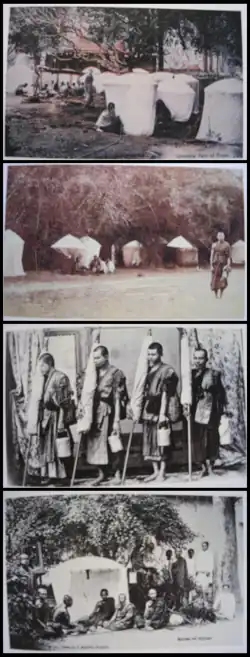
Postcards of monks on Dhutanga in the early 20th century The Kammatthana meditation tradition originally grew out of the Dhammayut reform movement, founded by Mongkut in the 1820s as an attempt to raise the bar for what was perceived as the "lax" Buddhist practice of the regional Buddhist traditions at the time. Mongkut's reforms were originally focused on scriptural study of the earliest extant Buddhist texts, revival of the dhutanga ascetic practices, and close adherence to the Buddhist Monastic Code (Pali: vinaya). However, the Dhammayut began to have an increasing emphasis on meditation as the 19th century progressed. During this time, a newly ordained Mun Bhuridatto went to stay with Ajahn Sao Kantasīlo, who was then the abbot of a small meditation-oriented monastery on the outskirts of Ubon Ratchathani, a province in the predominantly Lao-speaking cultural region of Northeast Thailand known as Isan.
Ajahn Mun learned from Ajahn Sao in the late 19th century, where he studied amidst the growing meditation culture in Isan's Dhammayut monasteries as a result of Mongkut's reforms a half-century earlier. Wandering the rural frontier of Northeast Thailand with Ajahn Sao in rigorous ascetic practices (Pali: dhutanga; Thai: tudong). Ajahn Mun traveled abroad to neighboring regions for a time, hoping to reach levels of meditative adeptness known as the noble attainments (Pali: ariya-phala), which culminate in the experience of Nibbana — the final goal of a Theravada Buddhist practitioner. (Full article...)
Image 8
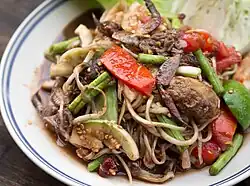
Green papaya salad with yardlong beans, chili, pla ra, brined crab, hog plum and lime
Green papaya salad is a spicy salad made from shredded unripe papaya. Originating in Laos, it is a national dish and a cornerstone of Lao cuisine, known locally as tam som or tam mak hoong. The dish exemplifies bold, vibrant flavors, blending sour, spicy, salty, and sweet elements, and holds deep cultural significance in Laos.
Green papaya salad is also widely popular in Thailand, particularly in the Isan region, which shares close ethnic and cultural ties with Laos due to its predominantly ethnic Lao population. Introduced to Thailand via Isan, the dish—called som tam in Thai—became a staple of Thai cuisine and spread nationwide. Beyond Laos and Thailand, green papaya salad has also gained regional prominence across continental Southeast Asia, including Cambodia, Myanmar, and Vietnam. (Full article...)
Image 9
Pridi in 1946
Pridi Banomyong (Thai: ปรีดี พนมยงค์, RTGS: Pridi Phanomyong, pronounced[prīː.dīːpʰā.nōm.jōŋ]; 11 May 1900 – 2 May 1983), also known by his noble title Luang Praditmanutham (Thai: หลวงประดิษฐ์มนูธรรม), was a Thai lawyer, professor, activist, politician, democratic socialist, and senior statesman. He served in multiple ministerial posts, as regent, and as prime minister in Thailand. He led the civilian wing of Khana Ratsadon, and helped found the University of Moral and Political Sciences and the Bank of Thailand.
Born to a family of farmers in Ayutthaya province, he received a good education, becoming one of the nation's youngest barristers in 1919, at the age of nineteen. In 1920, he won a royal scholarship granted by the King of Siam to study in France, where he graduated from the University of Caen with a master's degree, and received a doctorate from the University of Paris in 1927. In the same year, he co-founded Khana Ratsadon with like-minded Siamese overseas royal-sponsored students. After returning to Thailand, still called Siam at the time, he worked as a judge, judicial secretariat, and professor. In the aftermath of 1932 Siamese Revolution, he played an important role in drafting two of the country's first constitutions and proposing a socialist economic plan influenced by communism scheme, principles and conducts. His plan was ill-received, and Pridi went into a short period of political exile as aftermatch of the fight-for-power with his fellow revolutionists. On his return, he took many ministerial posts in Khana Ratsadon governments. His contributions include modernizing Thai legal codes, laying the foundation for Thailand's local government system, negotiating the cancellation of unequal treaties with the West, and tax reform. (Full article...)
Image 10
Street stall pad thai from Chiang Mai in northern Thailand served with bean sprouts and green onion
Pad thai (/ˌpɑːdˈtaɪ/ or /ˌpædˈtaɪ/; Thai: ผัดไทย, RTGS: phat thai, ISO: p̄hạd thịy, pronounced[pʰàt̚tʰāj]ⓘ) is a stir-friedrice noodle dish commonly served as a street food in Thailand as part of Thai cuisine. It is typically made with rice noodles, shrimp, peanuts, green onions, scrambled egg, sugar and bean sprouts. The ingredients are fried in a wok. (Full article...)
General images
The following are images from various Thailand-related articles on Wikipedia.
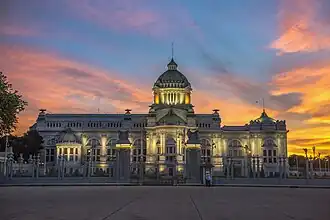
Image 18Ananta Samakhom Throne Hall, the royal reception hall built in European architectural style. Construction was started by Rama V, but was completed in 1915. (from History of Thailand)
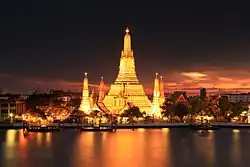
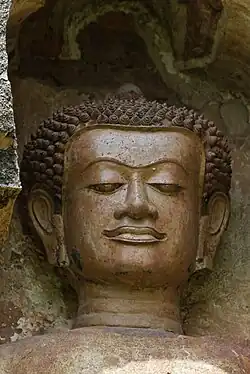
Image 25Wat Arun, the most prominent temple of the Thonburi period, derives its name from the Hindu god Aruṇa. Its main prang was constructed later in the Rattanakosin period. (from History of Thailand)
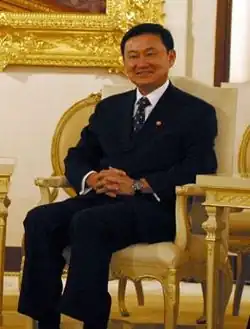
Image 26Thaksin Shinawatra, Prime Minister of Thailand, 2001–2006. (from History of Thailand)
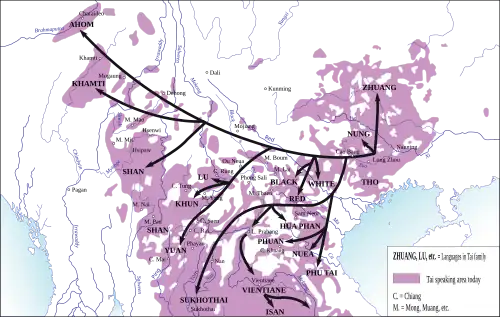
Image 28Map showing linguistic family tree overlaid on a geographic distribution map of Tai-Kadai family. This map only shows general pattern of the migration of Tai-speaking tribes, not specific routes, which would have snaked along the rivers and over the lower passes. (from History of Thailand)
Image 38King Bhumibol in his birthday ceremony in 2007, celebrating his longest-reigning in Thai history. (from History of Thailand)
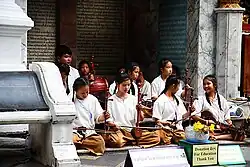
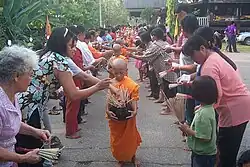
Image 39Display of respect of the younger towards the elder is a cornerstone value in Thailand. A family during the Buddhist ceremony for young men who are to be ordained as monks. (from Culture of Thailand)
This is a Good article, an article that meets a core set of high editorial standards.
A Man Will Rise (originally known as Local Hero) is an incomplete comedywestern film directed by Tony Jaa and Vitidnan Rojanapanich, and starring Jaa, Dolph Lundgren, Conan Stevens, and Byron Gibson. Set in 1950s Thailand, the film follows a local gangster who terrorizes a town. When a young man opposes him, the gangster hires a group of foreign hit men to kill the rebel and silence the town.
In January 2013, Jean-Claude Van Damme was rumored to be co-starring alongside Jaa; in reality, he was never available due to scheduling issues, and as a result, Lundgren was cast as an alternative. The film entered production in April 2013, but came to an abrupt halt after three months of filming. Sahamongkol Film International filed a $49–50 million lawsuit against Jaa, Universal Pictures, and United International Pictures, claiming Jaa was in breach of his contract by accepting a role in Fast and Furious 7. After two years of legal proceedings, Sahamongkol dropped the lawsuit in July 2015. Despite this, production of A Man Will Rise has not continued, and the film remains incomplete. (Full article...)
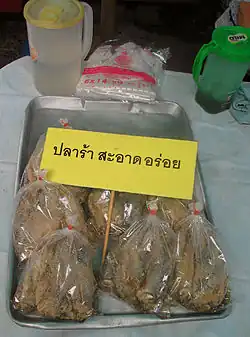
Pla ra (Thai: ปลาร้า, pronounced[plāːráː]; Northeastern Thai: ปลาแดก, pronounced[pàːdɛ̀ːk]), similar to padaek in Laos, is a traditional Thai seasoning produced by fermenting fish with rice bran or roasted rice flour and salt fermented in a closed container for at least six months. Fermented fish seasoning is commonly found in Cambodian, Lao, Mon, Thai and Vietnamese cuisine. Pla ra has a very strong smell, which is considered unpleasant by some people. Its flavors are salty and sour, depending on the amount of salt put in and lactic acid resulting from fermentation process. (Full article...)
... that the neighborhood Phahurat, before it became Bangkok's Little India, was an enclave of Vietnamese immigrants until a fire burned it down in 1898?







.jpg)
.jpg)
.jpg)

.png)







.jpg)


_Arc_de_Triomphe_WW1_1919.jpg)


.jpg)

.jpg)
.jpg)


.jpg)









_-_img_08.jpg)



.png)


.jpg)


.jpeg)




.jpg)




 Commons
 Wikibooks
 Wikidata
 Wikinews
 Wikiquote
 Wikisource
 Wikispecies
 Wikiversity
 Wikivoyage
 Wiktionary
 List of all portals





 Random portal
 WikiProject Portals