Portal:Renewable energy

 
|
The Renewable Energy Portal
|
 
|
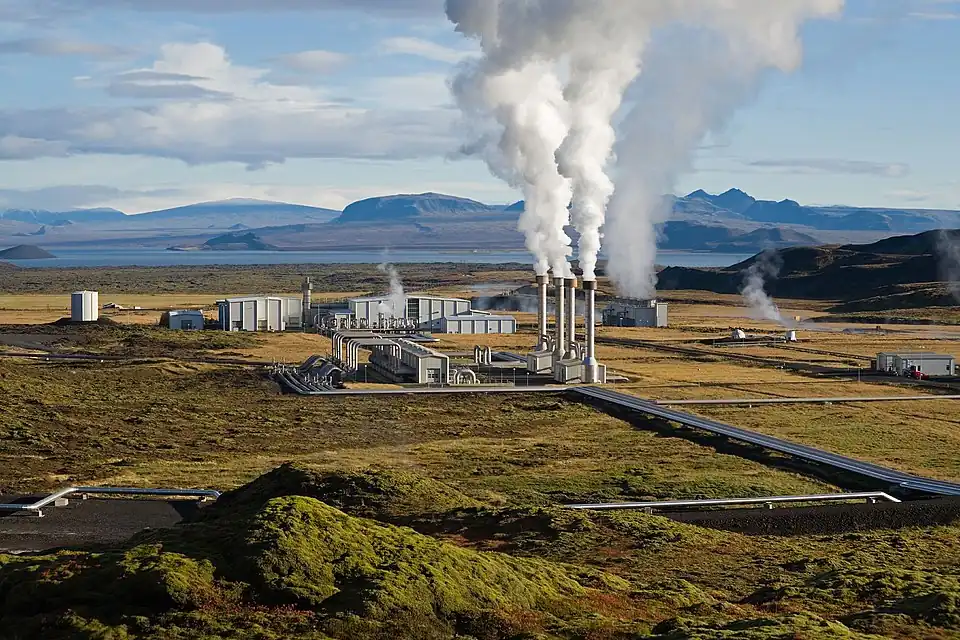
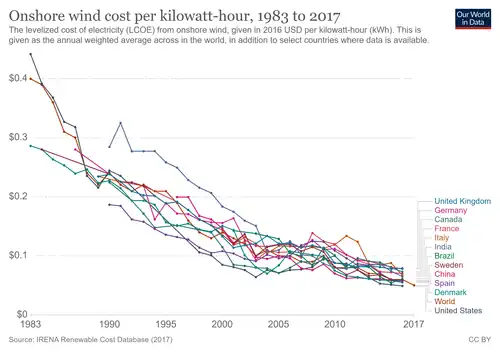
Introduction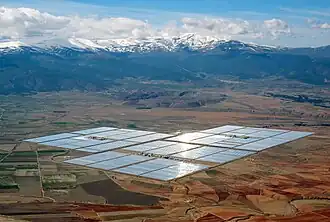 Renewable energy (also called green energy) is energy made from renewable natural resources that are replenished on a human timescale. The most widely used renewable energy types are solar energy, wind power, and hydropower. Bioenergy and geothermal power are also significant in some countries. Renewable energy installations can be large or small and are suited for both urban and rural areas. Renewable energy is often deployed together with further electrification. This has several benefits: electricity can move heat and vehicles efficiently and is clean at the point of consumption. Variable renewable energy sources are those that have a fluctuating nature, such as wind power and solar power. In contrast, controllable renewable energy sources include dammed hydroelectricity, bioenergy, or geothermal power. Renewable energy systems have rapidly become more efficient and cheaper over the past 30 years. A large majority of worldwide newly installed worldwide electricity capacity is now renewable. Renewable energy sources, such as solar and wind power, have seen significant cost reductions over the past decade, making them more competitive with traditional fossil fuels. In some geographic localities, photovoltaic solar or onshore wind is the cheapest new-build electricity. From 2011 to 2021, renewable energy grew from 20% to 28% of the global electricity supply. Power from the sun and wind accounted for most of this increase, growing from a combined 2% to 10%. Use of fossil energy shrank from 68% to 62%. In 2024, renewables accounted for over 30% of global electricity generation and are projected to reach over 45% by 2030. Many countries already have renewables contributing more than 20% of their total energy supply, with some generating over half or even all their electricity from renewable sources. The main motivation to use renewable energy instead of fossil fuels is to reduce greenhouse gas emissions, which cause climate change. In general, renewable energy sources pollute much less than fossil fuels. Renewables also cause much less air pollution than fossil fuels, improving public health, and are less noisy. The International Energy Agency estimates that to achieve net zero emissions by 2050, 90% of global electricity will need to be generated by renewables. The current pace of renewable expansion remains far from this required rate globally, including in major economies with high financial capacities such as the G7 and the EU. The deployment of renewable energy still faces obstacles, especially fossil fuel subsidies, lobbying by incumbent power providers, and local opposition to the use of land for renewable installations. Like all mining, the extraction of minerals required for many renewable energy technologies also results in environmental damage. Some also consider nuclear power a renewable power source, although this is controversial, as nuclear energy requires mining uranium, a nonrenewable resource. (Full article...) Selected article -The Hoover Dam is a concrete arch-gravity dam in the Black Canyon of the Colorado River, on the border between the U.S. states of Nevada and Arizona. Constructed between 1931 and 1936, during the Great Depression, it was dedicated on September 30, 1935, by President Franklin D. Roosevelt. Its construction was the result of a massive effort involving thousands of workers, and cost over 100 lives. Bills passed by Congress during its construction referred to it as Hoover Dam (after President Herbert Hoover), but the Roosevelt administration named it Boulder Dam. In 1947, Congress restored the name Hoover Dam. Since about 1900, the Black Canyon and nearby Boulder Canyon had been investigated for their potential to support a dam that would control floods, provide irrigation water, and produce hydroelectric power. In 1928, Congress authorized the project. The winning bid to build the dam was submitted by a consortium named Six Companies, Inc., which began construction in early 1931. Such a large concrete structure had never been built before, and some of the techniques used were unproven. The torrid summer weather and lack of facilities near the site also presented difficulties. Nevertheless, Six Companies turned the dam over to the federal government on March 1, 1936, more than two years ahead of schedule. Hoover Dam impounds Lake Mead and is located near Boulder City, Nevada, a municipality originally constructed for workers on the construction project, about 30 mi (48 km) southeast of Las Vegas, Nevada. The dam's generators provide power for public and private utilities in Nevada, Arizona, and California. Hoover Dam is a major tourist attraction, with 7 million tourists a year. The heavily traveled U.S. Route 93 (US 93) ran along the dam's crest until October 2010, when the Hoover Dam Bypass opened. (Full article...) Quotations -
Main topicsRenewable energy sourcesGeneralRenewable energy commercialization · Smart grid · Timeline of sustainable energy research 2020–present Renewable energy by countryList of countries by electricity production from renewable sources
WikiProjectsWikiProjects connected with renewable energy:
Selected image -Selected biography -Steven Chu FREng ForMemRS HonFInstP (Chinese: 朱棣文; pinyin: Zhū Dìwén; born February 28, 1948) is an American physicist and former government official. He is a Nobel laureate and was the 12th U.S. secretary of energy. He is currently the William R. Kenan Jr. Professor of Physics and Professor of Molecular and Cellular Physiology at Stanford University. He is known for his research at the University of California, Berkeley, and his research at Bell Laboratories and Stanford University regarding the cooling and trapping of atoms with laser light, for which he shared the 1997 Nobel Prize in Physics with Claude Cohen-Tannoudji and William Daniel Phillips. Chu served as U.S. Secretary of Energy under the administration of President Barack Obama from 2009 to 2013. At the time of his appointment as Energy Secretary, Chu was a professor of physics and molecular and cellular biology at the University of California, Berkeley, and the director of the Lawrence Berkeley National Laboratory, where his research was concerned primarily with the study of biological systems at the single molecule level. Chu resigned as energy secretary on April 22, 2013. He returned to Stanford as Professor of Physics, Molecular & Cellular Physiology, and Energy Science and Engineering. (Full article...) Did you know? -... that efficient energy use is most often achieved by adopting a more efficient technology or production process ? Energy efficient buildings, industrial processes and transportation could reduce the world's energy needs in 2050 by one third, and help controlling global emissions of greenhouse gases, according to the International Energy Agency. Energy efficiency and renewable energy are said to be the twin pillars of sustainable energy policy. General images -The following are images from various renewable energy-related articles on Wikipedia.
Related portalsCategories Select [►] to view subcategories
Renewable energy Renewable energy by continent Renewable energy by country Lists related to renewable energy Algaculture Anaerobic digestion Bioenergy Renewable energy certification Documentary films about alternative energy Geothermal energy Offshore test sites Renewable energy organizations People associated with renewable energy Renewable energy policy Renewable electricity Renewable energy economics Solar energy Renewable energy technology Water power Wind power Renewable energy stubs Associated WikimediaThe following Wikimedia Foundation sister projects provide more on this subject:
Discover Wikipedia using portals
|

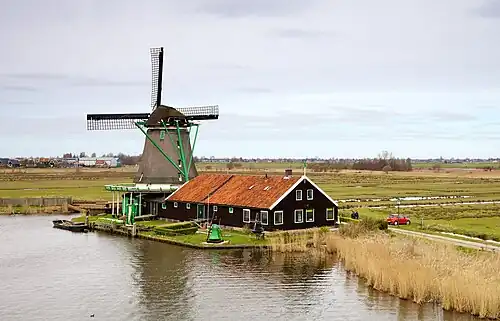




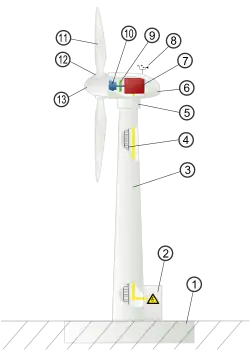


.jpg)
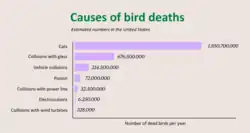



![Image 18Concentrated solar panels are getting a power boost. Pacific Northwest National Laboratory (PNNL) will be testing a new concentrated solar power system – one that can help natural gas power plants reduce their fuel usage by up to 20 percent.[needs update] (from Solar energy)](./_assets_/0c70a452f799bfe840676ee341124611/Photo_of_the_Week-_Boosting_Solar_Technology_(8722948189).jpg)