Portal:Paleontology
|
The Palaeontology Portal
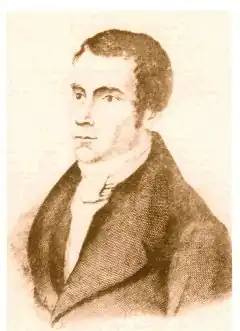
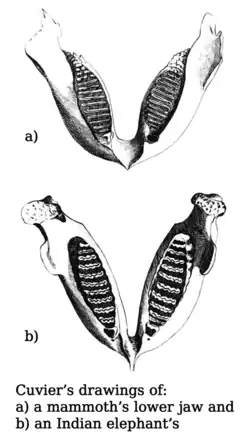
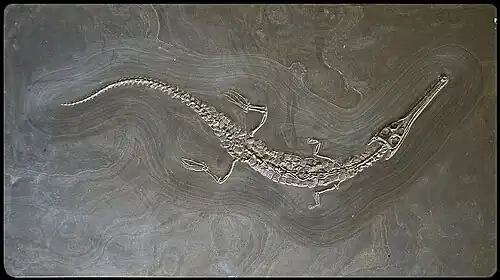
Introduction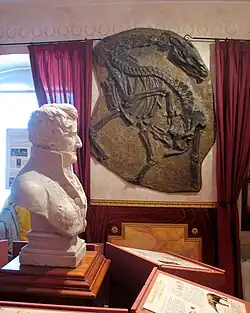 Paleontology or palaeontology is the scientific study of the life of the past, mainly but not exclusively through the study of fossils. Paleontologists use fossils as a means to classify organisms, measure geologic time, and assess the interactions between prehistoric organisms and their natural environment. While paleontological observations are known from at least the 6th century BC, the foundation of paleontology as a science dates back to the work of Georges Cuvier in 1796. Cuvier demonstrated evidence for the concept of extinction and how the life of the past was not necessarily the same as that of the present. The field developed rapidly over the course of the following decades, and the French word paléontologie was introduced for the study in 1822, which was derived from the Ancient Greek word for 'ancient' and words describing relatedness and a field of study. Further advances in the field accompanied the work of Charles Darwin who popularized the concept of evolution. Together, evolution and extinction can be understood as complementary processes that shaped the history of life. Paleontology overlaps the most with the fields of geology and biology. It draws on technology and analysis of a wide range of sciences to apply them to the study of life and environments of the past, particularly for the subdisciplines of paleobiology and paleoecology that are analogous to biology and ecology. Paleontology also contributes to other sciences, being utilized for biostratigraphy to reconstruct the geologic time scale of Earth, or in studies on extinction to establish both external and internal factors that can lead to the disappearance of a species. Much of the history of life is now better understood because of advances in paleontology and the increase in interdisciplinary studies. Several improvements in understanding have occurred from the introduction of theoretical analysis to paleontology in the 1950s and 1960s which led to the rise of more focused fields of paleontology that assess the changing geography and climate of Earth, the phylogenetic relationships between different species, and the analysis of how fossilization occurs and what biases can impact the quality of the fossil record. (Full article...) Selected article on the prehistoric world and its legacies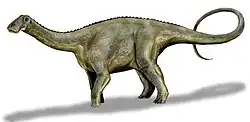 Nigersaurus was 9 m (30 ft) long, which is small for a sauropod, and had a short neck. It weighed around four tonnes, comparable to a modern elephant. Its skeleton was filled with air spaces connected to air sacs, but the limbs were robustly built. Its skull was very specialised for feeding, with a wide muzzle filled with more than 500 teeth. The jaws may have borne a keratinous sheath. Unlike other tetrapods, the tooth-bearing bones of its jaws were rotated transversely relative to the rest of the skull, so that all of its teeth were located far to the front. Nigersaurus was probably a browser, and fed with its head close to the ground. It lived in a riparian habitat, and its diet probably consisted of soft plants, such as ferns, horsetails, and angiosperms. It is one of the most common fossil vertebrates found in the area, and shared its habitat with other dinosaurian megaherbivores, as well as large theropods and crocodylomorphs. (see more...) Did you know?
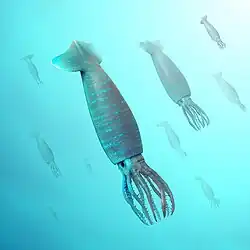
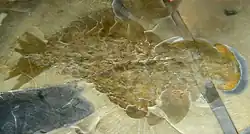
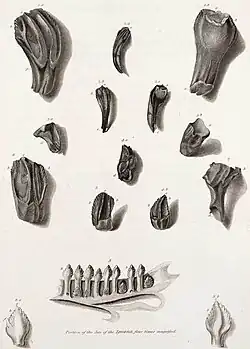
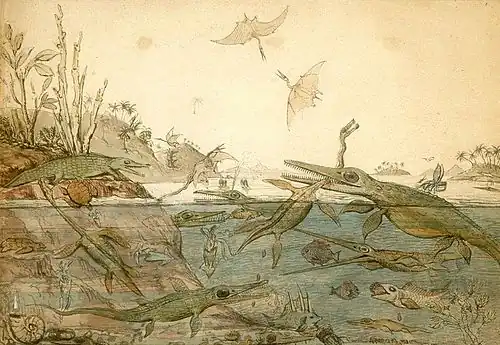
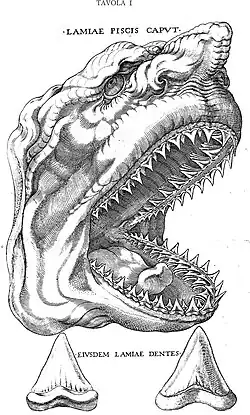
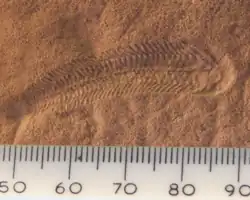
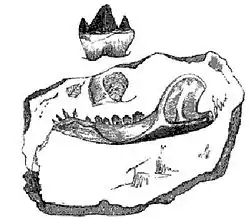
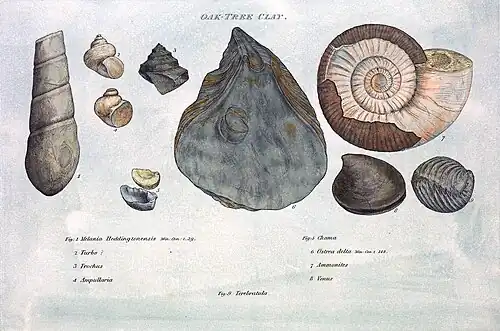
General images -The following are images from various paleontology-related articles on Wikipedia.
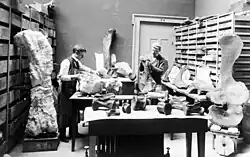
Selected article on paleontology in human science, culture and economics.png) Paleontology lies on the border between biology and geology. It now uses techniques drawn from a wide range of sciences, including biochemistry, mathematics and engineering. Use of all these techniques has enabled paleontologists to discover much of the evolutionary history of life, almost all the way back to when Earth became capable of supporting life, about 3,800 million years ago. As knowledge has increased, paleontology has developed specialized sub-divisions, some of which focus on different types of fossil organisms while others study ecology and environmental history, such as ancient climates. Body fossils and trace fossils are the principal types of evidence about ancient life, and geochemical evidence has helped to decipher the evolution of life before there were organisms large enough to leave fossils. (see more...) On this day...
Estimating Mass Properties of Dinosaurs Using Laser Imaging and 3D Computer Modelling Karl T. Bates, Phillip L. Manning, David Hodgetts, William I. Sellers published 19 Feb 2009 Selected image
Categories Select [►] to view subcategories
Paleontology Paleontology by country Paleontology lists Subfields of paleontology Paleontology awards Paleontology in the Caribbean Paleontological concepts and hypotheses Dinosaurs Economic paleontology Evolution of the biosphere Fossil record History of paleontology Paleontology images Paleontological institutions and organizations Prehistoric life Paleontology mass media Paleontological sites Paleontologists Paleontology by year Paleontology stubs TopicsGeneral - Paleontology - Fossil - Evolution - Extinction Quality ContentFeatured paleontology articles
- Achelousaurus
- Acrocanthosaurus
- Albertosaurus
- Allosaurus
- Amargasaurus
- Ankylosaurus
- Apatosaurus
- Archaeopteryx
- Baryonyx
- Carnotaurus
- Catopsbaatar
- Ceratosaurus
- Chicxulub Crater
- Compsognathus
- Cretaceous–Tertiary extinction event
- Daspletosaurus
- Deinocheirus
- Deinonychus
- Deinosuchus
- Dilophosaurus
- Dinosaur
- Diplodocus
- Dromaeosauroides
- Edmontosaurus
- Elasmosaurus
- Giganotosaurus
- Gorgosaurus
- Herrerasaurus
- Iguanodon
- Istiodactylus
- Lambeosaurus
- List of dinosaur genera
- Majungasaurus
- Massospondylus
- Megalodon
- Nemegtomaia
- Nigersaurus
- Opisthocoelicaudia
- Paranthodon
- Parasaurolophus
- Plateosaurus
- Psittacosaurus
- Seorsumuscardinus
- Spinosaurus
- Stegosaurus
- Stegoceras
- Styracosaurus
- Tarbosaurus
- Thescelosaurus
- Triceratops
- Tyrannosaurus
- Velociraptor
Things you can do
Current Paleontology FACs - None yet... WikiProjects
Related portalsAssociated WikimediaThe following Wikimedia Foundation sister projects provide more on this subject:
Discover Wikipedia using portals
|