Portal:Cheshire
|
The Cheshire Portal
Welcome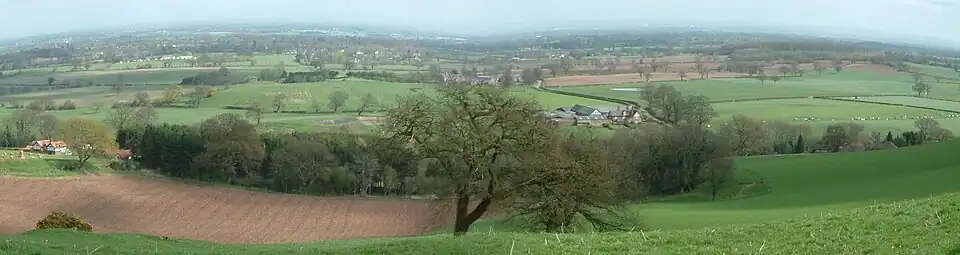 Cheshire Plain from the Mid Cheshire Ridge
Cheshire is a ceremonial county in the North West of England. Chester is the county town, and formerly gave its name to the county. The largest town is Warrington, and other major towns include Congleton, Crewe, Ellesmere Port, Macclesfield, Nantwich, Northwich, Runcorn, Sandbach, Widnes, Wilmslow and Winsford. The county is administered as four unitary authorities. Cheshire occupies a boulder clay plain (pictured) which separates the hills of North Wales from the Peak District of Derbyshire. The county covers an area of 2,343 km2 (905 sq mi), with a high point of 559 m (1,834 ft) elevation. The estimated population is a little over one million, 19th highest in England, with a population density of around 450 people per km2. The county was created in around 920, but the area has a long history of human occupation dating back to before the last Ice Age. Deva was a major Roman fort, and Cheshire played an important part in the Civil War. Predominantly rural, the county is historically famous for the production of Cheshire cheese, salt and silk. During the 19th century, towns in the north of the county were pioneers of the chemical industry, while Crewe became a major railway junction and engineering facility. Selected article
Norton Priory was established as an Augustinian foundation in 1115 by William fitz Nigel, second Baron of Halton. The original priory in Runcorn was the second religious house to be founded in the Chester earldom. The priory was moved to the nearby village of Norton in 1134 by William fitz William, the third baron, and was raised to the status of an abbey in 1391. The abbey closed in 1536 as part of the dissolution of the monasteries; Norton was purchased by Sir Richard Brooke and most of the monastic buildings were demolished. Excavation of Norton Priory began in 1971, and was the largest modern excavation of a monastic site in Europe. It revealed the foundations and lower parts of the walls of the monastery buildings and the abbey church. Important finds included a Norman doorway, a finely carved arcade, a floor of mosaic tiles (the largest floor area of this type to be found in any modern excavation), the remains of the kiln, a bell pit used for casting the bell, and a large medieval statue of St Christopher. The site is open to the public, and includes a museum, the archaeological findings and the surrounding gardens and woodland. Selected image
Salt-making by the open-pan method dates back to the Roman occupation, and was one of Cheshire's major industries. The Lion Salt Works was the last place in the county to use the method. It closed in 1986, when this picture was taken, and is now a museum. Credit: Chris Allen (8 June 1986) In this month
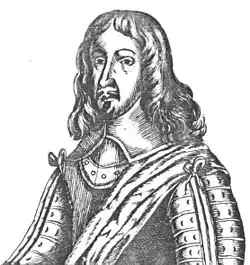
1 February 1863: Artist and printmaker John Romney died in Chester. 1 February 1869: The first goods train crossed Runcorn Railway Bridge. 3 February 1646: Chester surrendered during the Civil War. 3 February 1857: First meeting of Cheshire Police committee. 3 February 1885: Foundation stone of Grosvenor Museum laid by the Duke of Westminster. 4 February 1253–4: Lordship of Chester gifted to Edward, heir of Henry III. 5 February 1977: Olympic gold medallist sailor Ben Ainslie born in Macclesfield. 6 February 1987: Lindow III discovered at Lindow Moss. 9 February 1539: First recorded race at Chester Racecourse. 13 February 1839: Riot at Chester Castle in support of poachers awaiting trial. 14 February 1926: Fire partially destroyed Oulton Hall. 15 February 1918: Physicist John Holt born in Runcorn. 19 February 1943: Nobel prize winning biochemist Tim Hunt born in Neston. 20 February 1643: Beeston Castle seized from the Royalists by Parliamentary forces commanded by Sir William Brereton (pictured). 20 February 1907: Radar pioneer Skip Wilkins born in Chorlton. 21 February 2008: Sunny Lowry, first woman to swim the Channel, died in Warrington. 26 February 1993: IRA explosive devices went off at Warrington gasworks. Selected list
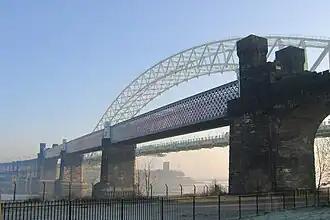
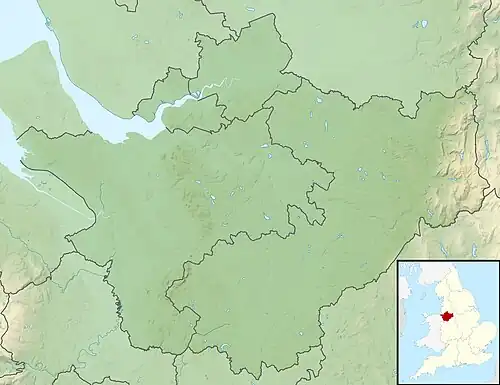
The 61 listed buildings in Runcorn urban area include two at Grade I, nine at Grade II* and 50 at Grade II. Runcorn's earliest listed buildings, Halton Castle and Norton Priory, date from the 11th and 12th centuries and are now in ruins. The oldest standing building, the Seneschal's House, dates from 1598. Other early buildings include ones relating to stately homes, such as the loggia and ice house in the grounds of Norton Priory; domestic buildings, such as Halton Old Hall, and church-related buildings, such as Halton Vicarage and the Chesshyre Library. The diversity of Runcorn's buildings increased during the Industrial Revolution. Structures such as Bridgewater House were associated with industry, while large domestic buildings such as Halton Grange were financed by the new wealth created. The enlarged town required new civic buildings and transport infrastructure such as the railway bridge (pictured) and the tide dock, while the needs of the growing population were met by structures such as Norton Water Tower. The most recent listed structure is the Silver Jubilee Bridge, constructed in 1961. GeographyTop: Map of modern Cheshire showing urban areas (grey) and the major road network. Chester (red) is the county town, and Warrington has the greatest population. Towns with more than 10,000 inhabitants in 2011 are highlighted; the size of dot gives a rough indication of the relative population. Wales and the adjacent English counties are shown in capitals. Bottom: Relief map showing the major hills. The Mid Cheshire Ridge is a discontinuous ridge of low hills running north–south from Beacon Hill (north of Helsby Hill) to Bickerton Hill. Most other high ground falls within the Peak District in the east of the county. Shining Tor (559 metres), on the boundary with Derbyshire, forms the county's high point.
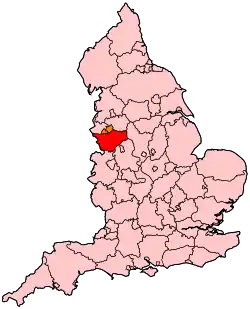
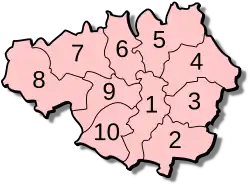
Administration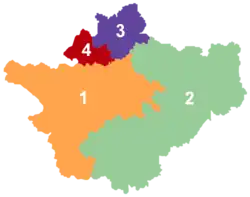 The ceremonial county of Cheshire is administered by four unitary authorities (click on the map for details): 2 – Cheshire East 3 – Warrington 4 – Halton In the local government reorganisation of 1974, Cheshire gained an area formerly in Lancashire including Widnes and Warrington. The county lost Tintwistle to Derbyshire, part of the Wirral Peninsula to Merseyside, and a northern area including Stockport, Altrincham, Sale, Hyde, Dukinfield and Stalybridge to Greater Manchester. Selected biography
One Direction is a boy band active from 2010 to 2016, which shot to fame after finishing third in the television singing competition The X Factor. Singer Harry Styles (born 1 February 1994) is from Holmes Chapel, and the group's other members are from England and Ireland. Their prominent social media presence was judged a factor in their rapid success. Their style includes teen pop, dance pop, pop rock and power pop. The group's 2011 debut album Up All Night topped the charts in sixteen countries, and was the first debut album by a British group to enter the US Billboard 200 chart at the top. Their subsequent albums, Take Me Home, Midnight Memories and Four, topped the charts in most major markets. A fifth album, Made in the A.M., was released in 2015. Their first single "What Makes You Beautiful" reached number one in the UK charts; subsequent hit singles include "Live While We're Young", "Story of My Life" and "Steal My Girl". The biographical film This Is Us was released in 2013. One Direction won seven Brit Awards and four MTV Video Music Awards. Zayn Malik left in 2015, and the band has been on hiatus since 2016. Did you know...
Selected town or village
Chester is a city on the River Dee, near the border with Wales. It is the second-largest settlement in Cheshire after Warrington, with a population of nearly 80,000 in 2011, and as of 2019 serves as Cheshire West and Chester's administrative headquarters. It was founded as the Roman fort of Deva Victrix in 79 AD, one of the main army camps in Roman Britain, and later a major civilian settlement. In 689, Æthelred of Mercia founded a minster church, later the first cathedral, and the Saxons improved the walls to protect against the Danes. Chester was one of the last places in England to fall to the Normans. A castle was built to dominate both the town and the Welsh border. City status was granted in 1541. Chester is among the best-preserved walled cities in Britain, with its walls almost complete, and several surviving medieval buildings. The Industrial Revolution brought railways, canals and new roads. Substantial Victorian development included the town hall and Grosvenor Museum, as well as the many Black-and-white Revival buildings in the centre. Tourism, shops and financial services are important to the modern economy. In the news.JPG) Crewe Market Hall 29 October, 1 November: Warrington council and the mayor of Crewe each announce plans to bid for city status in 2022. 13–14 October: Prince Edward visits Chester and opens a Fire Service training centre in Winsford. 8 October: Castle Street shopping area in Macclesfield reopens after refurbishment. 4 October: Restoration of the grade-I-listed Bridgegate, part of Chester city walls, is completed. 25 September: A bronze frieze by the sculptor Tom Murphy is unveiled in Warrington, as a memorial to the band Viola Beach. 9 September: The fifth stage of the Tour of Britain cycle race takes place in Cheshire, starting at Alderley Park and finishing in Warrington. 24 July: The grade-II-listed Crewe Market Hall (pictured) formally reopens after refurbishment. 15 July: Crewe, Runcorn and Warrington are awarded potential funding under the "Town Deal" government scheme. QuotationIn the first place, Cranford is in possession of the Amazons; all the holders of houses above a certain rent are women. If a married couple come to settle in the town, somehow the gentleman disappears; he is either fairly frightened to death by being the only man in the Cranford evening parties, or he is accounted for by being with his regiment, his ship, or closely engaged in business all the week in the great neighbouring commercial town of Drumble, distant only twenty miles on a railroad. In short, whatever does become of the gentlemen, they are not at Cranford. ... The ladies of Cranford are quite sufficient. "A man," as one of them observed to me once, "is so in the way in the house!" From Cranford by Elizabeth Gaskell (1851–3)
Subcategories
TopicsRecommended articles.svg.png) Things you can do
WikiProject WikiProject Cheshire There are 3,644 articles in the project's scope Related WikiProjects UK Geography • England Greater Manchester • Lancashire and Cumbria • Merseyside • YorkshireRelated portalsAssociated WikimediaThe following Wikimedia Foundation sister projects provide more on this subject:
Discover Wikipedia using portals
| ||||||||