Portal:Capitalism

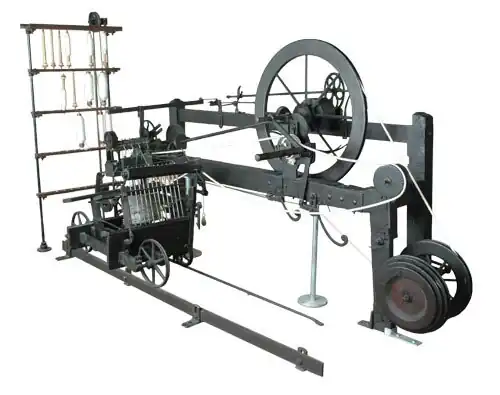
The Capitalism PortalCapitalism is an economic system based on the private ownership of the means of production and its use for the purpose of obtaining profit. This socioeconomic system has developed historically in several stages, and is defined by a number of constituent elements: private property, profit motive, capital accumulation, competitive markets, commodification, wage labor, and an emphasis on innovation and economic growth. Capitalist economies may experience business cycles of economic growth followed by recessions. Economists, historians, political economists, and sociologists have adopted different perspectives in their analyses of capitalism and have recognized various forms of it in practice. These include laissez-faire or free-market capitalism, state capitalism, and welfare capitalism. Different forms of capitalism feature varying degrees of free markets, public ownership, obstacles to free competition, and state-sanctioned social policies. The degree of competition in markets and the role of intervention and regulation, as well as the scope of state ownership, vary across different models of capitalism. The extent to which different markets are free and the rules defining private property are matters of politics and policy. Most of the existing capitalist economies are mixed economies that combine elements of free markets with state intervention and in some cases economic planning. Capitalism in its modern form emerged from agrarianism in England, as well as mercantilist practices by European countries between the 16th and 18th centuries. The Industrial Revolution of the 18th century established capitalism as a dominant mode of production, characterized by factory work, and a complex division of labor. Through the process of globalization, capitalism spread across the world in the 19th and 20th centuries, especially before World War I and again after the end of the Cold War. During the 19th century, capitalism was largely unregulated by the state, but became more regulated in the post–World War II period through Keynesianism, followed by a return of more unregulated capitalism starting in the 1980s. (Full article...) Selected article By the 14th century, Norwich was one of the largest and most prosperous cities in England, and Norwich Market was a major trading hub. Control of, and income from, the market was ceded by the monarchy to the city of Norwich in 1341, from which time it provided a significant source of income for the local council. Freed from royal control, the market was reorganised to benefit the city as much as possible. Norwich and the surrounding region were devastated by plague and famine in the latter half of the 14th century, with the population falling by over 50%. Following the plague years, Norwich came under the control of local merchants and the economy was rebuilt. In the early 15th century, a Guildhall was built next to the market to serve as a centre for local government and law enforcement. The largest surviving mediaeval civic building in Britain outside London, it remained the seat of local government until 1938 and in use as a law court until 1985. (Full article...) Selected biography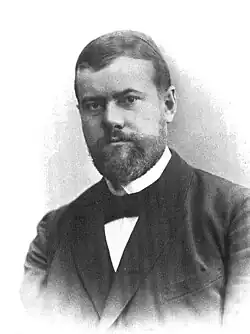 Weber is best known for his thesis combining economic sociology and the sociology of religion, elaborated in his book The Protestant Ethic and the Spirit of Capitalism, in which he proposed that ascetic Protestantism was one of the major "elective affinities" associated with the rise in the Western world of market-driven capitalism and the rational-legal nation-state. He argued that it was in the basic tenets of Protestantism to boost capitalism. Thus, it can be said that the spirit of capitalism is inherent to Protestant religious values. After the First World War, Max Weber was among the founders of the liberal German Democratic Party. He also ran unsuccessfully for a seat in parliament and served as advisor to the committee that drafted the ill-fated democratic Weimar Constitution of 1919. After contracting Spanish flu, he died of pneumonia in 1920, aged 56. (Full article...) Selected quote
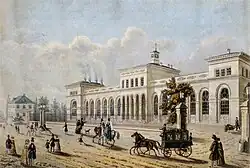
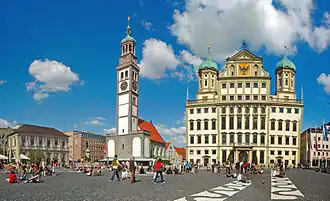
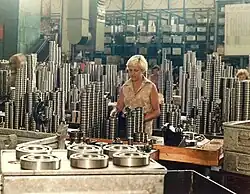
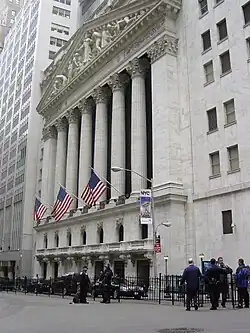
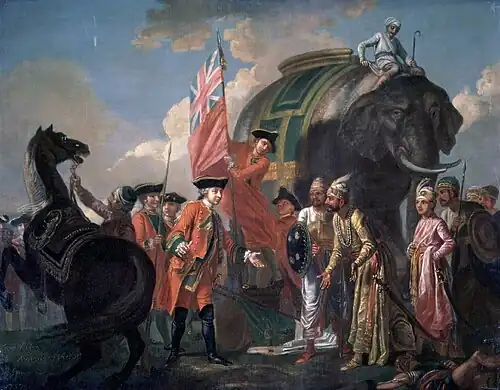
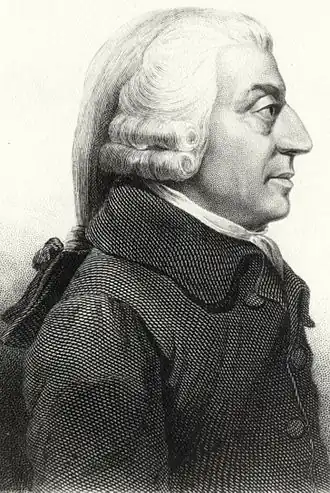
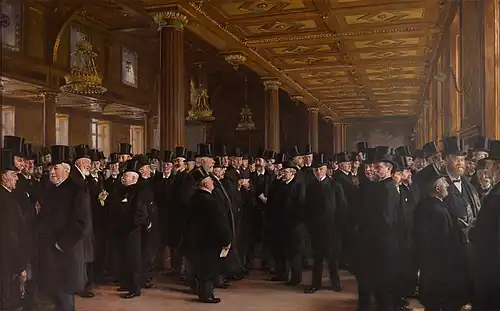
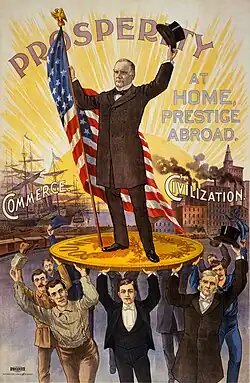
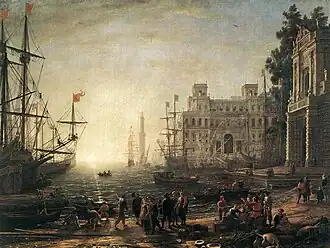
General imagesThe following are images from various capitalism-related articles on Wikipedia.
Did you know
Categories Capitalism Works about capitalism Capital (economics) Criticism of capitalism History of capitalism Ideologies of capitalism Capitalist propaganda State capitalism Capitalist systems Related portalsCapitalism topicsCapitalism .. Private property .. Economic freedom .. Laissez-faire .. British Agricultural Revolution .. Industrial Revolution .. Klondike Gold Rush .. Marketplace .. Prices .. Money .. Wage .. Taxes .. Patent .. Capitalist mode of production .. Criticisms of socialism .. Adam Smith .. Milton Friedman .. Ludwig Von Mises .. Murray N. Rothbard .. The Wealth of Nations .. The Protestant Ethic and the Spirit of Capitalism .. Capital and Interest .. Capitalism and Freedom .. American capitalism .. Corporate capitalism .. Democratic capitalism .. Anarcho-capitalism .. State capitalism .. Welfare capitalism .. Ronald Reagan Related WikiProjects
Things you can do Improve this portal! Associated WikimediaThe following Wikimedia Foundation sister projects provide more on this subject:
Discover Wikipedia using portals
|




.svg.png)
.jpg)



.jpg)