Portals → History → Byzantine Empire
Selected articles
-
 Image 1Byzantine law was essentially a continuation of Roman law with increased Orthodox Christian and Hellenistic influence. Most sources define Byzantine law as the Roman legal traditions starting after the reign of Justinian I in the 6th century and ending with the Fall of Constantinople in the 15th century. Although future Byzantine codes and constitutions derived largely from Justinian's Corpus Juris Civilis, their main objectives were idealistic and ceremonial rather than practical. Following Hellenistic and Near-Eastern political systems, legislations were tools to idealize and display the sacred role and responsibility of the emperor as the holy monarch chosen by God and the incarnation of law " nómos émpsychos", thus having philosophical and religious purposes that idealized perfect Byzantine kingship. Though during and after the European Renaissance Western legal practices were heavily influenced by Justinian's Code (the Corpus Juris Civilis) and Roman law during classical times, Byzantine law nevertheless had substantial influence on Western traditions during the Middle Ages and after. ( Full article...)
-
-
Image 3Byzantine medicine encompasses the common medical practices of the Byzantine Empire from c. 400 AD to 1453 AD. Byzantine medicine was notable for building upon the knowledge base developed by its Greco-Roman predecessors. In preserving medical practices from antiquity, Byzantine medicine influenced Islamic medicine and fostered the Western rebirth of medicine during the Renaissance. The concept of the hospital appeared in Byzantine Empire as an institution to offer medical care and possibility of a cure for the patients because of the ideals of Christian charity. Byzantine physicians often compiled and standardized medical knowledge into textbooks. Their records tended to include both diagnostic explanations and technical drawings. The Medical Compendium in Seven Books, written by the leading physician Paul of Aegina, survived as a particularly thorough source of medical knowledge. This compendium, written in the late seventh century, remained in use as a standard textbook for the following 800 years. This tradition of compilation continued from around the tenth century into the twentieth through the genre of medical writings known as iatrosophia. ( Full article...)
-
Image 4A Hodegetria, or Virgin Hodegetria, is an iconographic depiction of the Theotokos ( Virgin Mary) holding the Child Jesus at her side while pointing to him as the source of salvation for humankind. The Virgin's head usually inclines towards the child, who raises his hand in a blessing gesture. Metals are often used to draw attention to young Christ, reflecting light and shining in a way to embody divinity. In the Western Church this type of icon is sometimes called Our Lady of the Way. The most venerated icon of the Hodegetria type, regarded as the original, was displayed in the Monastery of the Panaghia Hodegetria in Constantinople, which was built specially to contain it. Unlike most later copies it showed the Theotokos standing full-length. It was said to have been brought back from the Holy Land by Eudocia, the wife of emperor Theodosius II (408–450), and to have been painted by Saint Luke the evangelist, the attributed author of the Gospel of Luke. The icon was double-sided, with a crucifixion on the other side, and was "perhaps the most prominent cult object in Byzantium". ( Full article...)
-
Image 5Byzantine art comprises the body of artistic products of the Eastern Roman Empire, as well as the nations and states that inherited culturally from the empire. Though the empire itself emerged from the decline of western Rome and lasted until the Fall of Constantinople in 1453, the start date of the Byzantine period is rather clearer in art history than in political history, if still imprecise. Many Eastern Orthodox states in Eastern Europe, as well as to some degree the Islamic states of the eastern Mediterranean, preserved many aspects of the empire's culture and art for centuries afterward. A number of contemporary states with the Eastern Roman (Byzantine) Empire were culturally influenced by it without actually being part of it (the " Byzantine commonwealth"). These included Kievan Rus', as well as some non-Orthodox states like the Republic of Venice, which separated from the Byzantine Empire in the 10th century, and the Kingdom of Sicily, which had close ties to the Byzantine Empire and had also been a Byzantine territory until the 10th century with a large Greek-speaking population persisting into the 12th century. Other states having a Byzantine artistic tradition, had oscillated throughout the Middle Ages between being part of the Byzantine Empire and having periods of independence, such as Serbia and Bulgaria. After the fall of the Byzantine capital of Constantinople in 1453, art produced by Eastern Orthodox Christians living in the Ottoman Empire was often called "post-Byzantine." Certain artistic traditions that originated in the Byzantine Empire, particularly in regard to icon painting and church architecture, are maintained in Greece, Cyprus, Serbia, Bulgaria, Romania, Russia and other Eastern Orthodox countries to the present day. ( Full article...)
-
Image 6Byzantine architecture is the architecture of the Byzantine Empire, or Eastern Roman Empire, usually dated from AD 330, when Constantine the Great established a new Roman capital in Byzantium, which became Constantinople, until the fall of the Byzantine Empire in 1453. There was initially no hard line between the Byzantine and Roman Empires, and early Byzantine architecture is stylistically and structurally indistinguishable from late Roman architecture. The style continued to be based on arches, vaults and domes, often on a large scale. Wall mosaics with gold background became standard for the grandest buildings, with frescos a cheaper alternative. The richest interiors were finished with thin plates of marble or coloured and patterned stone. Some of the columns were also made of marble. Other widely used materials were bricks and stone. Mosaics made of stone or glass tesserae were also elements of interior architecture. Precious wood furniture, like beds, chairs, stools, tables, bookshelves and silver or golden cups with beautiful reliefs, decorated Byzantine interiors. ( Full article...)
-
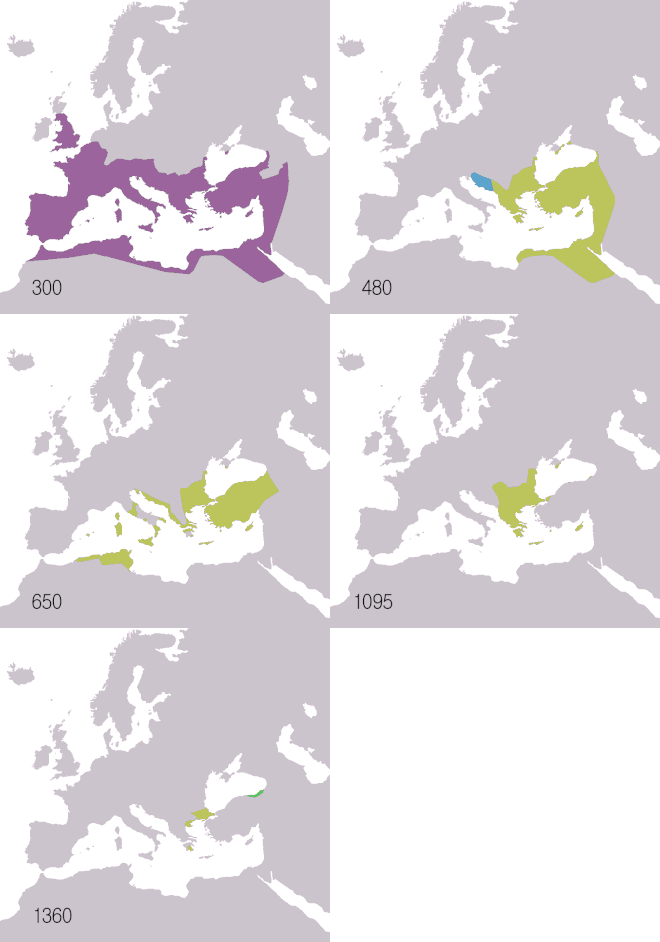
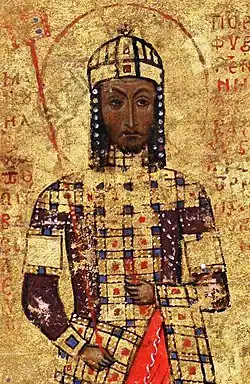
Image 7The Byzantine Empire was ruled by emperors of the Komnenos dynasty for a period of 104 years, from 1081 to about 1185. The Komnenian (also spelled Comnenian) period comprises the reigns of five emperors, Alexios I, John II, Manuel I, Alexios II and Andronikos I. It was a period of sustained, though ultimately incomplete, restoration of the military, territorial, economic and political position of the Byzantine Empire. Byzantium under the Komnenoi played a key role in the history of the Crusades in the Holy Land, while also exerting enormous cultural and political influence in Europe, the Near East, and the lands around the Mediterranean Sea. The Komnenian emperors, particularly John and Manuel, exerted great influence over the Crusader states of Outremer, whilst Alexios I played a key role in the course of the First Crusade, which he helped bring about. ( Full article...)
-
Image 8The Byzantine civil war of 1341–1347, sometimes referred to as the Second Palaiologan Civil War, was a conflict that broke out in the Byzantine Empire after the death of Andronikos III Palaiologos over the guardianship of his nine-year-old son and heir, John V Palaiologos. It pitted on the one hand Andronikos III's chief minister, John VI Kantakouzenos, and on the other a regency headed by the Empress-Dowager Anna of Savoy, the Patriarch of Constantinople John XIV Kalekas, and the megas doux Alexios Apokaukos. The war polarized Byzantine society along class lines, with the aristocracy backing Kantakouzenos and the lower and middle classes supporting the regency. To a lesser extent, the conflict acquired religious overtones; Byzantium was embroiled in the Hesychast controversy, and adherence to the mystical doctrine of Hesychasm was often equated with support for Kantakouzenos. As the chief aide and closest friend of Emperor Andronikos III, Kantakouzenos became regent for the underage John V upon Andronikos's death in June 1341. While Kantakouzenos was absent from Constantinople in September the same year, a coup d'état led by Alexios Apokaukos and the Patriarch John XIV secured the support of Empress Anna and established a new regency. In response, Kantakouzenos' army and supporters proclaimed him co-emperor in October, cementing the rift between himself and the new regency. The split immediately escalated into armed conflict. ( Full article...)
-
Image 9The walls of Constantinople ( Turkish: Konstantinopolis Surları; Greek: Τείχη της Κωνσταντινούπολης) are a series of defensive stone walls that have surrounded and protected the city of Constantinople (modern Fatih district of Istanbul) since its founding as the new capital of the Roman Empire by Constantine the Great. With numerous additions and modifications during their history, they were the last great fortification system of antiquity, and one of the most complex and elaborate systems ever built. Initially built by Constantine the Great, the walls surrounded the new city on all sides, protecting it against attack from both sea and land. As the city grew, the famous double line of the Theodosian walls was built in the 5th century. Although the other sections of the walls were less elaborate, they were, when well-manned, almost impregnable for any medieval besieger. They saved the city, and the Byzantine Empire with it, during sieges by the Avar–Sassanian coalition, Arabs, Rus', and Bulgars, among others. The fortifications retained their usefulness even after the advent of gunpowder siege cannons, which played a part in the city's fall to Ottoman forces in 1453 but were not able to breach its walls. ( Full article...)
-
Image 10The Emirate of Crete ( Arabic: إقريطش, romanized: Iqrīṭish or إقريطية, Iqrīṭiya; Greek: Κρήτη, romanized: Krētē) was an Arab Islamic state that existed on the Mediterranean island of Crete from the late 820s to the reconquest of the island by the Byzantine Empire in 961. Although the emirate recognized the suzerainty of the Abbasid Caliphate and maintained close ties with Tulunid Egypt, it was de facto independent. A group of Arab Andalusian exiles led by Abu Hafs Umar al-Iqritishi conquered Crete in either 824 or 827/828, and established an independent Islamic state. The Byzantines launched a campaign that took most of the island back in 842–43 under Theoktistos, but the reconquest was not completed and would soon be reversed. Later attempts by the Byzantine Empire to recover the island failed, and for the approximately 135 years of its existence, the emirate was one of the major foes of Byzantium. Crete commanded the sea lanes of the Eastern Mediterranean and functioned as a forward base and haven for Muslim corsair fleets that ravaged the Byzantine-controlled shores of the Aegean Sea. The emirate's internal history is less well known, but all accounts point to considerable prosperity deriving not only from piracy but also from extensive trade and agriculture. The emirate was brought to an end by Nikephoros Phokas, who successfully campaigned against it in 960–961, re-annexing the island to the Byzantine Empire. ( Full article...)
-
-
-
-
-
Image 15The Byzantine economy was among the most robust economies in the Mediterranean and the world for many centuries. Constantinople was a prime hub in a trading network that at various times extended across nearly all of Eurasia and North Africa. It could be argued that up until the 7th century, the Eastern Roman Empire had the most powerful economy in the world. The Arab conquests, however, would represent a substantial reversal of fortunes contributing to a period of decline and stagnation. The Byzantine state restructured its administrative and fiscal systems, introducing the theme system, which organized land and military service in a way that ensured both local defense and agricultural productivity. Rural life revived as new lands were brought under cultivation, and local economies became more self-sufficient, reducing dependence on long-distance trade that had been curtailed by the loss of eastern territories. By the 9th and 10th centuries, the empire experienced a notable resurgence: agricultural output increased, population levels rose, and the circulation of coinage expanded once again. However, by the 12th and 13th centuries, the economic balance began to shift. Western maritime republics such as Venice and Genoa gradually overtook Byzantine merchants, largely due to the tax exemptions and trading privileges granted to them under the Komnenian emperors. This process accelerated after the Fourth Crusade and the establishment of the Latin Empire, during which Venetian traders gained control over key ports and commercial networks once held by the Byzantines. The Byzantines continued to face economic challenges during the Palaiologan era until its fall in 1453. One of the economic foundations of the empire was trade. The state strictly controlled both the internal and the international trade. It has been argued by the historian Alex M. Feldman that this amounted to an early version of the political economy of mercantilism. Constantinople remained the single most important commercial centre of Europe for much of the Medieval era, which it held until the Republic of Venice slowly began to overtake Byzantine merchants in trade; first through tax exemption under the Komnenoi, then under the Latin Empire. ( Full article...)
-
Image 16The Byzantine Empire was ruled by emperors of the dynasty of Heraclius between 610 and 711 AD. The Heraclians presided over a period of cataclysmic events that were a watershed in the history of the Empire and the world. Heraclius, the founder of his dynasty, was of Armenian and Cappadocian (Greek) origin. At the beginning of the dynasty, the Empire's culture was still essentially Ancient Roman, dominating the Mediterranean and harbouring a prosperous late antique urban civilization. This world was shattered by successive invasions, which resulted in extensive territorial losses, financial collapse and plagues that depopulated the cities, while religious controversies and rebellions further weakened the Empire. By the dynasty's end, the Empire had been transformed into a different state structure: now known in historiography as medieval Byzantine rather than (Ancient) Roman, a chiefly agrarian, military-dominated society that was engaged in a lengthy struggle with the Muslim Rashidun Caliphate and successor Umayyad Caliphate. However, the Empire during this period became also far more homogeneous, being reduced to its mostly Greek-speaking and firmly Chalcedonian core territories, which enabled it to weather these storms and enter a period of stability under the successor Isaurian dynasty. ( Full article...)
-
Image 17The Byzantine Iconoclasm ( Ancient Greek: Εἰκονομαχία, romanized: Eikonomachía, lit. 'image struggle', 'war on icons') are two periods in the history of the Byzantine Empire when the use of religious images or icons was opposed by religious and imperial authorities within the Ecumenical Patriarchate (at the time still comprising the Roman-Latin and the Eastern-Orthodox traditions) and the temporal imperial hierarchy. The First Iconoclasm, as it is sometimes called, occurred between about 726 and 787, while the Second Iconoclasm occurred between 814 and 842. According to the traditional view, Byzantine Iconoclasm was started by a ban on religious images promulgated by the Byzantine Emperor Leo III the Isaurian, and continued under his successors. It was accompanied by widespread destruction of religious images and persecution of supporters of the veneration of images. The Papacy remained firmly in support of the use of religious images throughout the period, and the whole episode widened the growing divergence between the Byzantine and Carolingian traditions in what was still a unified European Church, as well as facilitating the reduction or removal of Byzantine political control over parts of the Italian Peninsula. Iconoclasm is the deliberate destruction within a culture of the culture's own religious images and other symbols or monuments, usually for religious or political motives. People who engage in or support iconoclasm are called iconoclasts, Greek for 'breakers of icons' ( εἰκονοκλάσται), a term that has come to be applied figuratively to any person who breaks or disdains established dogmata or conventions. Conversely, people who revere or venerate religious images are derisively called "iconolaters" ( εἰκονολάτρες). They are normally known as " iconodules" ( εἰκονόδουλοι), or "iconophiles" ( εἰκονόφιλοι). These terms were, however, not a part of the Byzantine debate over images. They have been brought into common usage by modern historians (from the seventeenth century) and their application to Byzantium increased considerably in the late twentieth century. The Byzantine term for the debate over religious imagery, iconomachy, means "struggle over images" or "image struggle". Some sources also say that the Iconoclasts were against intercession to the saints and denied the usage of relics; however, it is disputed. ( Full article...)
-
Image 18Byzantine currency, money used in the Eastern Roman Empire after the fall of the West, consisted of mainly two types of coins: gold solidi and hyperpyra and a variety of clearly valued bronze coins. By the 15th century, the currency was issued only in debased silver stavrata and minor copper coins with no gold issue. The Byzantine Empire established and operated several mints throughout its history. Aside from the main metropolitan mint in the capital, Constantinople, a varying number of provincial mints were also established in other urban centres, especially during the 6th century. Most provincial mints except for Syracuse were closed or lost to Arab Muslim invasions in the Mediterranean Region by the mid-7th century onwards. After the loss of Syracuse in 878, Constantinople became the sole mint for gold and silver coinage until the late 11th century, when major provincial mints began to re-appear. Many mints, both imperial and, as the Byzantine Empire fragmented, belonging to autonomous local rulers, were operated in the 12th to 14th centuries. Constantinople and Trebizond, capital of the independent Empire of Trebizond (1204–1461), survived until the invasion of Anatolia by the Ottoman Turks in the mid-15th century. ( Full article...)
-
Image 19The Byzantine Rite, also known as the Rite of Constantinople, is a liturgical rite that is identified with the wide range of cultural, devotional, and canonical practices that developed in the Eastern Christian church of Constantinople. The canonical hours are extended and complex, lasting about eight hours (longer during Great Lent) but are abridged outside of large monasteries. An iconostasis, a partition covered with icons, separates the area around the altar from the nave. The sign of the cross, accompanied by bowing, is made very frequently, e.g., more than a hundred times during the divine liturgy, and there is prominent veneration of icons, a general acceptance of the congregants freely moving within the church and interacting with each other, and distinctive traditions of liturgical chanting. ( Full article...)
-
Image 20The Corpus Juris (or Iuris) Civilis ("Body of Civil Law") is the modern name for a collection of fundamental works in jurisprudence, enacted from 529 to 534 by order of Byzantine Emperor Justinian I. It is also sometimes referred to metonymically after one of its parts, the Code of Justinian. The work as planned had three parts: the Code ( Codex) is a compilation, by selection and extraction, of imperial enactments to date; the Digest or Pandects (the Latin title contains both Digesta and Pandectae) is an encyclopedia composed of mostly brief extracts from the writings of Roman jurists; and the Institutes ( Institutiones) is a student textbook, mainly introducing the Code, although it has important conceptual elements that are less developed in the Code or the Digest. All three parts, even the textbook, were given force of law. They were intended to be, together, the sole source of law; reference to any other source, including the original texts from which the Code and the Digest had been taken, was forbidden. Nonetheless, Justinian found himself having to enact further laws; today these are counted as a fourth part of the Corpus, the Novellae Constitutiones ( Novels, literally New Laws). ( Full article...)
-
-
Image 22The Despotate of Epirus ( Medieval Greek: Δεσποτᾶτον τῆς Ἠπείρου) was one of the Greek rump states of the Byzantine Empire established in the aftermath of the Fourth Crusade in 1204 by a branch of the Angelos dynasty, the Komnenodoukas dynasty. It claimed to be the legitimate successor of the Byzantine Empire during the subsequent struggle for Constantinople, along with the Empire of Nicaea and the Empire of Trebizond; its rulers briefly proclaiming themselves as Emperors in 1227–1242, during which it is most often called the Empire of Thessalonica. The Despotate was centred on the region of Epirus, encompassing also the western portion of Greek Macedonia, Thessaly, western Greece as far south as Nafpaktos, and Albania. Through a policy of aggressive expansion under Theodore Komnenos Doukas the Despotate of Epirus also briefly came to incorporate central Macedonia, with the establishment of the Empire of Thessalonica in 1224, and Thrace as far east as Didymoteicho and Adrianople, and was on the verge of recapturing Constantinople and restoring the Byzantine Empire before the Battle of Klokotnitsa in 1230 where he was defeated by the Bulgarian Empire. After that, the Epirote state contracted to its core in Epirus and Thessaly, and was forced into vassalage to other regional powers. It nevertheless managed to retain its autonomy until being conquered by the restored Palaiologan Byzantine Empire in ca. 1337. In the 1410s, Carlo I Tocco, Count Palatine of Cephalonia and Zakynthos, managed to reunite the core of the Epirote state, but his successors gradually lost it to the advancing Ottoman Empire, with the last stronghold, Vonitsa, falling to the Ottomans in 1479. ( Full article...)
-
Image 23The Empire of Thessalonica is a historiographic term used by some modern scholars to refer to the short-lived Greek state centred on the city of Thessalonica between 1224 and 1246 ( sensu stricto until 1242) and ruled by the Komnenodoukas dynasty of the Despotate of Epirus. At the time of its establishment during the struggle for Constantinople, the Empire of Thessalonica, under the capable Theodore Komnenos Doukas, rivaled the Empire of Nicaea and the Second Bulgarian Empire as the strongest state in the region, and aspired to capturing Constantinople, putting an end to the Latin Empire, and restoring the Byzantine Empire that had been extinguished in 1204. Thessalonica's ascendancy was brief, ending with the disastrous Battle of Klokotnitsa against Bulgaria in 1230, where Theodore Komnenos Doukas was captured. Reduced to a Bulgarian vassal, Theodore's brother and successor Manuel Komnenos Doukas was unable to prevent the loss of most of his brother's conquests in Macedonia and Thrace, while the original nucleus of the state, Epirus, broke free under Michael II Komnenos Doukas. Theodore recovered Thessalonica in 1237, installing his son John Komnenos Doukas, and after him Demetrios Angelos Doukas, as rulers of the city, while Manuel, with Nicaean support, seized Thessaly. The rulers of Thessalonica bore the imperial title from 1225/7 until 1242, when they were forced to renounce it and recognize the suzerainty of the rival Empire of Nicaea. The Komnenodoukai continued to rule as Despots of Thessalonica for four more years after that, but in 1246 the city was annexed by Nicaea. ( Full article...)
-
Image 24The Byzantine Empire was ruled by emperors of the Palaiologos dynasty in the period between 1261 and 1453, from the restoration of Byzantine rule to Constantinople by the usurper Michael VIII Palaiologos following its recapture from the Latin Empire, founded after the Fourth Crusade (1204), up to the Fall of Constantinople to the Ottoman Empire. Together with the preceding Nicaean Empire and the contemporary Frankokratia, this period is known as the late Byzantine Empire. From the start, the regime faced numerous problems. The Turks of Asia Minor had begun conducting raids and expanding into Byzantine territory in Asia Minor by 1263, just two years after the enthronement of the first Palaiologos emperor Michael VIII. Anatolia, which had formed the very heart of the shrinking empire, was systematically lost to numerous Turkic ghazis, whose raids evolved into conquering expeditions inspired by Islamic zeal, the prospect of economic gain, and the desire to seek refuge from the Mongols after the disastrous Battle of Köse Dağ in 1243. The Palaiologoi were engaged on several fronts, often continually, while the empire's supply of food and manpower dwindled. In this period, the Byzantine Empire found itself continually at war, both civil and interstate, with most interstate conflicts being with other Christian empires. Most commonly, these comprised the Second Bulgarian Empire, the Serbian Empire, the remnants of the Latin Empire and even the Knights Hospitaller. ( Full article...)
-
Image 25The Chora Church or Kariye Mosque ( Turkish: Kariye Camii) is a Byzantine church, now converted to a mosque (for the second time), in the Edirnekapı neighborhood of Fatih district, Istanbul, Turkey. It is famous for its outstanding Late Byzantine mosaics and frescos. In the 16th century, during the Ottoman era, it was converted into a mosque; it became a museum in 1945, and was turned back into a mosque in 2020 by President Recep Tayyip Erdoğan. The interior is covered with some of the finest surviving Byzantine Christian mosaics and frescoes, which were left in plain sight during Muslim worship throughout much of the Ottoman era. They were restored after the building was secularized and turned into a museum. ( Full article...)
-
Image 1Manuscript miniature, part of double portrait with Empress Maria, Vatican Library ( Greek: Μανουήλ Κομνηνός, romanized: Manouḗl Komnēnós; 28 November 1118 – 24 September 1180), Latinized as Comnenus, also called Porphyrogenitus (Greek: Πορφυρογέννητος, romanized: Porphyrogénnētos; " born in the purple"), was a Byzantine emperor of the 12th century who reigned over a crucial turning point in the history of Byzantium and the Mediterranean. His reign saw the last flowering of the Komnenian restoration, during which the Byzantine Empire experienced a resurgence of military and economic power and enjoyed a cultural revival. Eager to restore his empire to its past glories as the great power of the Mediterranean world, Manuel pursued an energetic and ambitious foreign policy. In the process he made alliances with Pope Adrian IV and the resurgent West. He invaded the Norman Kingdom of Sicily, although unsuccessfully, being the last Eastern Roman emperor to attempt reconquests in the western Mediterranean. The passage of the potentially dangerous Second Crusade through his empire was adroitly managed. Manuel established a Byzantine protectorate over the Crusader states of Outremer. Facing Muslim advances in the Holy Land, he made common cause with the Kingdom of Jerusalem and participated in a combined invasion of Fatimid Egypt. Manuel reshaped the political maps of the Balkans and the eastern Mediterranean, placing the kingdoms of Hungary and Outremer under Byzantine hegemony and campaigning aggressively against his neighbours both in the west and in the east. ( Full article...)
-
Image 2John Kourkouas ( Greek: Ἰωάννης Κουρκούας, romanized: Ioannes Kourkouas, fl. c. 900–946), also transliterated as Kurkuas or Curcuas, was one of the most important generals of the Byzantine Empire. His success in battles against the Muslim states in the East reversed the course of the centuries-long Arab–Byzantine wars and set the stage for Byzantium's eastern conquests later in the century. Kourkouas belonged to a family of Armenian descent that produced several notable Byzantine generals. As commander of an imperial bodyguard regiment, Kourkouas was among the chief supporters of Emperor Romanos I Lekapenos ( r. 920–944) and facilitated the latter's rise to the throne. In 923, Kourkouas was appointed commander-in-chief of the Byzantine armies along the eastern frontier, facing the Abbasid Caliphate and the semi-autonomous Arab Muslim border emirates. He kept this post for more than twenty years, overseeing decisive Byzantine military successes that altered the strategic balance in the region. ( Full article...)
-
Image 3Leo Sgouros ( Greek: Λέων Σγουρός), Latinized as Leo Sgurus, was a Greek independent lord in the northeastern Peloponnese in the early 13th century. The scion of the magnate Sgouros family, he succeeded his father as hereditary lord in the region of Nauplia. Taking advantage of the disruption caused by the Fourth Crusade, he made himself independent, one of several local rulers that appeared throughout the Byzantine Empire during the final years of the Angeloi dynasty. He expanded his domain into Corinthia and Central Greece, eventually marrying the daughter of former Byzantine emperor Alexios III Angelos (r. 1195–1203). His conquests, however, were short-lived, as the Crusaders forced him back into the Peloponnese. Blockaded in his stronghold on the Acrocorinth, he committed suicide in 1208. ( Full article...)
-
Image 4Michael I Komnenos Doukas, Latinized as Comnenus Ducas ( Greek: Μιχαήλ Κομνηνός Δούκας, romanized: Mikhaēl Komnēnos Doukas), and in modern sources often recorded as Michael I Angelos, a name he never used, was the founder and first ruler of the Despotate of Epirus from c. 1205 until his assassination in 1214/15. Born c. 1170, Michael was a descendant of Alexios I Komnenos and a cousin of emperors Isaac II Angelos and Alexios III Angelos. He began his public career in 1190, as a hostage to the Third Crusade, and went on to serve as governor of the province of Mylasa and Melanoudion in the 1190s and again in c. 1200/01. During the latter tenure he rebelled against Alexios III but was defeated and forced to flee to the Seljuk Turks. In the aftermath of the sack of Constantinople by the Fourth Crusade in 1204, he attached himself to Boniface of Montferrat. Soon, however, he abandoned the Crusader leader and went to Epirus, where he established himself as ruler, apparently through marriage with the daughter or widow of a local magnate. ( Full article...)
-
Image 5Isaac I Komnenos or Comnenus ( Ancient Greek: Ἰσαάκιος Κομνηνός, romanized: Isaákios Komnēnós; c. 1007 – 1 June 1060) was Byzantine emperor from 1057 to 1059, the first reigning member of the Komnenian dynasty. The son of the general Manuel Erotikos Komnenos, he was orphaned at an early age, and was raised under the care of Emperor Basil II. He made his name as a successful military commander, serving as commander-in-chief of the eastern armies between c. 1042 and 1054. In 1057 he became the head of a conspiracy of the dissatisfied eastern generals against the newly crowned Michael VI Bringas. Proclaimed emperor by his followers on 8 June 1057, he rallied sufficient military forces to defeat the loyalist army at the Battle of Hades. While Isaac was willing to accept a compromise solution by being appointed Michael's heir, a powerful faction in Constantinople, led by the ambitious Patriarch of Constantinople, Michael Keroularios, pressured Michael to abdicate. After Michael abdicated on 30 August 1057, Isaac was crowned emperor in the Hagia Sophia on 1 September. ( Full article...)
-
Image 6Theodora (; Greek: Θεοδώρα; c. 490/500 – 28 June 548) was a Roman-Byzantine empress empress and wife of emperor Justinian I. She was of humble origins and became empress when her husband became emperor in 527. Theodora was one of his chief political advisers. She is recognized as a saint in the Oriental Orthodox Churches, and commemorated on 14 November. ( Full article...)
-
Image 7Staurakios ( Greek: Σταυράκιος, sometimes Latinized Stauracius; died 3 June 800) was a Byzantine Greek eunuch official, who rose to be one of the most important and influential associates of Byzantine empress Irene of Athens ( r. 797–802). He effectively acted as chief minister during her regency for her young son, Emperor Constantine VI ( r. 780–797) in 780–790, assisting the empress in ruling the empire, consolidating her position, achieving her goals, and suppressing her opponents; however, he kept everything under control, and encouraged Irene to prevent the emperor from exercising power, until he was overthrown and exiled by a military revolt in favour of the young emperor in 790. Restored to power by Constantine along with Irene in 792 and he officially served as the chief minister for the co-reign of this mother and son, acting as a power broker for Irene, Staurakios aided her in the eventual removal, blinding, and possible murder of her son in 797. His own position thereafter was threatened by the rise of another powerful eunuch, Aetios. Their increasing rivalry, and Staurakios's own imperial ambitions, were only resolved by Staurakios's death. ( Full article...)
-
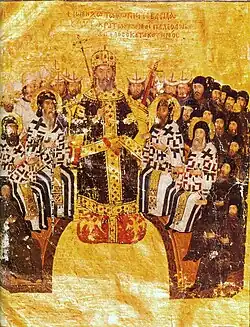
Image 8John VI presiding over a synod, c. 1370–1375 or Cantacuzene ( Greek: Ἰωάννης Ἄγγελος [Κομνηνός] Παλαιολόγος Καντακουζηνός, romanized: Iōánnēs Ángelos [Komnēnós] Palaiológos Kantakouzēnós; Latin: Iohannes Cantacuzenus; c. 1292 – 15 June 1383) was a Byzantine Greek emperor and nobleman, statesman, and general. He served as grand domestic under Andronikos III Palaiologos and regent for John V Palaiologos before reigning as Byzantine emperor in his own right from 1347 to 1354. Deposed by his former ward, he was forced to retire to a monastery under the name Joasaph Christodoulos ( Greek: Ἰωάσαφ Χριστόδουλος, romanized: Joásaph Christódoulos) and spent the remainder of his life as a monk and historian. At age 90 or 91 at his death, he was the longest-lived of the Roman emperors. His two disastrous civil wars led to the loss of much of the remaining territory in the Balkans under Byzantine control to the Serbian and Bulgarian empires, but the most severe loss during his civil war was the loss of the Gallipoli peninsula to the Ottoman Turks, allowing the Ottomans to gain territory in Europe and setting the stage for the destruction of the Byzantine Empire a century later. ( Full article...)
-
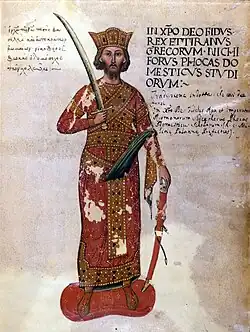
-
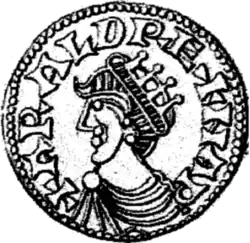
Image 10Coin of Harald as the sole Norwegian king, "ARALD[us] REX NAR[vegiae]" ( Old Norse: Haraldr Sigurðarson; c. 1015 – 25 September 1066), also known as Harald III of Norway and given the epithet Hardrada in the sagas, was King of Norway from 1046 to 1066. He unsuccessfully claimed the Danish throne until 1064 and the English throne in 1066. Before becoming king, Harald spent 15 years in exile as a mercenary and military commander in Kievan Rus' and chief of the Varangian Guard in the Byzantine Empire. In his chronicle, Adam of Bremen called him the " Thunderbolt of the North". In 1030, the fifteen-year-old Harald fought in the Battle of Stiklestad alongside his half-brother Olaf Haraldsson. Olaf sought to reclaim the Norwegian throne, which he had lost to Danish king Cnut two years previously. Olaf and Harald were defeated by forces loyal to Cnut, and Harald was forced into exile to Kievan Rus'. Thereafter, he was in the army of Grand Prince Yaroslav the Wise, becoming captain, until he moved on to Constantinople with his companions around 1034. In Constantinople, he rose quickly to become the commander of the Byzantine Varangian Guard, seeing action on the Mediterranean Sea, in Asia Minor, Sicily, possibly in the Holy Land, Bulgaria and in Constantinople itself, where he became involved in the imperial dynastic disputes. Harald amassed wealth whilst in the Byzantine Empire, which he shipped to Yaroslav in Kievan Rus' for safekeeping. In 1042, he left the Byzantine Empire, returning to Kievan Rus' to prepare to reclaim the Norwegian throne. In his absence the Norwegian throne had been restored from the Danes to Olaf's illegitimate son Magnus the Good. ( Full article...)
-
-
Image 12Bardanes, nicknamed Tourkos, "the Turk" ( Greek: Βαρδάνης ὁ Τοῦρκος, romanized: Bardanēs ho Tourkos, fl. 795–803), was a Byzantine general who launched an unsuccessful rebellion against Emperor Nikephoros I ( r. 802–811) in 803. Although a major supporter of Byzantine empress Irene of Athens ( r. 797–802), soon after her overthrow he was appointed by Nikephoros as commander-in-chief of the Anatolian armies. From this position, he launched a revolt in July 803, probably in opposition to Nikephoros's economic and religious policies. His troops marched towards Constantinople, but failed to win popular support. At this point, some of his major supporters deserted him and, reluctant to engage the loyalist forces in battle, Bardanes gave up and chose to surrender himself. He retired as a monk to a monastery he had founded. There he was blinded, possibly on Nikephoros's orders. He was of Turkic origin ( Full article...)
-
-
Image 14Constantine VII crowned by Christ, detail of an ivory plaque, Pushkin Museum, AD 945 ( Medieval Greek: Κωνσταντῖνος Πορφυρογέννητος, romanized: Kōnstantīnos Porphyrogénnētos; 17 May 905 – 9 November 959) was the fourth Byzantine emperor of the Macedonian dynasty, reigning from 6 June 913 to 9 November 959. He was the son of Emperor Leo VI and his fourth wife, Zoe Karbonopsina, and the nephew of his predecessor Alexander. Most of his reign was dominated by co-regents: from 913 until 919 he was under the regency of his mother, while from 920 until 945 he shared the throne with Romanos Lekapenos, whose daughter Helena he married, and his sons. Constantine VII is best known for the Geoponika (τά γεωπονικά), an important agronomic treatise compiled during his reign, and three, perhaps four, books; De Administrando Imperio (bearing in Greek the heading Πρὸς τὸν ἴδιον υἱὸν Ῥωμανόν), De Ceremoniis (Περὶ τῆς Βασιλείου Τάξεως), De Thematibus (Περὶ θεμάτων Άνατολῆς καὶ Δύσεως), and Vita Basilii (Βίος Βασιλείου), though his authorship of the Vita Basilii is not certain. ( Full article...)
-
-
Image 16Miniature from the Madrid Skylitzes version of the chronicle of John Skylitzes depicting Thomas, on horseback and dressed as a Byzantine emperor, negotiating with the Arabs. The rebellion of Thomas is one of the most richly illustrated episodes in the chronicle. ( Greek: Θωμᾶς, romanized: Thōmas, c. 760 – October 823) was a 9th-century Byzantine military commander, most notable for leading a wide-scale revolt in 821–23 against Emperor Michael II the Amorian ( r. 820–829). An army officer of Slavic origin from the Pontus region (now north-eastern Turkey), Thomas rose to prominence, along with the future emperors Michael II and Leo V the Armenian ( r. 813–820), under the protection of general Bardanes Tourkos. After Bardanes' failed rebellion in 803, Thomas fell into obscurity until Leo V's rise to the throne, when Thomas was raised to a senior military command in central Asia Minor. After the murder of Leo and usurpation of the throne by Michael the Amorian, Thomas revolted, claiming the throne for himself. Thomas quickly secured support from most of the themes (provinces) and troops in Asia Minor, defeated Michael's initial counter-attack and concluded an alliance with the Abbasid Caliphate. After winning over the maritime themes and their ships as well, he crossed with his army to Europe and laid siege to Constantinople. The imperial capital withstood Thomas's attacks by land and sea, while Michael II called for help from the Bulgarian Khan Omurtag. Omurtag attacked Thomas's army, but although repelled, the Bulgarians inflicted heavy casualties on Thomas's men, who broke and fled when Michael took to the field a few months later. Thomas and his supporters sought refuge in Arcadiopolis, where he was soon blockaded by Michael's troops. In the end, Thomas's supporters surrendered him in exchange for a pardon, and he was executed. ( Full article...)
-
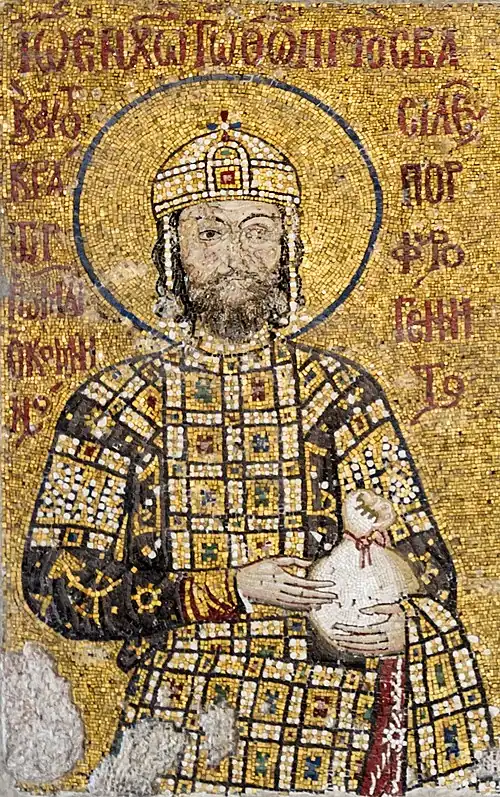
Image 17John II Komnenos or Comnenus ( Greek: Ἱωάννης ὁ Κομνηνός, romanized: Iōánnēs Komnēnós; 13 September 1087 – 8 April 1143) was Byzantine emperor from 1118 to 1143. Also known as " John the Beautiful" or " John the Good" ( Greek: Καλοϊωάννης, romanized: Kaloïōánnēs), he was the eldest son of Emperor Alexios I Komnenos and Irene Doukaina and the second emperor to rule during the Komnenian restoration of the Byzantine Empire. As he was born to a reigning emperor, he had the status of a porphyrogennetos. John was a pious and dedicated monarch who was determined to undo the damage his empire had suffered following the Battle of Manzikert, half a century earlier. John has been assessed as the greatest of the Komnenian emperors. This view became entrenched due to its espousal by George Ostrogorsky in his influential book History of the Byzantine State, where John is described as a ruler who, "... combined clever prudence with purposeful energy ... and [was] high principled beyond his day." In the course of the quarter-century of his reign, John made alliances with the Holy Roman Empire in the west, decisively defeated the Pechenegs, Hungarians and Serbs in the Balkans, and personally led numerous campaigns against the Turks in Asia Minor. John's campaigns fundamentally changed the balance of power in the east, forcing the Turks onto the defensive; they also led to the recapture of many towns, fortresses and cities across the Anatolian peninsula. In the southeast, John extended Byzantine control from the Maeander in the west all the way to Cilicia and Tarsus in the east. In an effort to demonstrate the Byzantine ideal of the emperor's role as the leader of the Christian world, John marched into Muslim Syria at the head of the combined forces of Byzantium and the Crusader states; yet despite the great vigour with which he pressed the campaign, John's hopes were disappointed by the evasiveness of his Crusader allies and their reluctance to fight alongside his forces. ( Full article...)
-
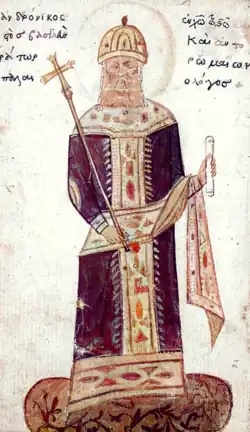
Image 18Andronikos II Palaiologos ( Greek: Ἀνδρόνικος Δούκας Ἄγγελος Κομνηνὸς Παλαιολόγος, romanized: Andrónikos Doúkās Ángelos Komnēnós Palaiológos; 25 March 1259 – 13 February 1332), Latinized as Andronicus II Palaeologus, reigned as Byzantine emperor from 1282 to 1328. His reign marked the beginning of the recently restored empire's final decline. The Turks conquered most of Byzantium's remaining Anatolian territories, and Andronikos spent the last years of his reign fighting his own grandson in the First Palaiologan Civil War. The war ended in Andronikos' forced abdication in 1328, after which he retired to a monastery for the remainder of his life. ( Full article...)
-
Image 19Manuel the Armenian ( Ancient Greek: Μανουήλ ὁ Ἀρμένιος), was a prominent Byzantine general of Armenian origin, active from c. 810 until his death. After reaching the highest military ranks, a palace conspiracy forced him to seek refuge in the Abbasid court in 829. He returned to Byzantine service the next year, receiving the position of Domestic of the Schools from Emperor Theophilos, who had married his niece Theodora. Manuel remained in the post throughout Theophilos's reign, and reportedly saved the emperor's life in the Battle of Anzen in 838. According to one report, he died on 27 July 838 of wounds received during the battle, but other sources record his survival past this date, ascribing him a major role in the regency that governed the empire after Theophilos's death, and report that he died some time around 860. ( Full article...)
-
-
Image 21Gregory of Nazianzus ( Koine Greek: Γρηγόριος ὁ Ναζιανζηνός, romanized: Grēgórios ho Nazianzēnós, IPA: [ɣriˈɣori.os o nazi.anziˈnos]; c. 329 – 25 January 390), also known as Gregory the Theologian or Gregory Nazianzen, was an early Roman Christian theologian and prelate who served as Archbishop of Constantinople from 380 to 381. He is widely considered the most accomplished rhetorical stylist of the patristic age. As a classically trained orator and philosopher, he infused Hellenism into the early Church, establishing the paradigm of Byzantine theologians and church officials. Gregory made a significant impact on the shape of Trinitarian theology among both Greek and Latin-speaking theologians, and he is remembered as the "Trinitarian Theologian". Much of his theological work continues to influence modern theologians, especially in regard to the relationship among the three Persons of the Trinity. Along with the brothers Basil of Caesarea and Gregory of Nyssa, he is known as one of the Cappadocian Fathers. ( Full article...)
-
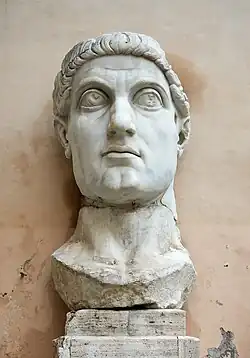
Image 22Constantine I (27 February 272 – 22 May 337), also known as Constantine the Great, or known mononymously as Constantine, was Roman emperor from AD 306 to 337 and the first Roman emperor to convert to Christianity. He played a pivotal role in elevating the status of Christianity in Rome, the Edict of Milan decriminalising Christian practice and ceasing Christian persecution. This was a turning point in the Christianisation of the Roman Empire. He founded the city of Constantinople (now Istanbul) and made it the capital of the Empire, which it remained for over a millennium. Born in Naissus, a city located in the province of Moesia Superior (now Niš, Serbia), Constantine was the son of Flavius Constantius, a Roman army officer from Moesia Superior, who would become one of the four emperors of the Tetrarchy. His mother, Helena, was a woman of low birth, probably from Bithynia. Later canonised as a saint, she is credited for the conversion of her son in some traditions, though others believe that Constantine converted her. He served with distinction under emperors Diocletian and Galerius. He began his career by campaigning in the eastern provinces against the Persians, before being recalled to the west in AD 305 to fight with his father in the province of Britannia. After his father's death in 306, Constantine was proclaimed as augustus (emperor) by his army at Eboracum ( York, England). He eventually emerged victorious in Civil wars of the Tetrarchy against the emperors Maxentius and Licinius to become the sole ruler of the Roman Empire by 324. ( Full article...)
-
-
Image 24Theodora Porphyrogenita ( Greek: Θεοδώρα Πορφυρογέννητη, romanized: Theodṓra Porphyrogénnētē; c. 980 – 31 August 1056) was Byzantine Empress from 21 April 1042 to her death on 31 August 1056, and sole ruler from 11 January 1055. She was the last sovereign of the Macedonian dynasty that ruled the Byzantine Empire for almost 200 years. Theodora was the youngest daughter of Emperor Constantine VIII. After Theodora's father died in 1028, her older sister Zoë co-ruled with her husbands Romanos III and Michael IV, kept Theodora closely watched. After two foiled plots, Theodora was exiled to an island monastery in the Sea of Marmara in 1031. A decade later, the people of Constantinople rose against Michael IV's nephew and successor, Michael V, and insisted that Theodora return to rule alongside Zoë. ( Full article...)
-
New articles
March 2025
Newly created articles
Alexios Komnenos (megas doux) • Cyril Phileotes • Demetrios Chrysoloras • John Doukas (son of Nikephoros Bryennios)
February 2025
Newly created articles
Battle of the Bosporus • Chortaiton
De-stubbed, significantly expanded or improved articles
War of the Straits
January 2025
Newly created articles
Byzantine literature of the Komnenian and Angelid periods • Castle of Saint George, Cephalonia • Xeros family
December 2024
Newly created articles
Al-A'la plateau • Battle of Melitene (576) • Council of Blachernae (1157) • Nicephorus II of Kiev • Principality of Benevento • Venetian expedition to the Levant (1099–1100)
November 2024
Newly created articles
Tzamandos
October 2024
Newly created articles
Armenians in the Byzantine Empire • Blakhiya Byzantine cemetery • Struggle for Constantinople • Tzamplakon family
September 2024
Newly created articles
Constantine Kephalas • Death in the Byzantine Empire
August 2024
Newly created articles
Albert Vogt • Asclepiades of Tralles • Battle of Archesh • Holy Archangels Church, Thiseio • Kalamata Castle • Khurdad (son of Hurmuzd-Afarid) • Theoclite the Wonderworker • Zarnata
July 2024
Newly created articles
Botaneiates • Eunuchs in the Byzantine Empire • Journey of Manuel II to Western Europe • Mary Whitby • Theodore (prefect of Egypt)
May 2024
Newly created articles
Georgios Sotiriou • Lycus (river of Constantinople) • Capitolium of Constantinople • Secundinus (consul 511) • Praetorium of Constantinople
April 2024
Newly created articles
Strategion • Vandal War (461–468)
March 2024
Newly created articles
Anthony the Confessor • Battle of Caesarea (1073) • Byzantine Church of Jabalia • Cistern of Pulcheria • Eustathios Kamytzes • Hajji Amir • Jerusalem during the Byzantine period • Koustouganes • Suleiman of Chalybia • Theodora of Thessaloniki • Thomais of Lesbos
February 2024
Newly created articles
Twelve noble families of Crete
January 2024
Newly created articles
Battle of Kutais
December 2023
Newly created articles
Mutahharten • Oracles of Leo the Wise • Siege of Serres • Suleiman I of Candar • [[Zawiyat al-Qsur and Qasr Sidi al-Khadri]
November 2023
Newly created articles
Innovation in Byzantine medicine
October 2023
Newly created articles
Kinsterna
September 2023
Newly created articles
Basil Kourtikios • Battle of Dristra • Frankoulios Servopoulos • Michael Laskaris • Nicholas Maurokatakalon • Nikephoros Loukanes • Ottoman conquest of the Morea • Tornikios family
De-stubbed, significantly expanded or improved articles
George Palaiologos
August 2023
Newly created articles
Arsenite Schism • Byzantine North Africa
June 2023
Newly created articles
Ashot II Bagratuni • Chrysippus of Jerusalem • Conversion of Volodimer • Hamazasp IV Mamikonian
May 2023
Newly created articles
Duchy of Antioch • Katakalon Tarchaneiotes • Ottaviano Querini • Simone Vignoso
De-stubbed, significantly expanded or improved articles
Jacopo Tiepolo
April 2023
Newly created articles
Egidio Querini • Giacomo Baseggio • Giovanni Michiel (13th century) • Jacopo Dolfin • Marco Gausoni • Marco Gradenigo • Teofilo Zeno • Virgin's veil
March 2023
Newly created articles
Byzantine–Hungarian War (1180–1185) • Council of Constantinople (843) • Siege of Corinth (1458) • Theophilus Antecessor
February 2023
Newly created articles
Alviso Diedo • Castle of Arta
De-stubbed, significantly expanded or improved articles
Nicholas Orsini
January 2023
Newly created articles
Harbor of Eutropius • Mount Lebanon revolts of 752 and 759 • Vardan II
December 2022
Newly created articles
Hagios Spyridon, Rhodes • Rufinus (Roman official) • Sergius (Byzantine general)
November 2022
Newly created articles
Hagia Sophia, Drama • Pammegistoi Taxiarches church
October 2022
Newly created articles
Aigan (Hun commander) • Althias • Apsich • Ascan • Atakam • Basil Peteinos • Berichus • Chalazar • Chelchal • Donatus (Huns) • Edeco • Elmingir • Eslas • Gordas • Hetaireiarches • Hormidac • Kursich • Mamas (Hun prince) • Manuel Kourtikes • Odolgan • Rhetorical School of Gaza • Scottas • Sigizan • Simmas • Tarrach • Turgun • Uldach • Zilgibis
September 2022
Newly created articles
Abraham of Ephesus
August 2022
Newly created articles
Cultural depictions of Theophanu • Zampia Palaiologina
June 2022
Newly created articles
Allīnūs
May 2022
Newly created articles
Constantine of Nicaea • Hilarion the Younger • Hisarlaka fortress • Porphyrios (whale) • Theodore Synkellos
April 2022
Newly created articles
John Kourkouas (died 971) • Makarios of Pelekete • Mansur ibn Sarjun • Narses (comes) • Sa'id ibn Hisham
March 2022
Newly created articles
Battle of Cillium (544) • Church of Panagia Atheniotissa • Hans Georg Beck
February 2022
Newly created articles
Battle of Thacia • Leontius of Damascus • Niketas of Mistheia • Theaetetus Scholasticus
January 2022
Newly created articles
Al-Harith ibn al-Hakam • Battle of Bourgaon • Battle of Sufetula (546 or 547) • Olympias (daughter of Robert Guiscard) • St. Aberkios Monastery • Sekbanbaşı Mosque
December 2021
Newly created articles
Çanlı Kilise • Erard I of Aulnay • Geoffrey of Aulnay • Joachim of Korsun
November 2021
Newly created articles
Alexios V of Trebizond • Diogenes (Byzantine family) • Manolis Hatzidakis
De-stubbed, significantly expanded or improved articles
Christianization of the Roman Empire
October 2021
Newly created articles
Andrea Angeli • Angelo Maria Angeli • Dagmar Cross • Enrico de Vigo Paleologo • Giovanni Andrea I Angeli • Giovanni Andrea II Angeli • Giovanni Demetrio Angeli • Girolamo I Angeli • Girolamo II Angeli • John George Heracleus Basilicos • Marco Angeli • Pietro Angeli • Pietro Paleologo Mastrogiovanni • Siege of Emesa (638)
September 2021
Newly created articles
Demetrius Rhodocanakis • Dhu'l-Kala Samayfa • Georgios Kalliergis • Manuel Fokas • Nikolaos Philanthropinos • Radu Cantacuzino • Venetikà
August 2021
Newly created articles
Michael Synkellos
June 2021
Newly created articles
Angelo Flavio Comneno • Arianitto Arianiti
May 2021
Newly created articles
Manuel Panselinos
March 2021
Newly created articles
Andronikos Euphorbenos • Gulfaris • Italo-Byzantine • John of Gaza • Junada ibn Abi Umayya al-Azdi
February 2021
Newly created articles
Coronation of the Byzantine emperor • Erotapokriseis • Loci communes (Pseudo-Maximus) • Michael Toxaras • Nicholas of Methone • Rubens vase • Soterichos Panteugenos • Symeon Logothete
De-stubbed, significantly expanded or improved articles
Matthew Blastares
January 2021
Newly created articles
Dimitris Krallis • Fadala ibn Ubayd • Lucillianus (fleet commander) • Lucillianus (magister equitum) • Marios Philippides • Niketas Abalantes • Siege of Taormina (902) • Tablion
December 2020
Newly created articles
Ali ibn Yusuf ibn Umar • Byzantine Dark Ages • Synod of Worms (868) • Isaac Komnenos Vatatzes • Kamytzes • Klimova Treasure • Yusuf ibn Umar ibn Shu'ayb
November 2020
Newly created articles
447 Constantinople earthquake • Byzantine–Serbian War (1090–1095) • Despot of Epirus • King of Thessalonica • Louis II's campaign against Bari (866–871) • Sebukht
October 2020
Newly created articles
Anastasiopolis-Peritheorion • Athenogenes of Petra • Baths of Arcadius • Battle of Zygos Pass • Byzantine–Serbian wars • Palaeologan Renaissance • Red Church (Vourgareli) • Siege of Constantinople (1394–1402) • Synaxarion of Constantinople
September 2020
Newly created articles
Al-Ghazal • Anthony Kaldellis • Domitian of Melitene • George Palaiologos (megas hetaireiarches) • Hellenic Institute of Byzantine and Post-Byzantine Studies in Venice • Hypatos ton philosophon • Vagenetia • Vitalien Laurent
De-stubbed, significantly expanded or improved articles
Vazelon Monastery
August 2020
Newly created articles
Alice-Mary Talbot • Arietta Papaconstantinou • Gregory Antiochos • List of Byzantine composers • Sack of Aleppo (962) • Sophia Antoniadis • Theoktiste (740–802)
De-stubbed, significantly expanded or improved articles
Manuel Komnenos (son of Andronikos I)
July 2020
Newly created articles
Anthusa of Mantinea • Byzantine–Venetian treaty of 1277 • Church of St Acacius • Council of Constantinople (536) • Council of Jerusalem (536) • Deno Geanakoplos • Didymoteicho Fortress • Diogenes of Phoenicia • Endemic synod • Heliou Bomon monastery • Isaac Doukas Vatatzes • John Haldon • Kecharitomene Monastery • Kokkinobaphos Master • Marco Bembo • Monastery of Saint Mamas • Niccolò Sagundino • Peter of Apamea • Riniasa Castle • Stephanus of Athens • Theotokos Euergetis Monastery • Theotokos Kosmosoteira
De-stubbed, significantly expanded or improved articles
Constantine Angelos Doukas • John Chortasmenos • Manuel Kamytzes
June 2020
Newly created articles
Andrea Barozzi • Andreas Palaiologos (son of Manuel) • Chronicle of 813 • Chronicle of 846 • Iacopo Barozzi • Iacopo II Barozzi • Jacopo Dondulo • Palaeologus-Montferrat • Rainerio of Travale • Seraglio Octateuch • Women in the Byzantine Empire
May 2020
Newly created articles
Anthusa of Constantinople • Glavinica (medieval town) • Gothograecia • Gregentios • Maritime Venice • Niketas David Paphlagon • Pseudo-Joshua the Stylite • Severianus of Damascus • Slavic migrations to the Balkans • Theodore of Raithu
April 2020
Newly created articles
Basilikos logos • Damsel of Cyprus • Diocese of Abydos • John Diakrinomenos • John Robert Martindale • John Xenos • Karykes • Laskaris Kananos • Meletios the Younger • Mutinensis gr. 122 • Rhapsomates
De-stubbed, significantly expanded or improved articles
Theodore II Laskaris
March 2020
Newly created articles
Al-Walid ibn Hisham al-Mu'ayti • Column of Leo • Degik • Dorotheus (magister militum) • Frankish Table of Nations • Gaianites • Herodian (commander) • Maslama ibn Hisham • Nachoragan • Pegonites • Succession to the Byzantine Empire • Timothy of Constantinople • Umar ibn al-Walid
February 2020
Newly created articles
Ahmad ibn Ziyadat Allah ibn Qurhub • Ayasuluk Hill • Al-Harith ibn Hisham • Khalil ibn Ishaq al-Tamimi • Roman people • Salim ibn Asad ibn Abi Rashid • Siege of Laodicea (636) • Ubayd Allah ibn Marwan
De-stubbed, significantly expanded or improved articles
Miriarcha • Theodore I Laskaris
January 2020
Newly created articles
Carmagnola (Venice) • Forty-Nine Martyrs of Scetis • George of Kiev • Iyad (tribe) • John W. Barker • Libadarios • Problem of two emperors
December 2019
Newly created articles
Ahmad ibn al-Hasan al-Kalbi • Battle of Mammes • Busr ibn Abi Artat • Byzantine Malta • Devastatio Constantinopolitana • George Synadenos Astras • Irene Komnene Palaiologina • Monastery of Panagia Molyvdoskepastos • Peter of Goulaion • Stephen du Perche (died 1205)
De-stubbed, significantly expanded or improved articles
Banu Judham • Gordoservon • Sack of Thessalonica (904)
November 2019
Newly created articles
Constantine the Jew • John Tzibus • Longinus (missionary) • Siege of Ravenna (539–540) • Siege of Urbinus • Siege of Urviventus
October 2019
Newly created articles
461 Apahunik' earthquake • 602 Surb Karapet Monastery earthquake • Constantine Arianiti • Constantine Komnenos Arianites • Enaton • Ferdinand Palaiologos • John Doukas (megas hetaireiarches) • Julian (Chalcedonian patriarch of Antioch) • Nikon of the Black Mountain • Theodore Palaiologos (16th century)
De-stubbed, significantly expanded or improved articles
Andreas Palaiologos
September 2019
Newly created articles
499 Nicopolis earthquake • 542 Sea of Marmara earthquake • 551 Malian Gulf earthquake • 554 Anatolia earthquake • Ammatus • Bathys Rhyax • Florentius of Constantinople • List of Byzantine emperors of Armenian origin • Siege of Onoguris • Synthronon
August 2019
Newly created articles
Abd Allah ibn Mas'ada al-Fazari • Basilakes • Battle of Nisibis (541) • Battle of Scardon • Battle of the Bagradas River (536) • Gardiki Castle, Arcadia • Hellenization in the Byzantine Empire • Heraclian revolt • Losorion • Manuel Bochalis • Matzouka • Moutalaske • Paul of Edessa (translator) • Phoulkon • Prohor of Pčinja • Siege of Ariminum (538) • Siege of Auximus • Sufyan ibn Awf
De-stubbed, significantly expanded or improved articles
Amr ibn Hind
July 2019
Newly created articles
Hagiotheodorites • Makrinitissa Monastery • Martinus (son of Heraclius) • Tiberius (son of Heraclius)
De-stubbed, significantly expanded or improved articles
Battle of Settepozzi
- WikiProject Greece: Open Tasks
- Create the missing articles!
- Expand Byzantine Empire-related stubs
External links and resources
Societies of Byzantine studies
Journals of Byzantine studies
- Византийский Временник Российской Академии Наук (in Russian)
- Bryn Mawr Classical Review (in English)
- BYZANTINA. Annual Review of the "Byzantine Research Centre", University of Thessaloniki (in English and Greek)
- BYZANTINA SYMMEIKTA, Institute for Byzantine Research (Greece) (in English and Greek)
- Deltion of the Christian Archaeological Society (Greece) (in English and Greek)
- Dumbarton Oaks Publications (incl. free online e-books) (in English)
- Ellinika, Society for Macedonian Studies (in Greek)
- Greek, Roman and Byzantine Studies, Duke University (in English)
- Revue des études byzantines (in French)
- Zbornik radova Vizantoloskog instituta (in English and Serbian)
- Επετηρίς Εταιρείας Βυζαντινών Σπουδών, Society for Byzantine Studies of Athens (in Greek) (online)
- Βυζαντιακά, Hellenic Association of Historical Sciences
- Estudios Bizantinos, Sociedad Española de Bizantinística (in Spanish)
- Byzantion Nea Hellás, Centro de Estudios Griegos, Bizantinos y Neohelénicos "Fitos Malleros" (Universidad de Chile) (in Spanish)
- Erytheia, Asociación Cultural Hispano-Helénica (Spain) (in Spanish)
Byzantine studies and research institutes
- AHRB Centre for Byzantine Cultural History (in English)
- Византолошки институт САНУ - Institute for Byzantine Studies of the Serbian Academy of Sciences and Arts (in Serbian and English)
- Dumbarton Oaks Research Library and Collection, Washington, DC (in English)
- Ινστιτούτο Βυζαντινών Ερευνών (ΙΒΕ) - Institute of Byzantine Research, National Hellenic Research Foundation, Athens (in Greek and English)
- Institut für Byzantinische Archäologie und Kunstgeschichte, University of Heidelberg (in German)
- Institut für Byzantinistik und Neogräzistik, Münster (in German)
- Institut für Byzantinistik und Neogräzistik, University of Vienna (in German)
- Institut für Byzanzforschung (IBF), Austrian Academy of Sciences, Vienna (in German)
- Κέντρο Βυζαντινών Ερευνών (ΚΒΕ) - Byzantine Research Centre, University of Thessaloniki (in Greek and English)
- The Oxford Centre for Byzantine Research (in English)
- Εταιρείας Βυζαντινών Σπουδών - Society for Byzantine Studies of Athens (in Greek)
- Centro de Estudios Bizantinos, Neogriegos y Chipriotas, Universidad de Granada (Spain) (in Spanish, English, and Greek)
- Centro de Estudios Griegos, Bizantinos y Neohelénicos "Fotios Malleros", Universidad de Chile (in Spanish and Greek)
Projects
Bibliography and primary sources
On-line manuscript collections
Art, museums and exhibitions
Prosopography
Other
- Byzantine Coins (in English)
- Byzantine Coinage, Chronological Index of Byzantine Rulers (in English)
- Byzantium 1200 (in English)
- The Byzantine churches of Istanbul, Institute of Fine Arts, New York University (in English)
- Byzantine Monuments of Attica, Institute of Byzantine Research, National Hellenic Research Foundation (in English and Greek)
- Byzantine Seals Online Catalogue, Dumbarton Oaks Research Institute (in English)
- Coins of the Byzantine Empire (in English)
- Digitales Forschungsarchiv Byzanz, University of Vienna (in German and English)
- Ίδρυμα Μείζονος Ελληνισμού - Foundation of the Hellenic World (in English and Greek)
- Interactive Map of Constantinople, University of Toronto (in English)
- Digital Atlas of Roman and Medieval Civilization, Harvard University (in English)
- ORBIS: The Stanford Geospatial Network Model of the Roman World (in English)
- PLEIADES: A community-built gazetteer and graph of ancient places (in English)
- Η Καστροπολιτεία του Μυστρά, Hellenic Ministry of Culture (in Greek)
- LEVANTIA - Social history of the Levant (in English)
- Roman and Byzantine Law (in English)
- Suda On Line: Byzantine Lexicography (in English)
Byzantine Empire Byzantine Empire-related lists Culture of the Byzantine Empire Education in the Byzantine Empire Geography of the Byzantine Empire Government of the Byzantine Empire History of the Byzantine Empire Byzantine Empire-related inscriptions Religion in the Byzantine Empire Society of the Byzantine Empire
|
|---|
|
|---|
Preceding | |
|---|
Early (330–717) | |
|---|
Middle (717–1204) | |
|---|
Late (1204–1453) | |
|---|
By modern region
or territory | |
|---|
|
| | | | | | |
| Classical Greece and Rome
|
•
|
Middle Ages
|
•
|
Greece (Byzantine world TF)
|
|


.png)
_v2.jpg)


.jpeg)


.jpg)
.jpg)