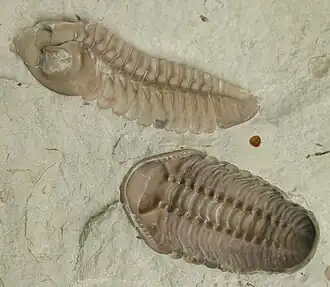
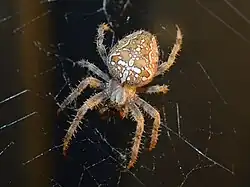
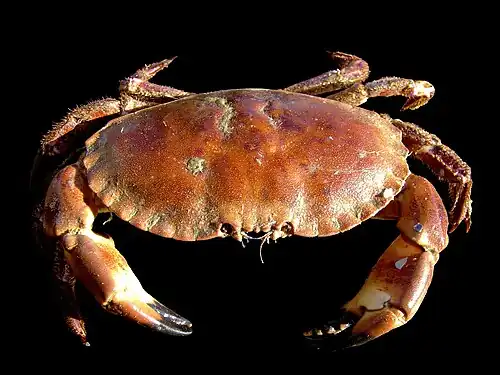
The evolutionary ancestry of arthropods dates back to the Cambrian period. The group is generally regarded as monophyletic, and many analyses support the placement of arthropods with cycloneuralians (or their constituent clades) in a superphylum Ecdysozoa. Overall, however, the basal relationships of animals are not yet well resolved. Likewise, the relationships between various arthropod groups are still actively debated. Today, arthropods contribute to the human food supply both directly as food and more importantly, indirectly as pollinators of crops. Some species are known to spread severe disease to humans, livestock, and crops. (Full article...)
Selected articles -
Entries here consist of Good and Featured articles, which meet a core set of high editorial standards.
Image 1
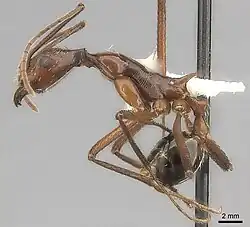
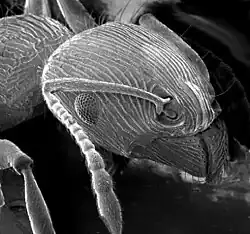
N. ensifer worker specimen
Novomessor ensifer is a species of ant endemic to Mexico. A member of the genus Novomessor in the subfamily Myrmicinae, it was first described by Swiss entomologist Auguste Forel in 1899. N. ensifer was originally a part of the genus Aphaenogaster until a recent phylogenetic study concluded that Novomessor was genetically distinct and should be separated. The ant is a medium-sized species, measuring 5.5 to 10 millimetres (0.2 to 0.4 in). The ant is ferruginous-colored in some certain parts of the body, and small workers (nanitics) in incipient colonies are noticeably different in color and body structure.
N. ensifer is active throughout the day, where they forage on the ground and sometimes on low herbs. Colonies are found under stones and other objects in tropical dry forests and pine-oak forests. These ants are solitary foragers and predominantly feed on insects such as wasps and moths. The only known predator of N. ensifer is the giant horned lizard (Phrynosoma asio). While nothing is known about its reproduction, nuptial flight may take place during spring or summer, where queens establish their nests under stones and other objects. (Full article...)
Image 2
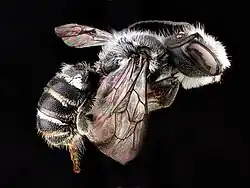
Male M. campanulae
Megachile campanulae, known as the bellflower resin bee, is a species of bee in the family Megachilidae. Described in 1903, these solitary bees are native to eastern North America. Studies in 2013 placed them among the first insect species to use synthetic materials for making nests. They are considered mason bees, which is a common descriptor of bees in several families, including Megachilidae. Within the genus Megachile, frequently also referred to as leafcutter bees, M. campanulae is a member of the subgenus Chelostomoides, which do not construct nests from cut leaves, but rather from plant resins and other materials. Females lay eggs in nests constructed with individual cell compartments for each egg. Once hatched, the eggs progress through larval stages and subsequently will overwinter as pupae. The bees are susceptible to parasitism from several other bee species, which act as brood parasites. They are medium-sized bees and the female adults are typically larger than the males. They are important pollinators of numerous native plant species throughout their range. (Full article...)
Image 3
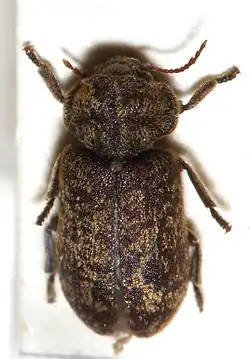
Zecicindela feredayi, also known as Fereday's tiger beetle, is a species of tiger beetle endemic to New Zealand. It was first described by Henry Walter Bates in 1867 and its taxonomy was most recently revised in 2013. The species has been suggested to be roughly 5.75 million years old. It can be distinguished from other species in the Zecicindela genus by its uniform dark legs and by the elytra colour pattern. It is widespread throughout most of the country and can primarily be found on sand near rivers. They occur as adults from November to April. Like other tiger beetles, they are predators. (Full article...)
Image 4
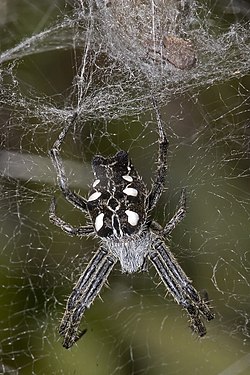
C. citricola from Portugal
Cyrtophora citricola, also known as the tropical tent-web spider, is an orb-weaver spider in the family Araneidae. It is found in Asia, Africa, Australia, Costa Rica, Hispaniola, Colombia, and Southern Europe and in 2000, it was discovered in Florida. C. citricola differs from many of its close relatives due its ability to live in a wide variety of environments. In North America and South America, the spider has caused extensive damage to agricultural operations.
C. citricola is in the orb web spider family, but its orb webs are considered atypical. They have a thick silk strand barrier above the orb and a thinner barrier below the orb. This gives the webs a horizontal mesh-like appearance. The spider has developed distinct and specific prey-capturing techniques using its unconventional webs. The prey flies into the upper mesh layer of the web and is deflected into the orb web. The spider then collects and stores the prey in its web. The difference in C. citricola's web silk stems from physiological variations in its spinning apparatuses, as compared to other closely related species. Its webs are non-adhesive and do not require daily respinning.
This spider is one of the few species to exhibit a variable level of sociality. C. citricola can be seen in colonies, which may have arisen due to reduced predation. Within these colonies, each spider has its own web that is linked to other spiders through communal webbing. The spider webs are often built in large matrices next to one another and can span entire trees. The spider usually peacefully coexists with other spiders in the colony. However, at times the spider may have to ward off other spiders in the colony that may try and claim its web. (Full article...)
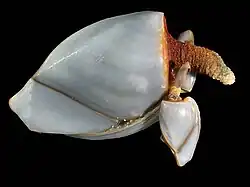
Whale barnacles passively filter food, using tentacle-like cirri, as the host swims through the water. The arrangement is generally considered commensal as it is done at no cost or benefit to the host. However, some whales may make use of the barnacles as protective armor or for inflicting more damage while fighting, which would make the relationship mutualistic where both parties benefit; alternatively, some species may just increase the drag that the host experiences while swimming, making the barnacles parasites.
After hatching, whale barnacles go through six molting stages before searching for a host, being prompted to settle by a chemical cue from the host skin. The barnacle creates a crown-shaped shell, and in most instances, deeply embeds itself into the skin for stability while riding a fast-moving host. The shell plates are made of calcium carbonate and chitin. (Full article...)
Image 6
The deathwatch beetle (Xestobium rufovillosum) is a species of woodboring beetle that sometimes infests the structural timbers of old buildings. The adult beetle is brown and averages 7 mm (0.3 in) in length. Eggs are laid in dark crevices in old wood inside buildings, trees, or tunnels left behind by previous larvae. The larvae bore into the timber, feeding for up to ten years before pupating, after which they emerge from the wood as adult beetles. Timber that has been damp and is affected by fungal decay is soft enough for the larvae to chew through. They obtain nourishment by using enzymes present in their gut to digest the cellulose and hemicellulose in the wood.
The larvae of deathwatch beetles weaken the structural timbers of a building by tunneling through them. Treatment with insecticides to kill the larvae is largely ineffective, and killing the adult beetles when they emerge in spring and early summer may be a better option. However, infestations by the beetles are often limited to historic buildings, because modern buildings tend to use softwoods for joists and rafters, rather than the aged oak timbers which the beetles prefer.
To attract mates, the adult insects create a tapping or ticking sound that can sometimes be heard in the rafters of old buildings on summer nights. For that reason, the deathwatch beetle is associated with quiet, sleepless nights, so it was named for the vigil (watch) being kept beside the dying or dead. By extension, there exists a superstition that the sounds are an omen of impending death. (Full article...)
Image 7
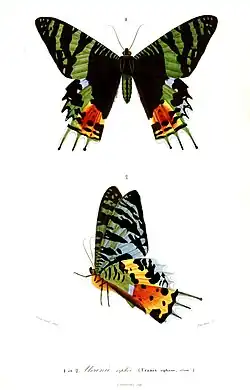
Engraving captioned Urania riphaeus from Charles D. d'Orbigny's Dictionnaire universel d'histoire naturelle (1849)
Chrysiridia rhipheus, the Madagascan sunset moth, is a species of day-flying moth of the family Uraniidae. It is considered one of the most impressive and appealing-looking lepidopterans. Famous worldwide, it is featured in most coffee table books on Lepidoptera and is much sought after by collectors, though many older sources misspell the species name as "ripheus". The colours originate from optical interference in the iridescent parts of the wings, while the black parts are pigmented. Adults have a wingspan of 7–9 cm (2.8–3.5 in).
Dru Drury, who described the moth in 1773, placed it in the genus Papilio, considering it a butterfly. Jacob Hübner placed it in the moth genus Chrysiridia in 1823. Later redescriptions led to junior synonyms such as Chrysiridia madagascariensis (Lesson, 1831).
At first the moth was thought to be from China, or Bengal, but was later found to be endemic to Madagascar. It is found throughout the year in most parts of the island, with peak populations between March and August, and smallest numbers between October and December. Females lay about 80 eggs under the leaves of Omphaleaspp. The caterpillars are whitish yellow with black spots and red feet and are covered in club-ended black setae. Silk spun from the mouth helps the caterpillars hold on to smooth leaves and climb back to the plant when they fall. After completing four instars, the caterpillars spin an open network cocoon. The pupal stage lasts from 17 to 23 days. Chrysiridia rhipheus is the sole specialist herbivore of the four species of Omphalea in Madagascar. Omphalea is toxic: the toxins are sequestered by the feeding caterpillar and retained in the pupal and adult stages. Thousands of these moths migrate between the eastern and western ranges of their host plants. (Full article...)
Image 8
Two Sphecius grandis wasps mate (male above, female below), in Big Bend, Texas.
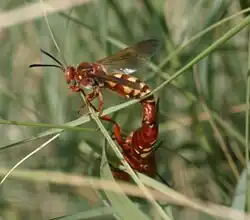
Sphecius grandis, also called the western cicada killer, is a species of cicada killer wasp (Sphecius). The western species shares the same nesting biology as its fellow species, the eastern cicada killer (S. speciosus). S. grandis, like all other species of the genusSphecius, mainly provides cicadas for its offspring. It forms nest aggregations and mates and broods once in a year, in July and early August. The wasp is on average 3 cm (1 in) to 5 cm (2 in) in length and is amber-yellow with yellow rings on its abdomen.
Wasps in the genus Sphecius are not habitually aggressive and use their venom mainly to paralyse cicadas which they take back to their nests to feed their young. The females catch around four or more cicadas for provisioning, place them in brood cells and lay eggs in the cells. S. grandis is endemic to Central America, Mexico and the Western United States, and is found at a higher mean altitude than other species of Sphecius. The western cicada killer males emerge earlier than females, but generally die after only a couple of days.
Sphecius grandis can be distinguished from S. convallis (the Pacific cicada killer wasp) by the coloration pattern of the gastral tergites. Formerly, the two species were distinguished on the basis of the number of tergites with yellow markings (five in S. grandis and three in S. convallis), but a more recent study showed that this character was insufficient to distinguish the two species. However, they can be distinguished by the density of the punctation on the first and second tergites. (Full article...)
Image 9
male
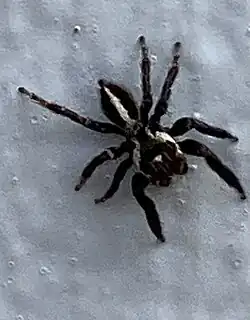
Portia schultzi is a species of jumping spider which ranges from South Africa in the south to Kenya in the north, and also is found in West Africa and Madagascar. In this species, which is slightly smaller than some other species of the genusPortia, the bodies of females are 5 to 7 mm (0.20 to 0.28 in) long, while those of males are 4 to 6 mm (0.16 to 0.24 in) long. The carapaces of both sexes are orange-brown with dark brown mottling, and covered with dark brown and whitish hairs lying over the surface. Males have white tufts on their thoraces and a broad white band above the bases of the legs, and these features are less conspicuous in females. Both sexes have tufts of orange to dark orange above the eyes, which are fringed with pale orange hairs. Males' abdomens are yellow-orange to orange-brown with blackish mottling, and on the upper sides are black and light orange hairs, and nine white tufts. Those of females are pale yellow and have black markings with scattered white and orange-brown hairs on the upper side. P. schultzi has relatively longer legs than other Portia, and a "lolloping" gait.
While most jumping spiders focus accurately up to about 75 cm (30 in) away, P. schultzi responds to a maximum of about 10 cm (3.9 in) in good light, and ignores everything in very subdued light. For prey, P. schultzi prefers web-based spiders, then jumping spiders, and finally insects. The females of P. schultzi and other Portia species build "capture webs" to catch prey, and often join their own webs on to web-based spiders to catch the other spiders or their prey.
If a P. schultzi female is mature, a male P. schultzi will try to copulate with her, or cohabit with a subadult female and copulate while she is moulting. They usually mate on a web or on a dragline made by the female, and P. schultzi typically copulates for about 100 seconds, while others in the genus can take several minutes or even several hours. Females try to kill and eat their mates during or after copulation, and subadult females mimic adult females to attract males as prey. Contests between Portia females are violent, and embraces in P. schultzi typically take 20 to 60 seconds. Sometimes, one female knocks the other on her back and the other may be killed and eaten if she does not right herself quickly and run away. When hunting, P. schultzi mature females emit olfactory signals that reduce the risk that any other females, males, or juveniles of the same species may contend for the same prey. (Full article...)
Image 10
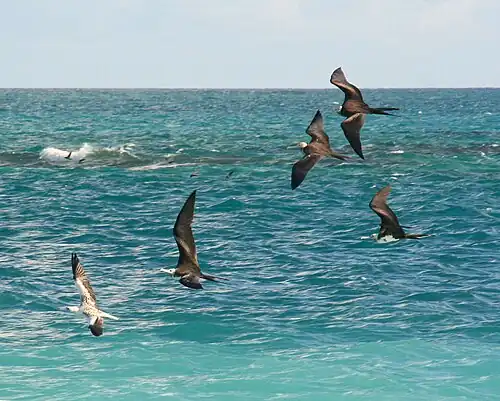
Great frigatebirds (Fregata minor) chasing a red-footed booby (Sula sula) to steal its food Kleptoparasitism (originally spelt clepto-parasitism, meaning "parasitism by theft") is a form of feeding behavior in which one animal — i.e. the kleptoparasite — deliberately takes food from another animal, often via aggressive confrontations. The strategy is evolutionarily stable when stealing is less costly than direct predation, such as when food is scarce or when physically weaker/less assertive victims are abundant and unlikely to fight back.
Many kleptoparasites are arthropods, especially bees and wasps, but including some true flies, dung beetles, bugs and spiders. Cuckoo bees are specialized kleptoparasites which lay their eggs either on the pollen masses made by other bees, or on the insect hosts of parasitoid wasps. They are an instance of Emery's rule, which states that insect social parasites tend to be closely related to their hosts. The behavior also occurs among vertebrates including birds such as skuas, who persistently chase and harass other seabirds until they disgorge their food; and hypercarnivorousmammals such as spotted hyenas and lions, who routinely rob killed prey from each other and other mesopredators such as cheetahs. Other species might also opportunistically indulge in kleptoparasitism, especially when driven by the desperation of hunger and when scavenging isn't an option. (Full article...)
Flea, the common name for the orderSiphonaptera, includes 2,500 species of small flightless insects that live as external parasites of mammals and birds. Fleas live by ingesting the blood of their hosts. Adult fleas grow to about 3 millimetres (1⁄8 inch) long, are usually dark in color, and have bodies that are "flattened" sideways or narrow, enabling them to move through their hosts' fur or feathers. They lack wings; their hind legs are extremely well adapted for jumping. Their claws keep them from being dislodged, and their mouthparts are adapted for piercing skin and sucking blood. Some species can leap 50 times their body length, a feat second only to jumps made by another group of insects, the superfamily of froghoppers. Flea larvae are worm-like, with no limbs; they have chewing mouthparts and feed on organic debris left on their hosts' skin.
Genetic evidence indicates that fleas are a specialised lineage of parasitic scorpionflies (Mecoptera) sensu lato, most closely related to the family Nannochoristidae. The earliest known fleas lived in the Middle Jurassic; modern-looking forms appeared in the Cenozoic. Fleas probably originated on mammals first and expanded their reach to birds. Each species of flea specializes, more or less, on one species of host: many species of flea never breed on any other host; some are less selective. Some families of fleas are exclusive to a single host group; for example, the Malacopsyllidae are found only on armadillos, the Ischnopsyllidae only on bats, and the Chimaeropsyllidae only on elephant shrews.
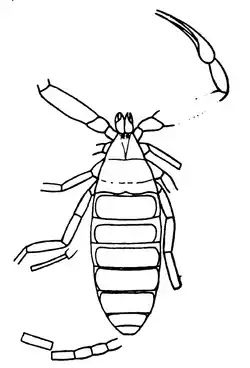
An image of the partial remains of an Eoscorpius specimen, created by Alexander Petrunkevitch
Eoscorpius is an extinct genus of scorpions. Several species have been formally described and named, while several other proposed species lack formal scientific names. The genus existed from the Early Carboniferous to the Asselian age of the Early Permian, its distribution spanning modern-day Asia, North America, and Europe. Its defining features include the subquadrate shape of its carapace, the placement of its median eyes on raised nodes, and two large ridges that differentiate the parts of its carapace. It has been noted for its extensive similarities to modern scorpions. Its habitat is believed to have included the extensive swampy, coal-producing forests that existed during the Carboniferous. Within these forests, there is evidence that it may have lived in the canopy and understory levels. (Full article...)
Evarcha denticulata, the Paterson Evarcha Jumping Spider, is a species of jumping spider that is endemic to South Africa. A member of the genusEvarcha, it is ground-dwelling spider, thriving in the fynbos found in the Eastern and Western Capes. The spider is small, with a rounded forward section, or cephalothorax, that is usually between 2.1 and 2.5 mm (0.08 and 0.10 in) long and, behind that, an ovoid abdomen that is between 1.8 and 3.4 mm (0.07 and 0.13 in) long. The female has a larger abdomen than the male. It is also lighter, with a pattern of grey patches visible on its yellow background. The male is generally blackish-brown. Both have three lines of white hairs on the spider's cheeks. The male Evarcha denticulata has a distinctive tooth on the spike, or apophysis, that emanates from its palpal tibia, part of its copulatory organs, which is recalled in the specific name. The species was first described in 2013 by Wanda Wesołowska and Charles Hadded. (Full article...)
Image 14
Lictor mirabilis is a species of jumping spider in the genusLictor that lives in the forests of Nigeria. The species was first described in 2011 by Wanda Wesołowska and Russell-Smith. Initially allocated to the genus Thiratoscirtus, the species was moved to its current genus in 2023. The spider is small, with an ovoid cephalothorax that is between 3.3 and 4.1 mm (0.13 and 0.16 in) long and a longer, thinner abdomen that is between 2.9 and 5.1 mm (0.11 and 0.20 in) long. The spider's carapace, the hard upper part of the cephalothorax, has a clear depression, or fovea, in the middle. The male has generally brown legs while the female's legs are brownish yellow. It can be distinguished from other species in the genus by its unusual copulatory organs. The male has an anvil-shaped protrusion, or apophysis, on its palpal tibia. The female has large translucent cup-like features near the front of its large epigyne and long insemination ducts. The unusual nature of its copulatory organs is recalled in its species name, which is a Latin word that can be translated as "strange". (Full article...)
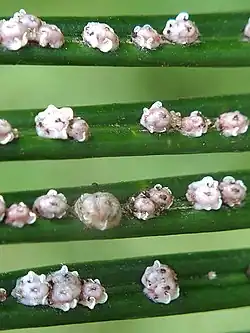
Scale insects are small insects of the orderHemiptera, suborder Sternorrhyncha. Of dramatically variable appearance and extreme sexual dimorphism, they comprise the infraorder Coccomorpha which is considered a more convenient grouping than the superfamily Coccoidea due to taxonomic uncertainties. Adult females typically have soft bodies and no limbs, and are concealed underneath domed scales, extruding quantities of wax for protection. Some species are hermaphroditic, with a combined ovotestis instead of separate ovaries and testes. Males, in the species where they occur, have legs and sometimes wings, and resemble small flies. Scale insects are herbivores, piercing plant tissues with their mouthparts and remaining in one place, feeding on sap. The excess fluid they imbibe is secreted as honeydew on which sooty mold tends to grow. The insects often have a mutualistic relationship with ants, which feed on the honeydew and protect them from predators. There are about 8,000 described species.
The oldest fossils of the group date to the Late Jurassic, preserved in amber. They were already substantially diversified by the Early Cretaceous suggesting an earlier origin during the Triassic or Jurassic. Their closest relatives are the jumping plant lice, whiteflies, phylloxera bugs and aphids. The majority of female scale insects remain in one place as adults, with newly hatched nymphs, known as "crawlers", being the only mobile life stage, apart from the short-lived males. The reproductive strategies of many species include at least some amount of asexual reproduction by parthenogenesis.
Some scale insects are serious commercial pests, notably the cottony cushion scale (Icerya purchasi) on Citrus fruit trees; they are difficult to control as the scale and waxy covering protect them effectively from contact insecticides. Some species are used for biological control of pest plants such as the prickly pear, Opuntia. Others produce commercially valuable substances including carmine and kermes dyes, and shellac lacquer. The two red colour-names crimson and scarlet both derive from the names of Kermes products in other languages. (Full article...)
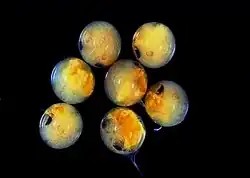
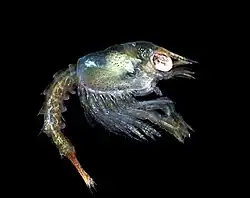
Image 2This Zoea-stage larva is hardly recognisable as a crab, but each time it sheds its cuticle it remodels itself, eventually taking on its final crab form (from Arthropod exoskeleton)
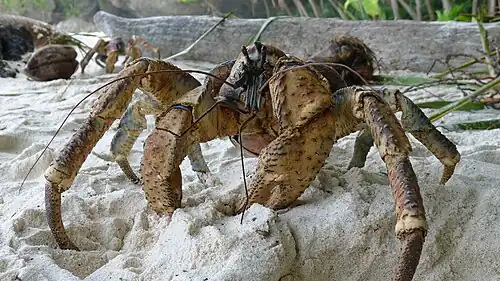
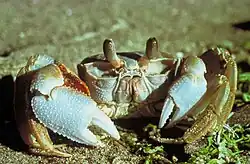
Image 5 This fully-grown robber crab has tough fabric forming its joints, delicate biomineralized cuticle over its sensory antennae, optic-quality over its eyes, and strong, calcite-reinforced chitin armouring its body and legs; its pincers can break into coconuts (from Arthropod exoskeleton)
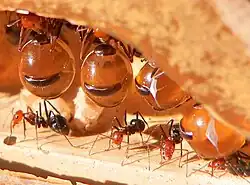
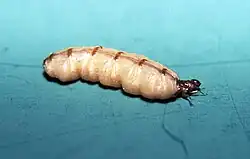
Image 13In honeypot antrepletes, the abdomens of the workers that hold the sugar solution grow vastly, but only the unsclerotised cuticle can stretch, leaving the unstretched sclerites as dark islands on the clear abdomen (from Arthropod exoskeleton)
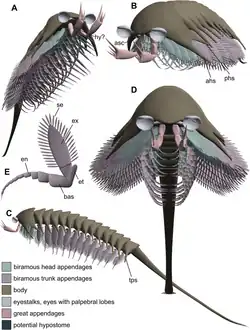
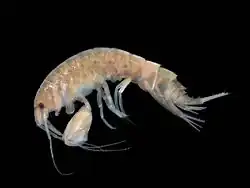
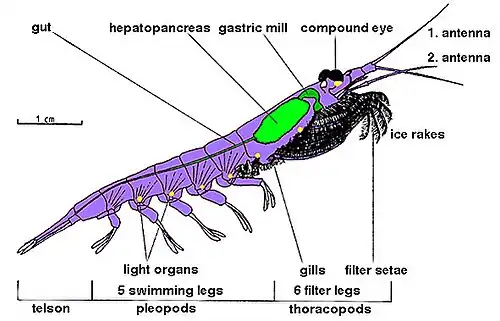
Image 17Body structure of a typical crustacean – krill (from Crustacean)
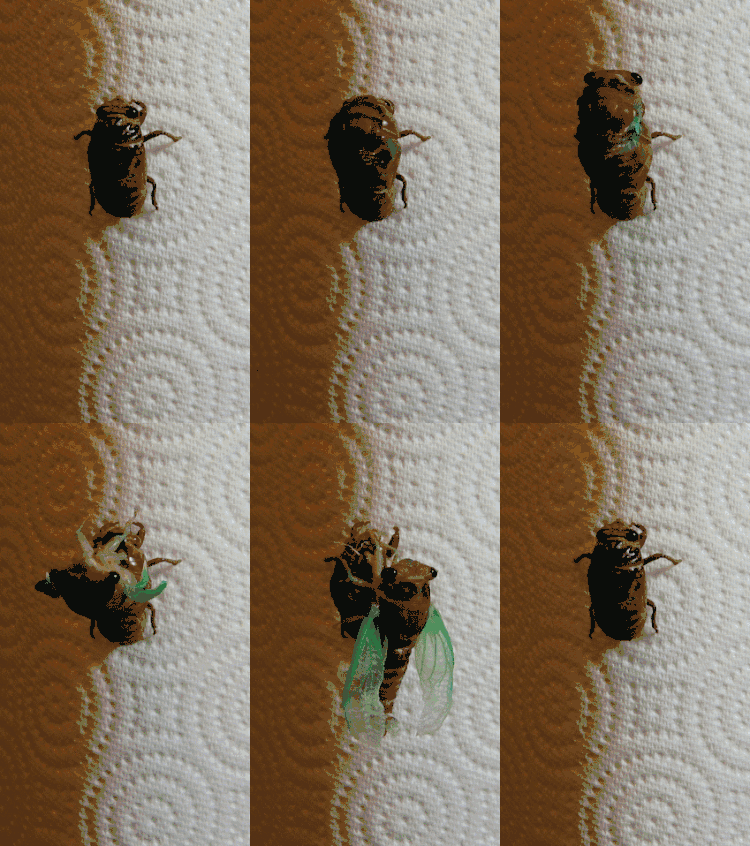
Image 18Crab larva barely recognisable as a crab, radically changes its form when it undergoes ecdysis as it matures (from Arthropod exoskeleton)
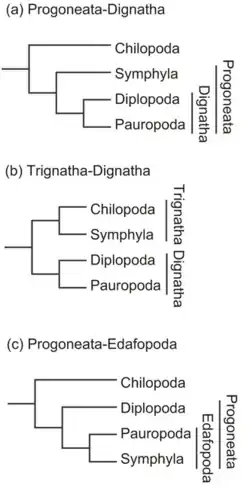
Image 19Some of the various hypotheses of myriapod phylogeny. Morphological studies (trees a and b) support a sister grouping of Diplopoda and Pauropoda, while studies of DNA or amino acid similarities suggest a variety of different relationships, including the relationship of Pauropoda and Symphyla in tree c. (from Myriapoda)
Image 25Mature queen of a termite colony, showing how the unsclerotised cuticle stretches between the dark sclerites that failed to stretch as the abdomen grew to accommodate her ovaries (from Arthropod exoskeleton)
Image 27Ghost crab, showing a variety of integument types in its exoskeleton, with transparent biomineralization over the eyes, strong biomineralization over the pincers, and tough chitin fabric in the joints and the bristles on the legs (from Arthropod exoskeleton)
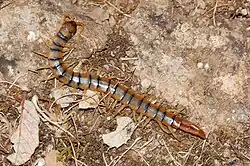
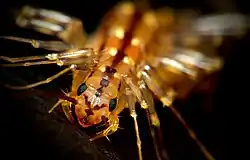
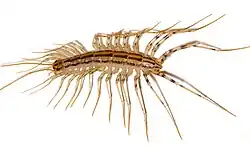
Image 29The house centipedeScutigera coleoptrata has rigid sclerites on each body segment. Supple chitin holds the sclerites together and connects the segments flexibly. Similar chitin connects the joints in the legs. Sclerotised tubular leg segments house the leg muscles, their nerves and attachments, leaving room for the passage of blood to and from the hemocoel (from Arthropod exoskeleton)
Image 31The Fangs in Spiders' chelicerae are so sclerotised as to be greatly hardened and darkened (from Arthropod exoskeleton)
Image 32Formation of anterior segments across arthropod taxa based on gene expression and neuroanatomical observations, Note the chelicera(Ch) and chelifore(Chf) arose from somite 1 and thus correspond to the first antenna(An/An1) of other arthropods. (from Chelicerata)
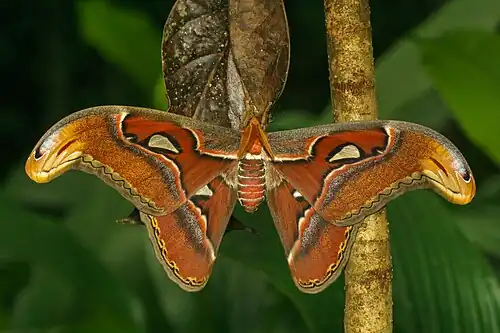
Attacus taprobanis is a species of moth in the family Saturniidae native to southern India and Sri Lanka. This adult male, photographed in Kadavoor, Kerala, developed from a larva feeding on a mahogany tree. When ready to pupate, the larva formed a papery cocoon 7.5 cm (3 in) long interwoven with a leaf; before doing this, the larva had attached the leaf to the stem with a silken thread and cut the leaf stalk. The colours of the dying leaf provided camouflage for the pupa, and the adult insect emerged some 24 days later.
Danaus genutia, the common tiger or striped tiger, is a species of brush-footed butterfly found in Sri Lanka, India, Myanmar, south-eastern Asia and Australia. It prefers areas of moderate to heavy rainfall, and typical habitats include scrubby jungle, deciduous forests and fallow land near habitations. The insect sequesters toxins from plants, and advertises its unpalatability by having prominent markings and striking colour patterns. This adult male common tiger, of the subspecies D. g. genutia, was photographed in Kerala, India.
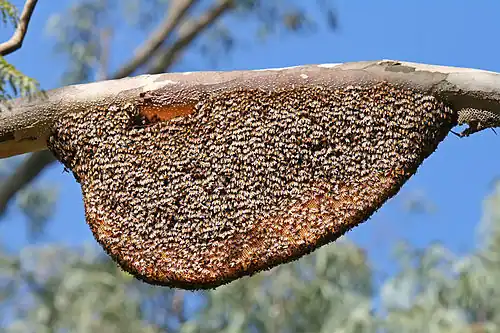
A nest of the tropical Asian giant honey bee, which consists of a single exposed honeycomb, an array of densely packed hexagonal cells made of beeswax. Honeycombs store food (honey and pollen) and house the "brood" (eggs, larvae, and pupae).
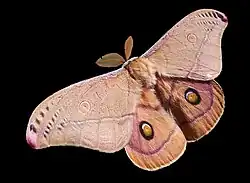
The Polyphemus Moth (Anthera polyphemus) is one the biggest moths, having a wingspan of up to 15 cm. Usually found in forests, moths are notable for apparently being attracted to light, the reason for this behaviour is not known.
The head of a female Clynotis severus species of jumping spider. The eyes of a spider are called simple eyes (as opposed to compound eyes) because in each eye, a single lens collects and focuses light onto the retina. In this spider, the two largest eyes in the middle are the most acute. The remainder on the sides and on the top of its head are "secondary eyes".
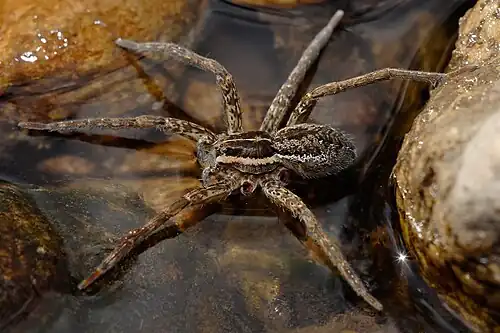
A fishing spider with two of its legs missing. Most likely some predator (a bird, or given its habitat a large fish or frog) grasped the spider by the missing limbs which were jettisoned by the spider in response, a process known as autotomy.
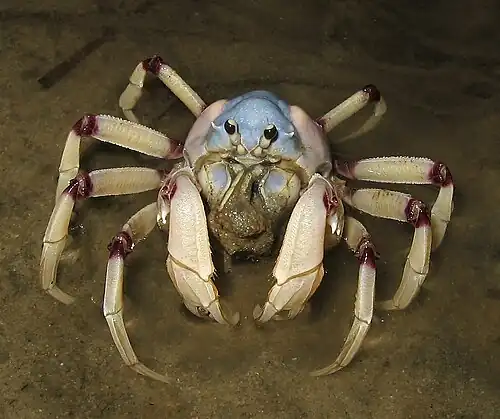
The light blue soldier crab (Mictyris longicarpus) inhabits beaches in the Indo-Pacific region. Soldier crabs filter sand or mud for microorganisms. They congregate during the low tide, and bury themselves in a corkscrew pattern during high tide, or whenever they are threatened.
Pieris brassicae, the large white, is a species of butterfly in the family Pieridae, common in Europe, Asia and North Africa. The larva pictured here, which was found at a market in Fronton, France, is a serious pest of plants in the cabbage family, Brassicaceae. The eggs are laid in batches on the undersides of the leaves of plants rich in mustard-oil glucosides, and consumption of these substances as they chew the leaves makes the larvae distasteful; the bright colouration of the larvae signals to predators that they taste bad. Additionally, the adult butterflies emit an unpleasant smell and display warning colours.
The Globe Skimmer (Pantala flavescens) is the most widespread dragonfly species on the planet, found between about the 40th parallels of latitude, or where the annual mean temperature is above 20 °C (68 °F), except in Europe where there are only occasional sightings.
Xylotrupes socrates (Siamese rhinoceros beetle, or "fighting beetle"), male, on a banana leaf. This scarab beetle is particularly known for its role in insect fighting in Northern Laos and Thailand.
The Ozyptila praticola species of crab spider is found throughout Europe and the Middle East. They do not build webs to trap prey, but are active hunters. Crab spiders are so named because of their first two pairs of legs, which are held out to the side giving them a crab-like appearance. Also, like crabs, these spiders move sideways and backwards more easily than forwards.
An assassin bug belonging to the Reduviidae family of insects. A predatory insect so named because of its tendency to wait in ambush for its prey, the assassin bug uses its long rostrum to inject a lethal saliva that liquefies the internal structures of the prey, which are then sucked out.
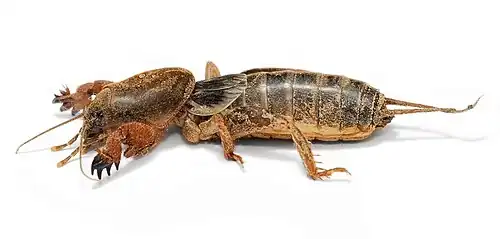
A mole cricket, an insect belonging to the Gryllotalpidaefamily. Mole crickets are common insects, found on every continent except Antarctica, but because they are nocturnal and spend nearly all their lives underground in extensive tunnel systems, they are rarely seen. This specimen is likely to be Gryllotalpa brachyptera and is about 3.5 cm (1.4 in.) in size.
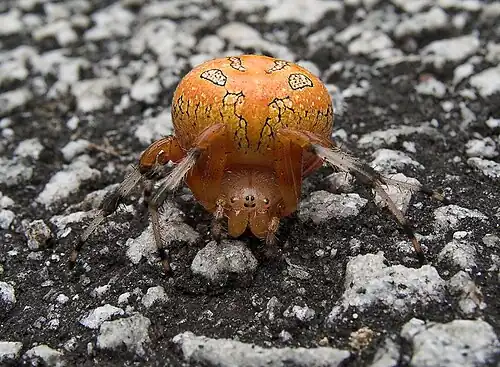
The orb-weaver spiders (family Araneidae) are the familiar builders of spiral wheel-shaped webs often found in gardens, fields and forests. The family is a large one, including over 2800 species in over 160 genera worldwide, making it the third largest known (behind Salticidae and Linyphiidae). The web has always been thought of as an engineering marvel.
The western honey bee (Apis mellifera) is the most common of the 7–12 species of honey bee worldwide. It is believed to have originated in either Africa or Asia, and spread naturally through Africa, the Middle East and Europe. Following human introduction into the Americas and Oceania, the species is now found on every continent except Antarctica. Humans have been collecting honey from bees for thousands of years, with evidence in the form of rock art found in France and Spain, dating to around 7000 BC. Along with other insects, the honey bee is an important pollinator, with a large number of the crop species farmed worldwide depending on it.
Gonepteryx rhamni, also known as the common brimstone, is a butterfly in the family Pieridae. It lives throughout the Palearctic zone and is commonly found across Europe, Asia and North Africa. The butterfly relies on two species of buckthorn as hosts for its eggs and larvae, which influences its geographic range and distribution as these plants are commonly found in wetlands. After spending the summer feeding, adults travel to woodland areas to spend seven months hibernating. In spring when their host plants have developed, they return to the wetlands to breed and lay eggs. Both the larval and adult forms of the species have protective coloration and behaviour that decreases their chances of being recognised and preyed upon. The adult common brimstone has sexual dichromism in its wing coloration and iridescence; the male (pictured) has yellow wings and iridescence, while females have greenish-white wings and are not iridescent.
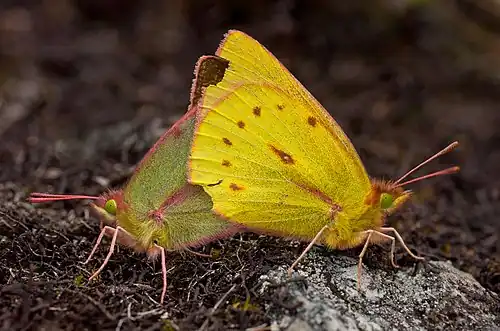
Sexual dimorphism is the condition where the two sexes of the same species exhibit different characteristics. Differences may include secondary sex characteristics, size, weight, color, or markings, as well as behavioral and cognitive differences. In the butterfly species Colias dimera (also known as the Dimera sulphur), seen here mating in Venezuela, the male on the right is a brighter shade of yellow than the female.
Start a new article. Arthropods cover an huge range of taxa and other topics, so there will always be plenty of missing articles. Some which have been explicitly requested are listed here.
Expand an existing article. Existing articles are often incomplete and missing information on key aspects of the topic. It is particularly important that the most widely read articles be broad in their scope. Wikipedia:WikiProject Arthropods/Popular pages (updated monthly) shows the number of views each article gets, along with assessments of its quality and importance. Articles with higher importance ratings and greater numbers of views are the priority for article improvements, but almost all our articles would benefit from expansion. Stubs can be found in Category:Arthropod stubs and its subcategories.
Associated Wikimedia
The following Wikimedia Foundation sister projects provide more on this subject:


.jpg)


.jpg)




.jpg)
_-_Oberer_Brauner_Jura_-_Bissingen_unter_Teck.jpg)

_crop.jpg)

.jpg)




_male_underside.jpg)

.jpg)

.jpg)
.jpg)


.jpg)
_male.jpg)
_on_Bohadschia_argus_(Sea_cucumber).jpg)






 Here are some tasks you can do:
 Commons
 Wikibooks
 Wikidata
 Wikinews
 Wikiquote
 Wikisource
 Wikispecies
 Wikiversity
 Wikivoyage
 Wiktionary
 List of all portals





 Random portal
 WikiProject Portals