Joan Tartas
Joan Tartas | |
|---|---|
Tartaseko Joan | |
| Born | c. 1610 Probably Chéraute, Soule |
| Died | Unknown |
| Other names | Jean de Tartas Juan de Tartas Ivan Tartas (erroneous) |
| Occupations | Clergyman, writer |
| Notable work | Onsa hilceco bidia (1666) Arima penitentaren occupatione devotaq (1672) |
Joan Tartas (Basque: Tartaseko Joan; French: Jean de Tartas; Spanish: Juan de Tartas; also erroneously known as Ivan Tartas[1]) was a Souletin clergyman and Basque-language writer born, probably, in 1610 (his date of death is unknown).
Two of his religious works are extant: one titled Onsa hilceco bidia (The Way to Die Well), from 1666, and Arima penitentaren occupatione devotaq (Devout Occupations of the Penitent Soul), from 1672.
Biography
The documentary information preserved about his life is scarce and, at times, contradictory.[2] Thus, he may have been born between 1610 and 1612, according to Luis Villasante,[3] into a family of wealthy farmers, beginning his early studies with the Clerics Regular of Saint Paul in Lescar in 1624.[4]
It is believed that Sanz de Tartas, proofreader of the New Testament translated by Joannes Leizarraga in 1565, may have been his great-uncle.[5]
While holding the position of canon of the Church of Saint Mary (Donamaria, in Basque) of Oloron, he was appointed rector of Aroue, a title with which he signed his two works. After 1662, the year in which he still appears as parish priest of Moncayolle and L'Hôpital-Saint-Blaise, references to him disappear, until 1673, when his signature as parish priest of Aroue and Tardets is attested again, in a speech written and addressed to the Cardinal of Olorón.
Works
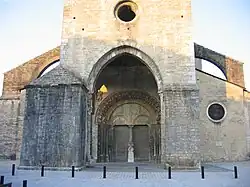
The Way to Die Well (Onsa hilceco bidia), 1666
The Way to Die Well (Onsa hilceco bidia) was published in 1666 and is his oldest preserved work, as well as the most studied and well-known. Due to the time elapsed between the first and last ecclesiastical approvals (eight years), it is believed he had problems publishing the book, likely due to the harshness of his examples (many referring to French monarchs) or the abundance of quotations from Latin and pagan authors (towards whom he shows admiration) to justify his theses.
According to Piarres Lafitte, it is the oldest example of the Souletin dialect and the most studied work of Juan de Tartas, among other aspects for its agile prose and its characteristics typical of sermon and oral literature.
Theme and style
This ascetic book explains the need to prepare to die correctly, for a good life demands a good death, according to the author's own words:
"Ezta halaber hiltçe honic, ezpada, biçitçe honic, onsa hil nahidenac, behardu onsa biçi". Translation: "Nor is there a good death, if there is not a good life; he who wishes to die well must live well."
As evidence to prove his thesis, the author, following the trail of the writers of the School of Sara, makes use of abundant quotations from classical authors, among whom Aristotle and Seneca stand out, from the Bible, and from Christian writers such as Saint Augustine. There is a certain resemblance between this work and the Guero of Axular, as both texts are in prose, have an ascetic theme, and share characteristics typical of the essay and abundance of quotes; however, Tartas is somewhat more anarchic and poorer in stylistic resources. The book falls within the European current of religious manuals for individual salvation.
Structure
According to Tartas' own words, the text presents the following structure:[6][7]
- Chapter 1: «lehenian... paganoen erranaz...» ("firstly... on what the pagans said...").
- Chapter 2: «bigarrenian lege zaharreko eskritura saindiaz» ("secondly, on the old law of the holy scriptures").
- Chapter 3: «Hirugarrenean lege berriaz eta elizako doktor saindiaz» ("thirdly, on the new law and the holy doctors of the Church").
- Chapter 4: «Laugarrenian arrazoin diferentez frogatzea: ontsa hiltzeko bidia dela herioaz eta hilziaz orhitzia» ("fourthly, proving with different reasons: that the way to die well is to remember dying and death").[8]

The book ends with an appendix containing prayers in Basque, commandments of God and the Catholic Church, litanies to the Virgin Mary, and some verses dedicated by his readers (Juan de Baguaria, Bonnecase and P. Darhetz).[9]
Devout Occupations of the Penitent Soul (Arima penitentaren occupatione devotaq), 1672
Arima penitentaren occupatione devotaq (Devout Occupations of the Penitent Soul) was published in Orthez by the Royal Printer of the place (responsible, probably, for the large number of spelling errors and the Frenchified orthography).[10][11] As the title indicates, it consists of reflections on Christian prayer, fasting, and almsgiving, with an independent section of the book dedicated to each of these topics.[8]
Structure
- Introduction: written in French and addressed to King Louis XIV of France and the Count of Troisvilles, Jean-Armand du Peyrer, to whom he dedicates this work. References are made to praises of his land, especially those of Iruri (Troisvilles).
- Chapter 1: «Orationia zer den, haren nezesitatia, nolako behar dian izan, zer bertute eta indar dian Jinkoa baitan» ("What prayer is, its necessity, how it should be, and what virtue and strength it has in God"). It deals with prayer, underlining its importance and where and how it should be performed.
- Chapter 2: «Barura zer den eta haren indarrak zer diren» ("What fasting is and what its strengths are"). As the title indicates, it revolves around fasting. It uses a fairly explicit example about a king of France whom he prefers not to name, then defines what a good fasting is; he gives four reasons to break it, six examples of how to perform it, and underlines the necessity of mortifying the body.
- Chapter 3: «Zer den amoina, nola eta noiz eman behar den, zer den haren indarra eta bertutia» ("What alms are, when and how they must be given, and their strength and virtue"). He defines alms, justifies them with three examples, and narrates two facts and three related stories.
The text ends with three poems offered to the author, in Latin, French, and Basque, the latter written by Mr. Juan de Baguaria.
Criticism
Tartas used the Basque language merely as an instrument of his pastoral work, i.e., to spread the doctrine of the Church, and not as an aesthetic element. However, despite these limitations, authors like Axular and Tartas himself managed to develop a consistent style, with their own personal traits, such as the rapid rhythm of his prose, which make him worthy of appreciation and study even today. Critics especially value his first work over the second, sometimes considered "unreadable" due to its abundant orthographic contradictions and Frenchified spelling.
Tartas uses a language that is not highly polished, but is his own and fond of wordplay, so it can be said that the originality of his work comes from its strange and somewhat chaotic aspect, as explained by professor and Carmelite philologist Santi Onaindia.[8]
Well-known are the criticisms made by Koldo Mitxelena and Father Luis Villasante in their respective works on Basque literature. Here is the contrast on which the originality of his work is based, according to these authors:
- On one hand, he appears "serious," "wise," "erudite," and "cultured." Tartas was a skilled translator, especially in passages converted from Spanish, French, and Latin into Basque, and shows a surprising erudition compared to Axular, according to Koldo Mitxelena, and a style "in the manner of Father Nieremberg" when recounting events from the lives of monarchs. According to research by Darricarrére, it is possible that these anecdotes earned him some trouble with censorship, as this would justify the period of nine years between the first and last approval.[12]
- On the other hand, he seems "vulgar," "coarse," and "entertaining," due to his wordplay, brusqueness in expressions, harshness of examples, etc. Like those lacking education, he forgets periods and commas; he takes the path of spontaneity and orality, and that is what gives his work value and prestige today.
According to experts, the author plays in his prose by alternating what they call azalpen-hitz ("explanation-words") and super-hitz ("super-words"):
- Azalpen-hitzak: these include stories, examples, and reflections. The citational function is dominant, and in these passages he largely uses the third person.
- Super-hitzetan: he pronounces advice, calls to the reader, and recommendations, often with the intention of moving the reader with his anguished or restless tone. The driving or dynamic function predominates. In these passages he uses the second person.
Like Axular, his prose does not stray too far from the oral tradition and sermons, although it is not as polished as that of the rector of Sara, making it somewhat anarchic. Paradoxically, it is that special rhythm of his prose that makes it so meritorious, successfully reflecting the liveliness that corresponds to action, unlike the authors of his time.
On the dialect
Koldo Mitxelena initially considered him the first author to write in Souletin, since Oihenart, although a native of Soule, used the Labourd dialect and Low Navarrese dialect in his works. Tartas refers to the dialect used in his own works as follows:
I do not know if my Basque will be approved; it has a bit of every dialect: Soule, Basse-Navarre, and Labourd have each provided something, though not everything. I wrote my poor book in Aroue; if this language is not beautiful enough, the Basque of that place is at fault and not the Basque speaker. (ene euskera eztakit aprobatiatzen denez; bai ala ez, badu orotarik zerbait, Zuberoak, Baxanabarrek eta Lapurdik eman drauko zerbait, baina ez oro; Arue-n egin dut neure pieza pobria, hanko lengajia ezpada aski eder, hanko euskerak du ogena, eta ez euskaldunak)
— Euskal Literatura I. Santi Onaindia (Etor, 1972) (in Basque) [trans-title: Basque Literature I]
Piarres Lafitte considered that the Basque used by Tartas was an example for studying the peculiarities of the Souletin dialect, although it was not a completely pure Souletin, due to the lack of use of the vowel ü and the influence of Labourdian, Low Navarrese, and the variant of Arue.[8] Currently, and in accordance with Mitxelena's rectification, it is believed that Tartas most likely used the subdialect of Amikuze of the Souletin dialect.[13]
Praise for the author
In their time, Tartas's two works were quite praised by French and Basque religious figures, although they later fell into oblivion and were not recovered until centuries later. In total, his two works include up to nine praises, five in verse and four in prose, a more than considerable number for an author who wrote in the Basque language. Curiously, his figure was forgotten in subsequent centuries, and references to this author are scarce until the studies of Patxi Altuna and Koldo Mitxelena already in the 20th century.
The figures of that time who wrote some dedication or praise in his prefaces are the following:
- A. de Cognet, rector of Atharratze, vicar of Soule.
- B. Iauregiberri, general and official.
- D. Irunberri, prior of Utziate and vicar of Dax.
- P. Darhetz, lawyer in parliament and judge of Barkoitze.
- Joanes, bishop of Bayonne.
- Juan de Baguaria, rector of Susmio and Camblonque.
- Bonnecase, rector of Mauleón.
- Jacobus de Casedevant, vicar of Gestas.
- D'Abbadie Costere, councillor and procurator of the king in the Land of Soule.
Approximate translation of Autorari (to the author), by Juan de Baguaria Cambloque, rector of Susmio:[8]
|
Euskal Herriak Tartas Lauda doktor handia Euskaldun orok harzaz Dugu libru hautia Sainduki bizitzeko Hark doktrina saindia Zelurat ioaiteko Emaitendu bidia. |
|
Relation to the School of Sara and Axular
In relation to the contemporary literature in Basque, Luis Villasante, quoted by Xabier Kintana, stated in his Historia de la literatura vasca (History of Basque Literature) that it took around 10 years to be approved by the church (Editions Sendo, Bilbao, 1961, p. 92.) According to Kintana:
With a century of delay compared to the surrounding literature, following the popular taste of the old tradition and not being fully in agreement with the elegant and official rule of the Church, Onsa hiltzeko bidea needed more than ten years to obtain all the ecclesiastical approvals. It is not at all strange for everyone, comparing it with the Basque literature of the time, that the Souletin's book seems very inopportune or inconvenient.[14]
Xabier Kintana believes that, despite this, one cannot think that Tartas prepared his book unknowingly and in a messy way. According to the linguist, although the author gives more importance to the story than to the doctrine, unlike Axular, and does not show that balance between quotes and thesis characteristic of the rector of Sara, it cannot be said that Tartas was not capable of doing more. He opines that this choice of different literary paths resided in different opinions.
Juan de Tartas did not agree with Axular, and evidence of this is his prologue, for while the writer from Urdazubi says:
baldin hala ezpada, euskaldunek berek dute falta eta ez euskarak
("if it is not so, the fault lies with the Basques themselves and not with the Basque language)[15]
the Souletin responds:
[...] hanko (Arueko) lengajia ezpada aski eder, hanko euskarak dü hogena eta ez euskaldünek
([...] if the language of that place (Arue) is not beautiful enough, the fault lies with the Basque of that place and not with the Basques)[15]
These phrases, opines the cited professor, are each other's responses and make it clear that Tartas knew the work of Axular and disagreed with him. The Navarrese, although he said the opposite in the prologue, gave both content and form their corresponding importance in his work, hence the "fine, elaborated, and exact" aspect of his language. Tartas, on the other hand, gave greater importance to what was expressed than to the way it was done, which is why his Basque is more unpolished and lacking in stylistic resources, although, despite that, natural and conversational.[16]
References
- ^ Kintana, Xabier (21 November 1974). "Literaturaren Zubitegia: Hitzaurre gisa" [Bridge of Literature:As a preface]. zubitegia.armiarma.com (in Basque). Bilbao. Archived from the original on 28 August 2008. Retrieved 31 January 2026.: ("Juan —eta ez, besteak beste, Ivan— de Tartasen bizitzaz dakiguna." ["What we know about the life of Juan—and not, among others, Ivan—de Tartas."])
- ^ "Literaturaren Zubitegia - Harluxet hiztegi entziklopedikoa: Tartas, Joan" [Harluxet Encyclopedic Dictionary:Tartas, Joan]. zubitegia.armiarma.com (in Basque). Bilbao. 1995. Archived from the original on 29 September 2007. Retrieved 31 January 2026. ("Nekazari aberatsen semea zen. Arüe eta Atharratzeko erretorea izan zen. Ortesen argitaratutako Onsa hilceco bidia (1666) du obra nagusia." ["He was the son of a wealthy farmer. He was rector of Aroue and Atharratze. His main work is Onsa hilceco bidia (1666), published in Orthez."])
- ^ Kintana, Xabier. "Literaturaren Zubitegia: Hitzaurre gisa" [Bridge of Literature: As a preface]. zubitegia.armiarma.com (in Basque). Bilbao. Archived from the original on 28 August 2008. Retrieved 31 January 2026.
- ^ Estornés Zubizarreta, Idoia. "Enciclopedia Auñamendi: Cultura Vasca on-line: Tartas, Juan de" [Auñamendi General Illustrated Encyclopedia of the Basque Country: entry for Joan Tartas]. euskomedia.org (in Spanish). Archived from the original on 29 September 2007. Retrieved 31 January 2026.("Hace sus estudios primarios en el colegio de las Barnabitas de Lescar en 1624." ["He began his primary studies at the Barnabite school in Lescar in 1624."])
- ^ "Enciclopedia Auñamendi: Cultura Vasca on-line: Tartas, Sanz de" [Auñamendi General Illustrated Encyclopedia of the Basque Country: entry for Sanz de Tartas]. euskomedia.org (in Spanish). Archived from the original on 30 September 2007. Retrieved 31 January 2026.("TARTAS, Sanz de. Corrector de la traducción del Nuevo Testamento de Leizarraga de 1565. Se le ve como ministro de Saint-Palais en 1578. Probablemente, era tío-abuelo de Jean de Tartas." ["Sanz de Tartas. Proofreader of Leizarraga's translation of the New Testament of 1565. He is seen as minister of Saint-Palais in 1578. Probably, he was the great-uncle of Jean de Tartas."])
- ^ "XVII mendeko literatura Iparraldean" [17th century literature in the North - Ivan of Tartas]. hiru.com (in Basque). Archived from the original on 29 March 2010. Retrieved 31 January 2026.
- ^ "Tartas" [Tartas (digital text of work)]. vc.ehu.es. EHU: University of the Basque Country. Archived from the original on 25 March 2010. Retrieved 31 January 2026.
- ^ a b c d e Onaindia, Santi. "Literaturaren Zubitegia: Euskal literatura I: 17 — Joanes Tartas" [Literary Bridge: Basque Literature I: 17 Joan Tartas (1624)]. zubitegia.armiarma.com (in Basque). Bilbao: Etor. Archived from the original on 19 May 2006. Retrieved 31 January 2026.
- ^ "Juan Tartas: Onsa hilzeko bidia" [Repository of Classics: Joan Tartas' Onsa hilzeko bidia: Authority (text of final section)]. klasikoak.armiarma.com. Archived from the original on 29 September 2007. Retrieved 31 January 2026.
- ^ Aldalur, Mikel (8 March 1997). "Benetako klasikoa" ["A true classic"]. Euskaldunon Egunkaria (Basque newspaper). Archived from the original on 21 May 2006. Retrieved 31 January 2026. ("Inprimategian, lehen argitalpen hartan, hutsegite eta errakuntza ugari egin zituzten, dirudienez, bertako arduradun edota langileek euskaraz ez zekitelako." ["In that first printing, many mistakes and errors were made, it seems, because those in charge or the workers at the printing press did not know Basque", in reference to the critical edition by Patxi Altuna])
- ^ Estornés Zubizarreta, Idoia. "Enciclopedia Auñamendi: Cultura Vasca on-line: Tartas, Juan de" [Auñamendi General Illustrated Encyclopedia of the Basque Country: entry for Joan Tartas]. euskomedia.org (in Spanish). Archived from the original on 29 September 2007. Retrieved 31 January 2026.("Es de lamentar, sin embargo, la gran cantidad de faltas ortográficas que se explica por la ignorancia del lenguaje del impresor de Orthez" ["It is regrettable, however, the great quantity of orthographic faults which are explained by the ignorance of the language on the part of the printer of Orthez."])
- ^ Estornés Zubizarreta, Idoia. "Enciclopedia Auñamendi: Cultura Vasca on-line: Tartas, Juan de" [Auñamendi General Illustrated Encyclopedia of the Basque Country: entry for Joan Tartas]. euskomedia.org (in Spanish). Archived from the original on 29 September 2007. Retrieved 31 January 2026.("Algunas de las anécdotas tal vez le valieron dificultades con la «censura» de la época ya que, según investiga Darricarrére, entre la primera y la última de las aprobaciones hay un lapso de nueve años que resulta sospechoso en una obra de rígida ortodoxia católica como la que enjuiciamos." ["Some of the anecdotes perhaps earned him difficulties with the 'censorship' of the time, since, as Darricarrére investigates, between the first and the last of the approvals there is a lapse of nine years which is suspicious in a work of rigid Catholic orthodoxy like the one we are judging."])
- ^ "XVII mendeko literatura Iparraldean" [17th century literature in the North - Ivan of Tartas]. hiru.com (in Basque). Archived from the original on 29 March 2010. Retrieved 31 January 2026. "Aipatu behar da bere euskarak hainbat eragin izan dituela: zuberera, lapurtera, behe-nafarrera eta Arueko euskara. Hasieran, Mitxelenak esan zuen Onsa hilceco bidia zubererako lehen liburua zela, baina hori ez da zuzena. Esandakoa zuzendu ondoren, Tartasen hizkera Amikuzeko (Mixe) behe-nafarrera zela esan zuen. Tartasek berak dio bere hizkera Aruekoa dela." ["The Basque used by Tartas has influences from several dialects: Souletin, Labourdin, Low Navarrese, and the Arue variant. Mitxelena stated that Onsa hilceco bidia was the first book in Souletin, but later rectified, saying that Tartas's dialect was the Low Navarrese of Amikuze (Mixe). Although Tartas himself states that his dialect is the Basque of Arue"]).
- ^ Kintana, Xabier (21 November 1974). "Literaturaren Zubitegia: Hitzaurre gisa" [Bridge of Literature:As a preface]. zubitegia.armiarma.com (in Basque). Bilbao. Archived from the original on 28 August 2008. Retrieved 31 January 2026.: ("Inguruko literaturekiko, mende bat atzeraturik, herri gustu zaharraren tradizioari segituz eta Elizaren arau dotore ofizialekin ez guztiz ados, Ontsa hiltzeko bideak hamar urte inguru behar ukan zituen eliz aprobazioak lortzeko. Guztiongatik, ez da batere estrainio, orduko euskal literaturaz gonbaratuz, zuberotarraren liburua oso desegoki agertzea." ["Compared to the surrounding literature, a century behind, following the old popular taste tradition and not fully in agreement with the Church's elegant official rules, Ontsa hiltzeko bidea needed about ten years to obtain church approvals. For all of us, it is not at all strange, considering the Basque literature of the time, that the Souletin's book appears very unsuitable."])
- ^ a b Kintana, Xabier (21 November 1974). "Literaturaren Zubitegia: Hitzaurre gisa" [Bridge of Literature:As a preface]. zubitegia.armiarma.com (in Basque). Bilbao. Archived from the original on 28 August 2008. Retrieved 31 January 2026.
- ^ Kintana, Xabier (21 November 1974). "Literaturaren Zubitegia: Hitzaurre gisa" [Bridge of Literature:As a preface]. zubitegia.armiarma.com (in Basque). Bilbao. Archived from the original on 28 August 2008. Retrieved 31 January 2026.: ("Esaldiok alkarren kontrast direla ukatzerik ez dago. Tartasek, obra bederen, Axular ezagutzen zuen, eta bistan dago ez zegoela harekin konforme. Nafarrak, hitzaurrean bestelakorik esan arren, azala eta loreari, mamia eta fruituari bezainbateko garrantzia eman zien bere obra egiterakoan. Aurreko lantzerik eza gora behera, Axularrek hizkuntzari, berez, egoki zeritzon; hortik haren tankera fin, laboratu eta zehatza. Tartasek, ordea, adierazleari ez, baina adieraziari eman zion lehentasuna. Ondorioa haren euskara trauskil, herrestari eta grazia gabea, baina bai halaber berezko, natural eta elkarrizketazkoa." ["There is no denying that these sentences contrast with each other. Tartas, at least regarding the work, knew Axular, and it is evident he did not agree with him. The Navarrese, although he said otherwise in the prologue, gave equal importance to the surface and the flower, the pulp and the fruit when making his work. Despite the lack of prior work, Axular treated the language appropriately, in itself; hence its fine, worked, and precise form. Tartas, however, gave priority not to the expresser, but to what was expressed. The result is his rough, dragging, and graceless Basque, but also inherent, natural, and conversational."])