The 2026 Super Rugby Pacific season[a] is the 31st season of the Super Rugby, an annual rugby union competition organised by SANZAAR between teams from Australia, Fiji, New Zealand and a combined team from Samoa, Tonga and other Pacific Island nations. It is the 30th anniversary of the competition, having been established in 1996.[3] The fixtures were released on 28 August 2025, and features the return of Super Round in Christchurch, New Zealand.[4]
The defending champions are the Crusaders.[5][6]
Unchanged from last season (2025), eleven teams compete in a round-robin format, playing fourteen matches each (seven home, seven away), with two byes.[3] Teams face four "rivals" twice and six others once. The top six advance to the Qualifying Finals: 1st vs 6th, 2nd vs 5th, and 3rd vs 4th. Winners and the highest-seeded losing team move to the semi-finals. Newly introduced for 2026,[3] rather than losing one seeding rank as in the previous season, the highest-ranked losing team enters as the fourth seed, playing away in the Semi-finals, and, if they advance, in the Final.[3][7]
Standings are based on competition points: four for a win, two for a draw, and none for a loss. Bonus points are awarded for scoring three or more tries than the opponent or losing by seven points or fewer.[8]
Law changes
In February 2026, just weeks before the start of the season, it was revealed that some of the existing laws pertaining to restarts, kicking/territory, rucks, and the television match official (TMO), would be amended in order to reduce stoppages, keep the ball-in-play longer, and simplify the viewing experience.[9][10][11] The law changes, as laid out by The Sydney Morning Herald, state:[12]
- It will no longer be mandatory for the referee to issue a yellow or red card to a player on the defending team when awarding a penalty try. Any sanction will be at the discretion of the referee. (Law 8.3)
- Accidental offsides and teams delaying playing the ball away from a ruck will result in free kicks rather than scrums. (Law 10.5 and Law 15.17)
- After the referee has called "use it" at the ruck, no additional players from the team in possession may join the ruck. (Law 15.17)
- Teams will be permitted to pass the ball back into their half before kicking a 50:22. (Law 18.8a)
- Players will be allowed to take quick taps within one metre either side of the of the mark, or anywhere behind the mark, if they are within that two-metre channel running parallel to the touchlines. (Law 20.2)
- The television match official (TMO) will only intervene unprompted if the referee has overlooked an act of serious foul play (yellow card level or above), or a clear and obvious infringement leading to a try.
These changes were reported to have "emphatic support" amongst Super Rugby clubs, match officials and stakeholders.[13] Sports news website Planet Rugby gave a positive assessment about law changes that give referees more discretion and help speed the game up, particularly removing the mandatory card for penalty tries, tightening the "use it" ruck law to kill caterpillars, and allowing more flexibility for quick taps.[14] The website was critical of removing scrums for accidental offsides and tweaking the 50/22 law, arguing these risk depowering the scrum, encouraging more kicking, and pushes the sport away from its traditional balance of playing styles, and commented that "it is another example of the Australian and Kiwi bigwigs trying to limit the impact of the set-piece."[14] The law changes were also heavily criticised by French former Test rugby referee Mathieu Raynal, whom stated to Sud Radio: "They [the Southern Hemisphere] want more passing, more tries, less time spent in mauls and scrums. Whereas we [the Northern Hemisphere] defend these specific elements and are against directions being set by the Southern Hemisphere. Our championship works, our stadiums are full, rugby is more watched than football in the country. We don't want to follow directions coming from countries where stadiums are empty, where they are trying to recreate spectacle and bring people back to stadiums at any cost..."[12]
Teams and personnel
Overview
| Union
|
Team
|
Stadia information
|
Coach
|
Captain
|
| Stadia
|
Capacity
|
.svg.png) Australia Australia
|
Brumbies
|
GIO Stadium, Canberra
|
25,011
|
Stephen Larkham[15]
|
|
| Force
|
HBF Park, Perth
|
20,500
|
 Simon Cron[18] Simon Cron[18]
|
Jeremy Williams[19]
|
| HIF Health Insurance Oval, Joondalup
|
16,000
|
| Reds
|
Suncorp Stadium, Brisbane
|
52,500
|
Les Kiss[20]
|
Fraser McReight[21]
|
| Waratahs
|
Allianz Stadium, Sydney
|
42,500
|
Dan McKellar[22]
|
Matt Philip[23]
|
 Fiji Fiji
|
Drua
|
Churchill Park, Lautoka
|
11,000
|
Glen Jackson[24]
|
|
| 4R Electrical Govind Park, Ba
|
13,500
|
| HFC Bank Stadium, Suva
|
15,446
|
| New Zealand
|
Blues
|
Eden Park, Auckland
|
60,000
|
Vern Cotter[26]
|
|
| Chiefs
|
FMG Stadium Waikato, Hamilton
|
25,800
|
Jono Gibbes[29]
|
Luke Jacobson[30]
|
| Crusaders
|
Apollo Projects Stadium, Christchurch
|
17,104
|
Rob Penney[31]
|
David Havili[32]
|
| One NZ Stadium, Christchurch
|
30,000
|
| Highlanders
|
Forsyth Barr Stadium, Dunedin
|
30,748
|
 Jamie Joseph[33] Jamie Joseph[33]
|
|
| Hurricanes
|
Wellington Regional Stadium, Wellington[d]
|
34,500
|
 Clark Laidlaw Clark Laidlaw
|
|
| McLean Park, Napier
|
19,700
|
| Pacific Islands[e]
|
Moana Pasifika
|
North Harbour Stadium, Albany
|
14,000
|
Tana Umaga[39]
|
Miracle Faiʻilagi[40]
|
| Teufaiva Sport Stadium, Nuku'alofa
|
10,000
|
| Navigation Homes Stadium, Pukekohe
|
12,000
|
Locations
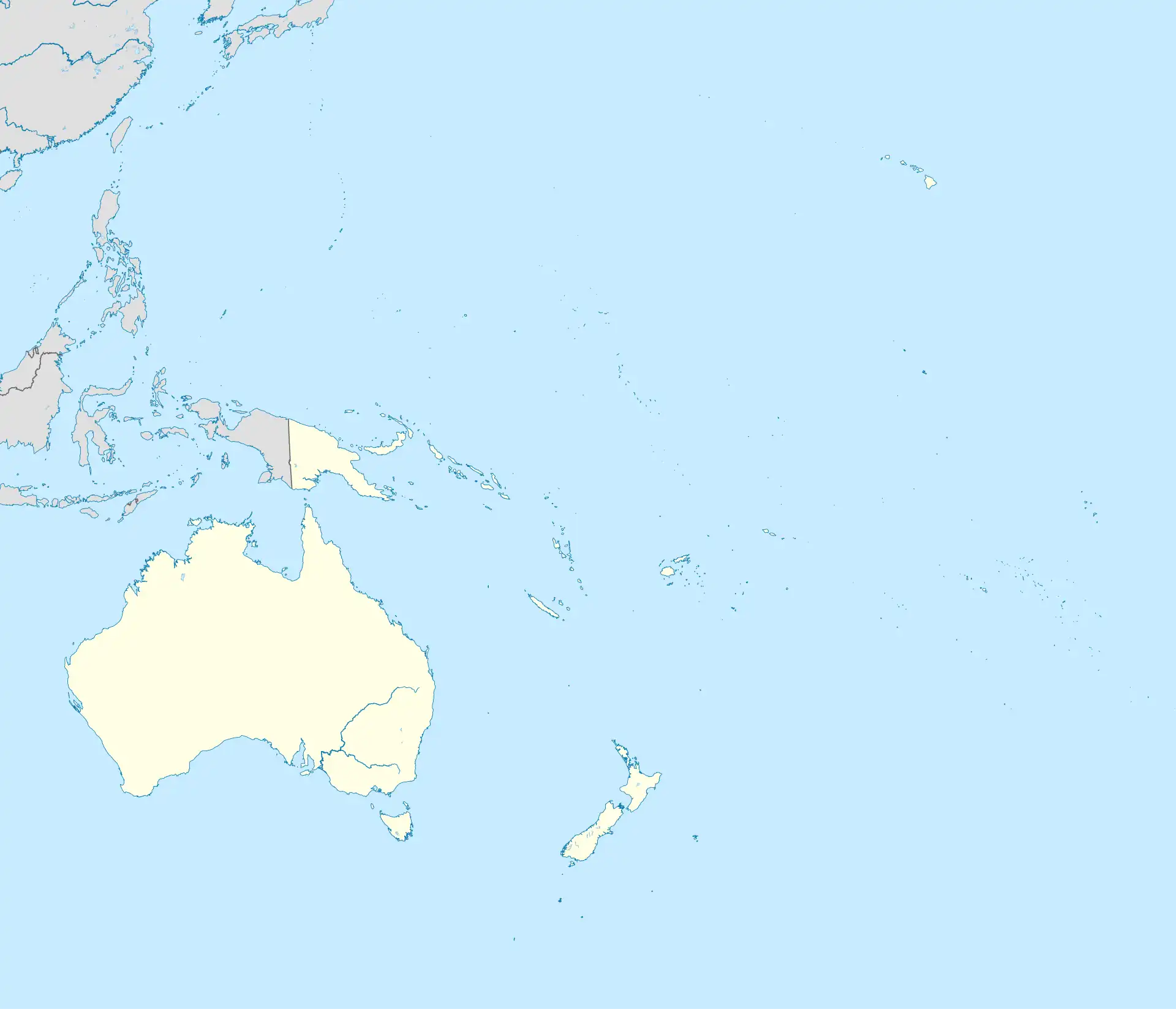
2026 Super Rugby Pacific season (Oceania)
Home locations of all the 2026 Super Rugby teams
Regular season
Standings
2026 Super Rugby Pacific standings
| Pos
|
Team
|
Pld
|
W
|
D
|
L
|
PF
|
PA
|
PD
|
TF
|
TA
|
TB
|
LB
|
Pts
|
Qualification
|
| 1
|
Brumbies
|
1
|
1
|
0
|
0
|
56
|
24
|
+32
|
8
|
3
|
1
|
0
|
5
|
Qualifying finals
|
| 2
|
Waratahs
|
1
|
1
|
0
|
0
|
36
|
12
|
+24
|
5
|
2
|
1
|
0
|
5
|
| 3
|
Moana Pasifika
|
1
|
1
|
0
|
0
|
40
|
26
|
+14
|
6
|
4
|
0
|
0
|
4
|
| 4
|
Chiefs
|
1
|
1
|
0
|
0
|
19
|
15
|
+4
|
3
|
2
|
0
|
0
|
4
|
| 5
|
Highlanders
|
1
|
1
|
0
|
0
|
25
|
23
|
+2
|
3
|
2
|
0
|
0
|
4
|
| 6
|
Crusaders
|
1
|
0
|
0
|
1
|
23
|
25
|
−2
|
2
|
3
|
0
|
1
|
1
|
| 7
|
Blues
|
1
|
0
|
0
|
1
|
15
|
19
|
−4
|
2
|
3
|
0
|
1
|
1
|
|
| 8
|
Hurricanes
|
0
|
0
|
0
|
0
|
0
|
0
|
0
|
0
|
0
|
0
|
0
|
0
|
| 9
|
Drua
|
1
|
0
|
0
|
1
|
26
|
40
|
−14
|
4
|
6
|
0
|
0
|
0
|
| 10
|
Reds
|
1
|
0
|
0
|
1
|
12
|
36
|
−24
|
2
|
5
|
0
|
0
|
0
|
| 11
|
Force
|
1
|
0
|
0
|
1
|
24
|
56
|
−32
|
3
|
8
|
0
|
0
|
0
|
Updated to match(es) played on 14 February 2026. Source:
Super Rugby
| Competition rules[8]
|
Competition points breakdown:
* 4 competition points for a win
* 2 competition points for a draw
* 1 competition bonus point for a loss by seven points or less
* 1 competition bonus point for scoring at least three tries more than the opponent in a match
|
Tiebreaker rules:
If, at any stage, teams have the same number of competition points, the following tiebreaker rules apply (in this order) to determine their standing:
* Most wins from all matches
* Highest difference between total points for and total points against from all matches (points difference)
* Most tries scored from all matches
* Highest difference between total tries for and total tries against from all matches
* Coin toss
|
Round-by-round
The table below shows each team's progression throughout the season. For each round, their cumulative points total is shown with the overall log position in brackets:
Matches
Updated to match(es) played on 14 February 2026. Source:
Super RugbyLegend: Blue = home team win; Yellow = draw; Red = away team win.
Finals series
Qualifying finals
Semi-finals
Final
Statistics
- As of 14 February 2026.[41]
Leading point scorers
Leading try scorers
Discipline
Players
Squads
The following squads have been named. Players listed as WTG are players named in the wider training groups. Players listed as Dev are players named in development groups. Players listed in italics denote non-original squad members:
Referees
The following referees were selected to officiate the 2026 Super Rugby Pacific season:[59]
See also
2025–26 United Rugby Championship
Notes
References
- ^ Sim, Josh (10 October 2025). "Super Rugby nabs 'multimillion-dollar' Swyftx crypto title deal in Australia". SportsPro.
- ^ "Shop N Save Supermarket Renews Sponsorship With Fijian Drua For Three More Seasons". drua.rugby. Fiji Rugby Union. 9 January 2026. Archived from the original on 9 January 2026.
- ^ a b c d "Super Rugby celebrates 30th anniversary, unveils 2026 season draw". super.rugby. SANZAAR. 28 August 2025. Archived from the original on 28 August 2025. Retrieved 28 August 2025.
- ^ Thorpe, Mike (11 August 2025). "Christchurch's new stadium to debut with Super Rugby Pacific Super Round 2026". The New Zealand Herald.
- ^ "Live: Crusaders v Chiefs – Super Rugby Pacific final". Stuff. 21 June 2025. Archived from the original on 21 June 2025.
- ^ "Super Rugby Pacific: Crusaders beat Chiefs to win title". The New Zealand Herald. 21 June 2025.
- ^ Mitchell, Brittany (27 August 2025). "Fan backlash sees Super Rugby Pacific finals 'lucky loser' rules changed". ESPN. Retrieved 28 August 2025.
- ^ a b "Tournament Format – Super Rugby Pacific". SANZAAR. 2024.
- ^ "Super Rugby Pacific law changes: What's new for the 2026 season's kick-off". The New Zealand Herald. New Zealand Media and Entertainment. 4 February 2026. Retrieved 5 February 2026.
- ^ "Why Super Rugby Pacific bosses have told TMOs to stop interfering in matches". Stuff. Stuff Ltd. 3 February 2026. Retrieved 5 February 2026.
- ^ "Super Rugby reins in TMO, trials five laws". SA Rugby Magazine. 2 February 2026. Retrieved 5 February 2026.
- ^ a b Drennan, Jonathan (4 February 2026). "'Most ridiculous decision': Waugh slams Super Rugby criticism from referee behind infamous Bledisloe call". The Sydney Morning Herald. Nine Entertainment. Retrieved 5 February 2026.
- ^ "Super Rugby Pacific confirms new law innovations for 2026 season". Rugby.com.au. 2 February 2026. Retrieved 5 February 2026.
- ^ a b Newboult, Colin (3 February 2026). "Super Rugby law trials judged as the south risks taking sport down 'slippery slope' despite ending the 'bane' of the game". Planet Rugby. Retrieved 5 February 2026.
- ^ Williamson, Nathan (30 September 2024). "ACT Brumbies re-sign coach Stephen Larkham until 2026". Rugby.com.au. Rugby Australia. Archived from the original on 10 December 2024.
- ^ "Allan Alaalatoa to miss start of the 2026 Swyftx Super Rugby Pacific season". brumbies.rugby. ACT Brumbies. 23 January 2026. Archived from the original on 26 January 2026. Retrieved 26 January 2026.
The ACT Brumbies can confirm captain Allan Alaalatoa will miss the start of the 2026 Swyftx Super Rugby Pacific season as he continues to recover from an ongoing back issue.
- ^ Helmers, Caden (13 February 2026). "A rookie is trying to replace the captain, and Alaalatoa says 'he's unreal'". The Canberra Times. Retrieved 13 February 2026.
Ryan Lonergan will captain the Brumbies and partner Meredith in the halves, with Edmed poised to close out the contest in his club debut.
- ^ "Simon Cron extends Force stint through 2026". ESPN. 13 February 2024. Archived from the original on 14 February 2024.
- ^ "Experienced Force leadership group confirmed for 2026 SRP season". Western Force. 27 January 2026. Retrieved 31 January 2026.
- ^ Williamson, Nathan (20 July 2023). "Les Kiss named Queensland Reds coach". Rugby.com.au. Rugby Australia. Archived from the original on 14 November 2023.
The Queensland Reds have confirmed their new head coach, signing Les Kiss on a three-year deal.
- ^ Monteverde, Marco (9 January 2026). "Fraser McReight appointed Queensland Reds captain ahead of Super Rugby Pacific season". The Daily Telegraph. Retrieved 9 January 2026.
- ^ "McKellar confirmed as Waratahs coach on three-year deal". ESPN. 5 July 2024. Archived from the original on 5 July 2024.
- ^ Payten, Iain (27 January 2026). "Fight club hasn't damaged team harmony: Waratahs new skipper confident of unity". The Sydney Morning Herald. Nine Entertainment. Retrieved 28 January 2026.
- ^ "Kiwi Glen Jackson appointed head coach of Fijian Drua". Stuff. Stuff Ltd. 21 May 2024. Archived from the original on 31 May 2024.
- ^ a b Wesele, Tevita (9 January 2026). "Leading at home special for Mayanavanua". Fiji Sun. Archived from the original on 9 January 2026. Retrieved 9 January 2026.
Former Northampton Saints lock Temo Mayanavanua is honoured to co-captain the Fijian Drua with Frank Lomani as they set to sail on February 14.
- ^ "Blues coach Vern Cotter rewarded with new contract after ending 21-year drought". Stuff. 25 November 2024. Archived from the original on 27 November 2024.
- ^ a b "Blues named for season opener against Chiefs". Blues (Press release). 11 February 2026. Retrieved 11 February 2026.
With Patrick Tuipulotu still rehabilitating his shoulder, Dalton Papali'i will captain the Blues as they look get their campaign off to a fast start.
- ^ Napier, Liam (10 February 2026). "Hurricanes ready to drop 'nearly men' tag and batte for title contention". ESPN. Retrieved 13 February 2026.
The Blues, in Vern Cotter's final season before switching to guide the Reds, welcome back All Blacks Stephen Perofeta and Ofa Tuʻungafasi from injury and experienced midfielder Pita Ahki from France to offset Rieko Ioane's sabbatical stint with Leinster. Captain Patrick Tuipulotu isn't available until round nine while recovering from shoulder surgery and Beauden Barrett will sit out the opening rounds.
- ^ Francis, Ben (21 July 2025). "Super Rugby Pacific: Jono Gibbes confirmed as Chiefs coach, replacing Clayton McMillan". The New Zealand Herald. Archived from the original on 23 July 2025.
- ^ "Four on Debut for First Game of Season". chiefs.co.nz. Chiefs. 11 February 2026. Retrieved 13 February 2026.
Included in the squad, Gibbes also announced Luke Jacobson will return to his role as captain, with support from Tupou Vaa'i and Quinn Tupaea as vice-captains.
- ^ Porter, Joe (30 July 2025). "Rob Penney re-commits as Crusaders coach but set to lose Scott Barrett for Super Rugby". Radio New Zealand. Archived from the original on 30 July 2025.
- ^ "Captain David Havili ready to lead as Crusaders embrace southern derby". crusaders.co.nz. Crusaders. 13 February 2026. Retrieved 13 February 2026.
- ^ Kirkness, Luke (10 August 2023). "Super Rugby: Jamie Joseph returns to Highlanders as head of rugby following stint as Japan coach". The New Zealand Herald. Archived from the original on 9 July 2024.
Jamie Joseph is returning to the Highlanders as their head of rugby on a four-year deal.
- ^ a b Hodge, Kayla (9 February 2026). "Highlanders retain co-captains for new season". Otago Daily Times. Retrieved 13 February 2026.
- ^ "Wellington Regional Stadium to be renamed Hnry Stadium as new sponsor signs on". The New Zealand Herald. 28 January 2026. Retrieved 28 January 2026.
- ^ a b "All Blacks Du'Plessis Kirifi and Jordie Barrett to captain Hurricanes". Radio New Zealand. 16 February 2026. Retrieved 16 February 2026.
- ^ McKay, Brett (17 February 2022). "By introducing the Fijian Drua and Moana Pasifika, Super Rugby 2022 centres the Pacific". ABC News. Archived from the original on 24 March 2022.
- ^ Manukuo, Matt (26 July 2024). "'It's more than just rugby': New owners reveal plans to unlock Pacific sporting power". Pacific Media Network. Archived from the original on 13 January 2025.
- ^ Hamilton, Tom (27 October 2023). "'I feel the pull of this calling': Tana Umaga on his rugby life, legacy and Pasifika challenge". ESPN. Archived from the original on 4 November 2023.
That's where Moana Pasifika comes in. Umaga signed a three-year deal with the Super Rugby Pacific franchise in July 2023, charged with heralding in the next batch of Pacific Islands internationals.
- ^ Voerman, Andrew (13 January 2026). "Miracle Faiilagi named Moana Pasifika captain for 2026 Super Rugby Pacific season". Stuff. Stuff Ltd. Retrieved 17 January 2026.
{{cite news}}: CS1 maint: url-status (link)
- ^ "Competition Stats | Super Rugby". super.rugby. SANZAAR. Retrieved 15 February 2026.
- ^ "2026 Blues squad announced". Blues (Press release). 6 November 2026. Retrieved 6 November 2025.
- ^ "Blues confirm 2026 wider training group". Blues (Press release). 7 November 2025. Retrieved 7 November 2025.
- ^ "ACT Brumbies announce 'exciting' squad for 2026 Swyftx Super Rugby Pacific" (Press release). ACT Brumbies. 6 November 2025. Retrieved 6 November 2025.
- ^ "Experience, depth and fresh talent as Gallagher Chiefs name 2026 squad" (Press release). Chiefs. 6 November 2025. Retrieved 6 November 2025.
- ^ "Gallagher Chiefs 2026 wider training group" (Press release). Chiefs. 7 November 2025. Retrieved 7 November 2025.
- ^ "2026 Crusaders squad announced" (Press release). Crusaders. 6 November 2025. Retrieved 6 November 2025.
- ^ "2026 Crusaders Wider Training Group Announced" (Press release). Crusaders. 7 November 2025. Retrieved 7 November 2025.
- ^ "Fijian Drua unveil 2026 squad" (Press release). Fijian Drua. 6 November 2025. Retrieved 6 November 2025.
- ^ "Fijian Drua unveil 12 development players for 2026". Fijian Drua (Press release). 5 January 2026. Retrieved 6 January 2026.
- ^ "Continuity the key as driven Force squad revealed for 2026 Super Rugby season" (Press release). Western Force. 6 November 2025. Retrieved 6 November 2025.
- ^ "Fresh faces and international experience feature in 2026 Highlanders squad" (Press release). Highlanders. 6 November 2025. Retrieved 6 November 2025.
- ^ "Highlanders confirm wider training group for 2026" (Press release). Highlanders. 7 November 2025. Retrieved 7 November 2025.
- ^ "Hurricanes announce 2026 Super Rugby Pacific squad" (Press release). Hurricanes. 6 November 2025. Retrieved 6 November 2025.
- ^ "Hurricanes unveil 12-man wider training group for 2026" (Press release). Hurricanes. 7 November 2025. Retrieved 7 November 2025.
- ^ "Moana Pasifika name squad for 2026" (Press release). Moana Pasifika. 6 November 2025. Retrieved 6 November 2025.
- ^ "Queensland Reds announce squad for 2026 Super Rugby Pacific" (Press release). Queensland Reds. 6 November 2025. Retrieved 6 November 2025.
- ^ "NSW Waratahs squad confirmed for 2026 Swyftx Super Rugby Pacific season" (Press release). NSW Waratahs. 6 November 2025. Retrieved 6 November 2025.
- ^ "2026 Super Rugby Pacific teams: Round one". SANAZAAR. 11 February 2026. Retrieved 11 February 2026.
External links
- Official Super Rugby websites:
|
|---|
| | Teams | | Current teams | |
|---|
| Former teams | |
|---|
|
|---|
| Super 12 seasons | |
|---|
| Super 14 seasons | |
|---|
| Super Rugby seasons | |
|---|
| Super Rugby Pacific seasons | |
|---|
| Super Rugby finals | |
|---|
| Player transfers | |
|---|
| Regionalised competitions | |
|---|
|
|
 Miracle Faiʻilagi, Moana Pasifika (3)